

Choosing a reverse osmosis setup is easier once you separate kitchen fit from raw filtering power. Under-sink units make sense for households that want a tidy, hidden install, while countertop models suit apartments, rentals, and anyone who wants less plumbing drama. You’ll also want to weigh waste ratio, tankless design, and faucet style, because those details shape daily use more than glossy marketing ever does.
Quick Look At The Shortlist

APEC Water ROES-PHUV75 7-Stage Under Sink RO System
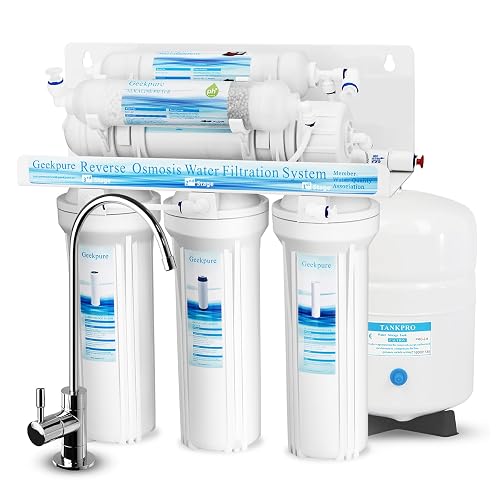
Geekpure 6 Stage Reverse Osmosis RO Drinking Water Filter System 75 GPD

Waterdrop G5P500A Reverse Osmosis System 8-Stage RO Filtration
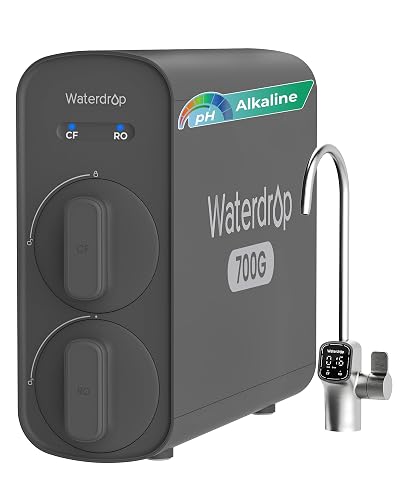
Waterdrop G5P700A Alkaline Mineral Reverse Osmosis Water Filter 700 GPD

Geekpure 4 Stage Portable Reverse Osmosis Water Filtration System 100 GPD

DREO Reverse Osmosis Water Filter Countertop RO Filtration System

DREO Reverse Osmosis Water Filter Countertop RO Filtration System 2 Autofill Pitchers

Geekpure 5 Stage Reverse Osmosis RO Drinking Water Filter System 75GPD
More Details On Our Top Picks
This APEC unit suits households that want an under-sink system with a little extra treatment beyond the usual membrane stages. The alkaline and UV additions matter for people who want a more layered setup, though the trade-off is a busier install than a countertop machine.
In a kitchen that sees steady use, the 75 GPD flow is a sensible middle ground, not a firehose. Compared with the simpler Geekpure 6-stage option, this one leans more toward extra treatment than bare-bones value.
Strong Points
- Seven-stage design gives you a more layered filtration path than the simpler six-stage pick.
- UV treatment adds another step for homes that want broader treatment at the tap.
- Alkaline support appeals to households that prefer a less stripped-down final taste profile.
- Under-sink layout keeps the countertop clear, which helps in smaller kitchens with limited prep space.
Things To Consider
- Under-sink installation takes more planning than an install-free countertop unit.
- The extra treatment stages can mean more filter upkeep over time.
- Households that want the simplest possible setup may find this more involved than they need.
Feature Snapshot
Who It Suits Best
Homes that want an under-sink RO setup with UV treatment and a more complete feature set fit this model well.
Where A Sibling Pick Shines
Waterdrop G5P500A Reverse Osmosis System suits you better if speed and a tankless build matter more than extra treatment layers.
This Geekpure setup is the straightforward under-sink option in the group, especially for homes that want RO basics without a lot of extra gadgetry. The alkaline pH+ filter is the small twist here, and that makes it a decent fit for kitchens where simple taste improvement matters more than a long feature list.
Compared with the APEC above, it feels less layered and a bit easier to understand on paper. For many apartments and starter homes, that simpler shape is exactly the point.
What We Like
- Six-stage layout keeps the system understandable for first-time RO shoppers.
- Alkaline pH+ support gives the final water a more tailored finish than a plain basic unit.
- Under-sink design saves counter space for cooking and daily prep.
- 75 GPD output is a practical match for average household water use.
Softer Spots
- It does not bring the extra UV layer found on the APEC model.
- Install work is still part of the equation, so renters may prefer a countertop setup.
Core Details
Built With In Mind
This suits you best when you want an under-sink RO filter that stays fairly simple while still adding an alkaline stage.
A Better Fit Elsewhere
APEC Water ROES-PHUV75 is the better match for you if UV treatment and a more layered filtration stack matter more than simplicity.
The Waterdrop G5P500A is the kind of pick that makes sense in a kitchen with steady sink traffic. Tankless means no storage tank waiting under the cabinet, so the footprint stays cleaner, and that matters when your cabinet space is already crowded with cleaners and bins.
The 500 GPD output is the big story, since it gives this model a much more energetic feel than the 75 GPD under-sink units above. That said, the upgrade only really pays off for homes that pour a lot of filtered water every day.
Highlights
- Tankless construction frees up cabinet space and cuts the bulky-tank look.
- 500 GPD output suits households that move through a lot of drinking water.
- 8-stage filtration adds more treatment steps than the simpler six- and seven-stage picks.
- 2:1 pure-to-drain ratio is a strong efficiency point for a system in this class.
- NSF/ANSI 58 and 372 references give the listing a more grounded materials-and-performance frame.
Points To Note
- The higher-output design makes the case most strongly in busier homes, not tiny kitchens with light use.
- Tankless systems can ask for a little more attention during installation planning.
Details At A Glance
Who Should Grab It
This suits you best in a busy kitchen where high output and a tankless footprint matter more than a simple low-volume setup.
Swap It Out When
Geekpure 6 Stage Reverse Osmosis RO Drinking Water Filter System 75 GPD is the easier fit for smaller homes that do not need the higher output.
The G5P700A pushes the same tankless idea further, and that higher output is the headline for larger homes. In a shared kitchen, that extra speed can feel like taking a wider lane in traffic, because multiple people can draw water without the same bottleneck.
The smart LED faucet also helps this model feel more current than the simpler under-sink options in the first half of the list. The honest read is that it makes the most sense where usage is heavy enough to justify the extra capacity.
Reasons To Buy
- 700 GPD output is built for heavier household demand.
- Tankless layout keeps the cabinet area less crowded.
- 8-stage system gives you a treatment path similar to the G5P500A, but with more capacity behind it.
- Smart LED faucet adds a clear usability touch for day-to-day monitoring.
Room For Improvement
- The stronger output makes the unit most sensible for larger households rather than lighter-use spaces.
- Smart faucet hardware adds another piece of equipment to keep clean over time.
Feature Rundown
The Right Fit
This is a strong match for larger households that want a tankless RO system with more output and a faucet that feels easier to live with.
Look Elsewhere When
Waterdrop G5P500A Reverse Osmosis System fits better for smaller households that want tankless convenience without stepping up to 700 GPD.
This Geekpure portable setup is different from the sink-based picks above, because it leans toward task water and hobby use rather than a permanent kitchen install. The DI stage, or deionization stage, is the key detail here, since it pushes water quality toward a very low dissolved-mineral result.
That makes it a strong fit for aquarium care and other uses where mineral control matters more than a polished kitchen faucet. For normal household drinking use, it feels more specialized than the Waterdrop or APEC options.
Bright Spots
- Portable format suits spaces where a fixed under-sink system would be awkward.
- DI stage gives the system a more specialized finishing step than standard RO alone.
- 100 GPD output helps it move water at a workable pace for task use.
- Four-stage layout keeps the structure easier to understand than more complex systems.
Small Caveats
- This is more specialized than a general kitchen drinking-water system.
- Portable gear usually asks you to think about storage and setup space between uses.
At A Glance
Whose Shelf It Belongs On
This suits hobbyists and task-focused users who want portable RO water with an extra DI stage.
Reach For A Different Pick When
DREO Reverse Osmosis Water Filter Countertop RO Filtration System fits you better for everyday kitchen use and install-free convenience.
The DREO countertop unit is the cleanest fit for renters or anyone who does not want to cut into cabinets. Installation-free design is the big appeal, and the self-cleaning function gives it a more hands-off feel than the sink-mounted systems above.
The included autofill pitcher also changes the daily routine in a useful way, especially in a small kitchen where you want filtered water ready to pour. One thing worth considering is that countertop equipment still asks for visible space, so the trade-off is convenience versus footprint.
Upsides
- Installation-free setup suits apartments and short-term living spaces.
- Countertop format keeps plumbing out of the picture.
- Self-cleaning design reduces the amount of routine fuss you need to think about.
- Autofill pitcher makes it easier to keep water ready for everyday drinking.
- 3:1 pure-to-drain ratio gives the unit a more efficient profile than basic countertop alternatives.
Honest Caveats
- Countertop placement takes visible space on the work surface.
- The pitcher format may not suit households that want water dispensed straight from a built-in tap.
Core Details
Best Suited To
This is a strong match for renters, small kitchens, and anyone who wants RO water without plumbing work.
Another Choice May Suit
DREO Reverse Osmosis Water Filter Countertop 2 Autofill Pitchers suits shared homes better when you want more than one pitcher in rotation.
This version keeps the same install-free DREO formula, but the second autofill pitcher changes the day-to-day rhythm. In a shared kitchen or office break area, that extra pitcher can make the setup feel less stop-and-wait, which is the main reason this model stands apart.
It still asks for countertop space, so the fit is more about convenience and serving multiple people than about keeping every inch clear. Compared with the single-pitcher DREO, this one is the easier call for groups that refill often.
Best Bits
- Two pitchers make it easier to keep filtered water ready for more than one person.
- Install-free format keeps setup simple in rentals and shared spaces.
- Self-cleaning design helps reduce routine maintenance hassle.
- 3:1 pure-to-drain ratio keeps the efficiency story strong for a countertop model.
Areas To Watch
- Two pitchers still need storage room when they are not in use.
- Countertop footprint can feel busy in very compact kitchens.
Feature Card
Right Fit
This fits shared homes, office corners, or busy households that want install-free RO water with more than one pitcher in play.
Where A Sibling Pick Shines
DREO Reverse Osmosis Water Filter Countertop RO Filtration System works better for tighter kitchens that only need a single pitcher.
The booster pump gives this Geekpure model a clear purpose, especially in homes where water pressure is less than ideal. That matters more than it sounds, because RO systems can feel sluggish without help, and the pump is what makes this pick more confident in low-pressure plumbing situations.
It stays in the familiar under-sink lane, so the cabinet install still applies, but the extra pump and included spare filters change the ownership story. Compared with the simpler Geekpure 6-stage model, this one makes a stronger case for households that want a little more support in the system itself.
Positives
- Booster pump helps the system in homes with weaker water pressure.
- Five-stage layout keeps the structure less complex than some larger under-sink systems.
- Included extra filters add a helpful buffer for future upkeep.
- 75GPD output sits in a practical range for routine household use.
Worth Noting
- The booster pump adds another component to think about during install and later upkeep.
- Under-sink space planning still matters, just as it does with the APEC and Geekpure six-stage models.
Technical Sheet
Who Will Love This
This suits you best if your home has lower water pressure and you want an under-sink RO system with a built-in assist.
Skip It When
Waterdrop G5P700A Alkaline Mineral Reverse Osmosis Water Filter is the better route for larger households that want higher output and a tankless cabinet layout.
How To Choose The Right reverse osmosis systems for drinking water
Start With Installation Style
Under-sink systems suit you when cabinet space is available and you want a permanent setup with a dedicated faucet. Countertop designs fit renters, temporary housing, and kitchens where you’d rather avoid drilling or plumbing work.
Tankless units trim cabinet clutter, while tank-based designs can feel more familiar and forgiving in standard homes. The best choice comes down to how visible you want the system to be and how much room you have around the sink.
Match Output To Daily Use
GPD means gallons per day, which is the system’s general production capacity. A 75 GPD model handles normal household drinking needs, while 500 GPD or 700 GPD makes more sense in high-use kitchens.
Higher output does not matter much in a lightly used apartment, but it matters a lot in homes where several people fill bottles, cook often, and draw water all day. Too much capacity can be unnecessary; too little can feel slow at peak times.
Look Past The Stage Count
Stage count tells you how many filtration steps the water passes through, but it does not tell the whole story by itself. Extra features such as UV treatment, alkaline finishing, DI, or a booster pump change how the system behaves in real life.
UV means ultraviolet treatment, which adds another treatment layer. Alkaline and mineral stages change the final water profile, while a booster pump helps in lower-pressure homes, so the right mix depends on your plumbing and taste preferences.
Think About Day-To-Day Ownership
Filter swaps, faucet cleaning, pitcher storage, and cabinet access all shape whether a system feels easy or annoying after month three. A tidy install helps, but a model with awkward cartridges or a crowded layout can still become a small chore.
Look for the version that fits your routine, not just your sink. That choice usually matters more than chasing the longest feature list.
Things Worth Knowing First
Wrong Turns To Avoid
Many shoppers focus only on purification labels and overlook installation shape, output, and space needs. That is how a good-seeming unit ends up awkward in a narrow cabinet or too bulky for a busy countertop.
Another common miss is choosing a feature-heavy model for a light-use kitchen. A simpler system often feels better when you only need dependable drinking water.
The Case For Spending Up
Higher-tier models usually cost more because they add faster output, tankless design, smarter faucets, extra filtration stages, or pressure support. Those additions matter most in homes that use a lot of water or need a system that stays out of the way.
The upgrade makes sense when daily convenience matters as much as filtration itself. For smaller households, the extra spend can be hard to justify unless one of those added features solves a real problem.
Frequently Asked Questions
Do reverse osmosis systems for drinking water take up a lot of space?
Under-sink models use cabinet space, while countertop units sit in plain view. The footprint depends on whether you want a hidden install or a no-plumbing setup.
What does GPD mean?
GPD stands for gallons per day, which is the system’s output rating. Higher numbers usually suit busier households and lower numbers fit lighter daily use.
Is tankless better than tank-based?
Tankless systems save cabinet space and often feel cleaner in modern kitchens. Tank-based systems still make sense when you want a familiar under-sink layout.
Why do some systems include alkaline stages?
Alkaline stages adjust the final water profile after RO filtration. That can matter for taste preferences, though it is more of a finishing feature than a core need.
Do all reverse osmosis systems for drinking water need a pump?
No, but a booster pump helps in homes with weaker incoming pressure. It is most useful when the plumbing setup would otherwise make the system feel slow.
Closing Thoughts
The right reverse osmosis system depends less on brand names and more on how your kitchen actually works. APEC and Geekpure make sense for people who want under-sink filtration, while the Waterdrop models suit homes that need more output and a cleaner tankless setup. DREO stands out for install-free convenience, and the portable Geekpure option fits more specialized use. Pick the format that matches your space, your water habits, and how much maintenance you’re comfortable handling.
