

Kitchen sink water shapes everything from coffee to pasta, so the right filter needs to fit your faucet, your counter space, and your tolerance for maintenance. Some homes need a compact faucet mount, others want an under-sink system that stays out of sight, and a few need countertop flexibility for rentals or temporary setups. This roundup focuses on those real-life trade-offs, not just the headline filtration claims.
The Shortlist At A Glance

Waterdrop TST-UF 0.01μm Ultra-Filtration Under Sink Water Filter System

Vortopt Advanced Faucet Water Filter for Sink T1

Countertop Water Filter OM-CF04

DREO Reverse Osmosis Water Filter Countertop

DREO Reverse Osmosis Water Filter Countertop 2 Autofill Pitchers

3 Pack Sink Water Filter Faucet and 10 Filter Elements Set

Ecoviva UF800G 0.01μm Ultra-Filtration Under Sink Water Filter
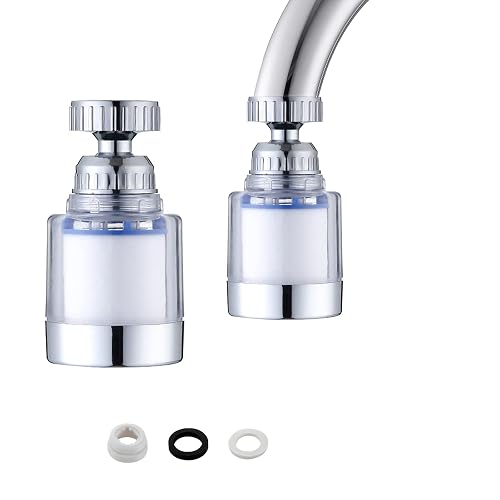
360-Degree Rotating Faucet Filter Sink Water Faucet Filter Purifier Blue
More Details On Our Top Picks
Waterdrop keeps this one visually quiet, which matters under a crowded sink. The stainless steel housing feels better suited to long-term cabinet duty than a flimsy plastic shell, and the no-drill setup helps in kitchens where permanent changes are off the table.
The 0.01 μm rating means ultrafiltration, a membrane level fine enough to target very small particles while staying simpler than reverse osmosis. That trade-off usually appeals to households that want a neater install without the heavier footprint of a countertop machine.
Strong Points
- Stainless steel construction gives the unit a more durable feel in damp cabinet spaces.
- No-drill installation suits rental kitchens and cabinets you do not want to modify.
- Ultrafiltration keeps the system more compact than many full reverse osmosis setups.
- Works well for daily sink use where cleaner taste matters more than a bulky machine.
Things To Consider
- Under-sink plumbing still calls for a bit of planning, especially around cabinet clearance.
- Ultrafiltration is not the same as reverse osmosis, so the treatment style is different.
- The under-cabinet format is less portable than a faucet mount or countertop unit.
Feature Snapshot
Who It Suits Best
It suits you best in a home kitchen where you want under-sink filtration without opening up the cabinet to a larger appliance.
A Better Fit Elsewhere
Ecoviva UF800G works better for you if cabinet space is tight and you want a similarly compact under-sink layout with a tankless design.
Vortopt goes straight to the faucet, which makes it a sensible match for kitchens where cabinet access is awkward or nonexistent. The white finish keeps the look plain and tidy, and the 400-gallon capacity gives you a clear service-life target before replacement comes into play.
That faucet-mount format is fast to live with, though it does add hardware at the spout and that can feel crowded on smaller sinks. For renters, dorm rooms, or households that want a simpler install than an under-sink system, the trade-off makes sense.
What We Like
- Faucet-mount format keeps installation simpler than a hidden cabinet system.
- 400-gallon capacity gives you a concrete usage range to plan around.
- White finish blends into many kitchen fixtures without drawing attention.
- Good fit for apartments and temporary setups where cabinet changes are limited.
Minor Gripes
- Mounted hardware can add visual clutter at the sink.
- The faucet connection may feel tight in compact sink areas.
- Less discreet than an under-sink system like Waterdrop or Ecoviva.
Core Details
Made For
It fits you best in a rental, dorm, or small kitchen where you want a visible but uncomplicated faucet-side filter.
Another Choice May Suit
Waterdrop TST-UF suits you better if you want the filter hidden under the sink instead of attached to the faucet.
OM-CF04 is the countertop route for households that want a more visible purifier with a long service interval. The 8,000-gallon figure stands out because it points to less frequent replacement in a busy kitchen, and the alkaline design suggests a more involved treatment path than a basic faucet add-on.
Compared with Vortopt, this is the more substantial counter presence, so you need room on the surface and a comfort level with a larger unit. That makes it a stronger fit for permanent kitchens than cramped rentals, and the benefit shows up most clearly when you use the sink all day.
Highlights
- 8,000-gallon capacity suggests a long interval between filter changes.
- Countertop layout keeps the system accessible for daily use and upkeep.
- Alkaline filtration approach gives it a more layered treatment profile.
- Good match for homes that want a visible purification station near the sink.
Areas To Watch
- Counter space matters, and smaller kitchens may feel the footprint quickly.
- More visible than under-sink choices like Waterdrop and Ecoviva.
- The larger format asks for a bit more cleaning around the base.
Details At A Glance
Who Will Love This
It fits you best in a stable home kitchen where counter space is available and you want a visible, higher-capacity purifier.
Where A Sibling Pick Shines
DREO Reverse Osmosis Water Filter Countertop suits you better if you want reverse osmosis with a more automated countertop workflow.
DREO takes a more appliance-like route, which suits you better than the simpler faucet mounts when you want a full countertop purifier. RO, short for reverse osmosis, is a pressure-driven filtration method that sends water through a fine membrane, and the 3:1 pure-to-drain ratio shows a more efficient water use profile than many older RO setups.
The TDS display, filter-life tracking, and autofill pitcher add convenience in a kitchen that sees steady daily use. You do need room for the unit itself, so the appeal is strongest in homes that can spare the surface space and want less hands-on guesswork.
Best Bits
- RO filtration gives the system a more advanced treatment profile.
- 3:1 pure-to-drain ratio points to more efficient water use for the category.
- TDS and filter-life readouts reduce guesswork during upkeep.
- Autofill pitcher adds a practical layer for meal prep and daily drinking.
- Installation-free design keeps setup simpler than many sink-plumbed options.
Worth Noting
- Countertop placement takes more room than an under-sink system.
- More features also mean more surface area to wipe down.
- Best suited to kitchens where the machine can stay put.
Technical Sheet
The Right Fit
It suits you best in a busy household that wants a feature-rich countertop purifier with less guesswork.
Reach For A Different Pick When
Waterdrop TST-UF makes more sense if you want a slimmer under-sink setup instead of a countertop appliance.
This version keeps the same RO backbone as the single-pitcher DREO, but the second autofill pitcher changes the daily rhythm. For households that fill bottles, brew often, or keep several people supplied from the same kitchen sink area, that extra pitcher reduces the stop-and-start routine.
The trade-off is straightforward, more accessories usually means more counter organization. Still, the added convenience makes sense in larger homes where water use spikes throughout the day and one pitcher never seems quite enough.
Reasons To Buy
- Two autofill pitchers offer more ready-to-use capacity.
- RO filtration keeps the treatment level aligned with the standard DREO platform.
- Useful for homes that move a lot of drinking water through the kitchen.
- Autofill function helps keep pitchers ready with less attention.
Points To Note
- Extra pitchers can take more storage and counter coordination.
- The overall footprint is still larger than a faucet filter.
- Best fit appears in busy kitchens, not minimal setups.
Core Details
Built With In Mind
It suits you best in a larger household that wants more ready water without changing the sink plumbing.
Skip It When
Vortopt T1 is the cleaner fit if you want a simpler faucet-mount option with less counter footprint.
BREADEEP focuses on a simple faucet-side upgrade, and the 3-pack layout makes sense for households that want multiple spares or need to outfit more than one sink. The 360-degree rotation is handy in small bathrooms or kitchens because it gives the spout more reach without rearranging the whole sink area.
This is a more basic path than Waterdrop or DREO, but that simplicity can be the appeal. You get a practical, light-touch format that works well for temporary needs, secondary sinks, or anyone who wants a modest faucet attachment rather than a larger system.
Positives
- Three units in the set add flexibility for more than one sink.
- Ten filter elements extend the practical life of the bundle.
- Rotating head helps the faucet reach work better in tighter sinks.
- Good for secondary bathrooms and basic kitchen use.
Softer Spots
- Less discreet than a hidden under-sink system.
- More of a basic attachment than a premium purification station.
- Shared sink spaces may need a little extra cleaning around the fitting.
Feature Rundown
Whose Shelf It Belongs On
It fits you best if you want a low-commitment faucet add-on for a bathroom or secondary sink.
Where Shoppers Go Wrong
Waterdrop TST-UF is the better fit if you expect a more substantial under-sink installation and cleaner cabinet look.
Ecoviva goes after the same under-sink crowd as Waterdrop, but the tankless design makes the cabinet footprint feel even cleaner. The 0.01 μm ultrafiltration level and the NSF 42 and 372 references give it a more formal spec profile, while the no-electricity, no-wastewater setup keeps the ownership story simple.
Another useful detail is that it preserves minerals rather than chasing TDS reduction, which suits people who want a less stripped-down water profile. That makes it a smart fit for kitchens where space matters as much as filtration style, and the ultra-compact shape is the sort of thing you appreciate every time you open the cabinet.
Upsides
- Tankless build saves space under the sink.
- No electricity keeps setup and placement simpler.
- No wastewater output is helpful in an everyday kitchen.
- Preserves minerals, which will appeal to users who dislike fully stripped water.
- 0.01 μm filtration gives the system a fine filtration profile.
Room For Improvement
- Tankless does not mean maintenance-free, so filter upkeep still matters.
- No TDS reduction may matter to households that want that exact result.
- Under-sink install still asks for cabinet planning and access.
Quick Facts
Perfect Match For
It suits you best in a smaller kitchen where cabinet space is tight and you want a slim under-sink filter.
Look Elsewhere When
DREO Reverse Osmosis Water Filter Countertop fits you better if you want a countertop system with RO and pitcher-style convenience.
CaoXiong keeps this one straightforward, with a rotating faucet head that suits kitchen and bathroom sinks alike. The blue finish adds a little visual distinction without turning the setup into a centerpiece, and the pitch is clearly about practical reach rather than a larger cabinet installation.
That makes it useful for households that want a simple faucet attachment and a lighter footprint than the Waterdrop or Ecoviva under-sink systems. The honest read is that it feels more basic than the DREO countertop units, but the simplicity is exactly why it fits routine sink use.
Bright Spots
- 360-degree rotation improves reach around the sink.
- Works in both kitchen and bathroom settings.
- Blue finish gives the unit a clearer visual identity.
- Simple format suits everyday use without a large install.
Small Caveats
- Faucet-mounted hardware is less discreet than an under-sink system.
- Basic layout means fewer convenience features than the DREO countertop picks.
- Small sinks may need a little extra space around the spout.
Feature Card
Who Should Grab It
It suits you best if you want a simple faucet filter for a kitchen or bathroom sink without adding a larger machine.
Swap It Out When
Vortopt T1 is a better fit if you want a more structured faucet filter with a stated 400-gallon capacity.
How To Choose The Right purified water filters for sink
Match The Filter Style To Your Sink Area
Faucet mounts work well when you want easy access and a small install footprint. Under-sink units keep the counter clear, while countertop systems suit kitchens that can spare a visible appliance.
Cabinet space matters more than many people expect. A slim tankless body, like Ecoviva UF800G, can feel very different from a larger countertop purifier once you start storing cleaning supplies and cookware underneath.
Read Filtration Claims In Plain Language
Ultrafiltration uses a fine membrane, usually a simpler path than reverse osmosis. RO, short for reverse osmosis, is the more intensive route and often comes with extra convenience features or a larger housing.
Capacity numbers and membrane size only help when they match your habits. A long-life countertop unit suits heavier daily use, while a compact faucet model can be enough for lighter sink traffic.
Think About Maintenance Before You Commit
Every sink filter needs some level of upkeep, whether that means changing cartridges, wiping the housing, or keeping the faucet connection clean. The easier it is to reach, the more likely the upkeep stays routine instead of annoying.
Households that cook often usually do better with systems that make replacement and monitoring simple. That is why features like TDS readouts, filter-life indicators, or clear capacity targets matter in daily life, not just on the listing.
Choose For Your Household Pattern
Single-person kitchens, rental apartments, and secondary bathrooms often suit faucet attachments or compact systems. Larger homes with steady cooking traffic usually appreciate countertop RO units or under-sink filters that stay out of the way.
The best match is the one that fits the sink layout you already have. Start with space, then think about the amount of water you use, and the choice usually becomes obvious.
What To Weigh Before You Commit
Common Shopping Slip Ups
Many shoppers focus on filtration claims first and forget the install space. A great spec sheet helps less than you’d think if the unit blocks cabinet storage or crowds the faucet.
Another easy miss is maintenance friction. A cartridge that seems simple on paper can become annoying in a busy kitchen if the housing is awkward to reach.
The Upgrade Payoff
Higher-tier sink filters often cost more because they add finer membranes, cleaner housings, and more useful convenience features. You usually pay for easier ownership as much as for the filtration path itself.
That upgrade makes sense in kitchens that see constant use. A family that fills pitchers, cooks daily, or wants a tidier counter tends to benefit more from RO readouts, tankless shapes, or stainless hardware than a basic faucet attachment.
Frequently Asked Questions
What Is The Difference Between Faucet Mount And Under-Sink Filters?
Faucet mounts attach at the spout and stay visible, which keeps installation simpler. Under-sink filters hide in the cabinet and usually leave the counter and faucet area cleaner.
Does A 0.01 μm Rating Always Mean Better Water?
It means the membrane is very fine, but the better choice still depends on your sink setup and maintenance tolerance. Some kitchens benefit more from a compact ultrafiltration unit than from a larger reverse osmosis system.
Are Countertop Water Filters Good For Small Kitchens?
They can work well, but the surface space has to be available. In a cramped kitchen, an under-sink or faucet mount filter usually feels easier to live with.
Why Do Some Models Mention TDS?
TDS means total dissolved solids, a measurement tied to what remains in the water after filtration. A display can help you keep track of filter status, though it does not replace choosing the right format for your sink.
Which Option Fits A Rental Best?
Faucet mounts and no-drill under-sink systems usually fit rentals best because they keep changes lighter. Waterdrop TST-UF and Vortopt T1 both make sense depending on whether you want hidden placement or a faster faucet-side setup.
Closing Thoughts
The strongest purified water filters for sink match your sink layout before they try to impress you with numbers. Waterdrop and Ecoviva serve the hidden-install crowd well, DREO covers countertop users who want more features, and Vortopt or CaoXiong make sense for lighter faucet-side setups. BREADEEP fills a practical gap for multi-sink households, while OM-CF04 suits you when long service life matters more than a tiny footprint. Start with space, then pick the format that fits the way your kitchen actually runs.
