

Roasting pans and sheet sets with racks solve a simple problem: they lift food off the hot surface, help fat and juices drain, and make cleanup less of a wrestling match. That matters in a busy kitchen, whether the goal is a Sunday chicken, a tray of vegetables, or a toaster oven dinner that has to fit neatly. Material, size, rack shape, and oven fit matter more than flashy labels. The six picks below cover full-size roasters, half-sheet sets, and compact options for smaller appliances.
Quick Look At The Shortlist

Glad Roasting Pan Nonstick 11×15 with Rack
Gymdin Baking Sheet with Cooling Racks 17 x 11

EWFEN Half Sheet Pans with Rack Set 18 Inch
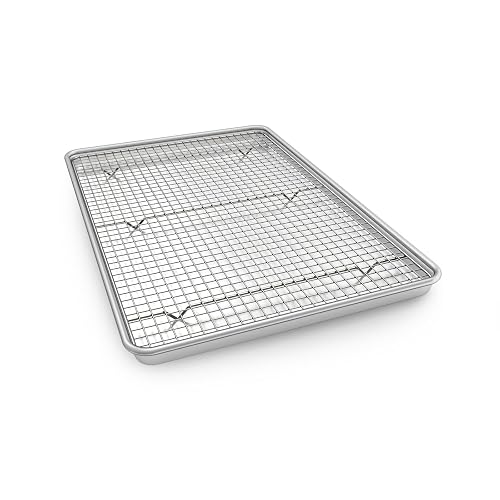
EWFEN Half Sheet Pans with Rack Set 13 Inch

Tifanso Heavy Duty Stainless Steel Roasting Pan with Rack
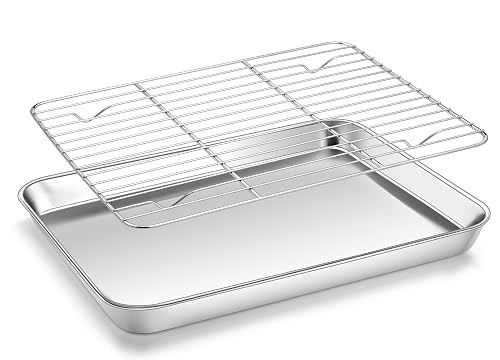
Homikit Quarter Sheet Pan with Wire Cooling Rack 10×12
More Details On Our Top Picks
The 11 x 15 shape gives this Glad roaster a useful middle ground, larger than a compact sheet but still manageable for weeknight meals. The included rack keeps poultry or vegetables lifted, which helps heat circulate and keeps drippings below the food instead of pooling around it.
That kind of setup suits cooks who want one pan for turkey breast, chicken parts, or a mixed roast without moving up to a heavy commercial roaster. The trade-off is straightforward, it looks built for practical use rather than refined presentation, so it fits function-first kitchens best.
What We Like
- 11 x 15 footprint suits mid-size roasting jobs.
- Rack adds separation for better airflow under food.
- Heavy-duty metal body should hold up well in regular oven use.
- Nonstick finish can make cleanup easier after sauced or fatty roasts.
Small Caveats
- The presentation leans practical, not polished.
- Size may feel small for large holiday birds.
- Nonstick surfaces usually reward gentle cleaning rather than abrasive scrubbing.
Feature Snapshot
Who It Suits Best
Home cooks who want a straightforward roaster for family dinners and occasional holiday meals get the most from this layout.
Where A Sibling Pick Shines
Tifanso Heavy Duty Stainless Steel Roasting Pan with Rack suits cooks who want a higher-sided steel pan and a more substantial build for heavier oven jobs.
This Gymdin set takes a different route from the Glad roaster, pairing two sheets with two racks instead of centering on a single deep pan. That makes it useful for cooks who shift between cookies, sheet-pan dinners, and rack-supported cooling, all without changing gear mid-task.
Carbon steel usually brings a sturdier feel than thin bargain sheet pans, though it also asks for a bit more care to keep the finish looking tidy. The 17 x 11 size hits a practical middle zone for standard ovens, which helps in kitchens where space is valuable but batch cooking still matters.
Strong Points
- Two pans and two racks expand cooking and cooling options.
- Carbon steel construction suits regular use in busy kitchens.
- Nonstick finish helps with release after roasting or baking.
- 17 x 11 format offers generous surface area for sheet meals.
- Rack pairing makes the set more versatile than a basic sheet alone.
Points To Note
- The shallower sheet profile is less suited to deep roasts than a true roasting pan.
- Carbon steel often benefits from careful drying after washing.
- Two-piece sets take more cabinet room than a single pan.
- The lighter sheet-pan format may feel less substantial than the Tifanso roaster.
Details At A Glance
Built With In Mind
Home cooks who bake often and want a sheet-and-rack setup for both roasting and cooling are the strongest fit here.
Another Choice May Suit
Glad Roasting Pan Nonstick 11×15 with Rack suits cooks who want a deeper, more traditional roasting pan for poultry and pan drippings.
The EWFEN 18-inch set steps up in surface area, so it makes sense for larger tray bakes, bigger vegetable spreads, and broader roasting jobs. Compared with the Gymdin set, this one leans more into full-coverage oven use than into compact flexibility.
Natural aluminum usually keeps the profile light in hand while still feeling more kitchen-grade than a flimsy disposable pan. The trade-off is that an 18-inch format can feel oversized in smaller ovens, so this is a stronger match for spacious setups and cooks who work in bigger batches.
Upsides
- 18-inch length gives generous room for batch cooking.
- Natural aluminum keeps the pan easy to handle for its size.
- Rack pairing supports roasting and draining in one setup.
- Commercial-style shape suits frequent oven use.
- Good fit for big sheet-pan dinners and larger ingredient spreads.
Softer Spots
- The size may be awkward in compact ovens.
- Large sheet pans can be less convenient to store.
- Aluminum usually asks for a little care to avoid dulling over time.
Core Details
Who Will Love This
Frequent batch cooks and households with roomier ovens get the most from this larger sheet-pan setup.
Skip It When
Homikit Quarter Sheet Pan with Wire Cooling Rack 10×12 suits small kitchens, toaster ovens, and lighter snack prep far better.
The 13-inch EWFEN set keeps the same general idea as the larger 18-inch version, but in a shape that’s easier to live with in tighter ovens and smaller cabinets. That smaller footprint matters in everyday cooking, where a pan can be perfectly useful yet still refuse to fit the space around it.
Natural aluminum again points toward lighter handling and easy movement in and out of the oven. The honest read is that this size favors moderate batches, so it suits weeknight baking and smaller roast portions more naturally than big holiday prep.
Highlights
- 13-inch size works well in tighter kitchen layouts.
- Rack set keeps the roasting and cooling setup simple.
- Natural aluminum makes handling easier than heavier pans.
- Commercial-style build suits regular oven use.
Areas To Watch
- Smaller surface area limits batch size.
- Less suited to oversized roasts than the 18-inch EWFEN set.
- Storage is easier, but the shorter length also reduces flexibility.
Feature Rundown
The Right Fit
Compact kitchens, smaller households, and cooks with modest batch sizes are the strongest match for this set.
Where Shoppers Go Wrong
EWFEN Half Sheet Pans with Rack Set 18 Inch suits cooks who want more surface room and less compromise on volume.
Tifanso shifts the shortlist toward a more substantial stainless steel build, which usually matters in kitchens that see heavier roasting use. High sides give the pan a more contained feel, and the rack system is set up to separate food from juices in a way that works for poultry, vegetables, and saucy bakes.
Compared with the Glad pan, this one reads as more versatile and more serious in construction, though that also means a little more metal to wash and store. The included rack is doing real work here, not just sitting as an accessory, and the pan shape gives it a steadier place in kitchens that roast often.
Reasons To Buy
- Stainless steel build suits heavier oven jobs.
- High sides help contain juices and saucy foods.
- Rack support adds separation for roasting and draining.
- Handle design should make lifting easier at the stove or table.
- Listed compatibility with induction adds flexibility beyond the oven.
- Useful for turkey, chicken, vegetables, and lasagna-style dishes.
Honest Caveats
- More metal usually means more weight to manage.
- High-sided pans can take up extra storage room.
- Cleanup can take longer than with simpler sheet pans.
Quick Facts
Made For
Frequent roasters, cooks who want a more substantial pan, and kitchens that use one pan for several oven tasks will find the fit strongest here.
Look Elsewhere When
Glad Roasting Pan Nonstick 11×15 with Rack suits cooks who want a lighter, simpler roaster with a nonstick surface and smaller footprint.
The Homikit quarter sheet is the smallest pick here, and that size makes it useful in toaster ovens, dorm kitchens, and snack prep where larger pans just waste space. Stainless steel and a wire rack keep the setup practical, while the nonstick surface helps the food side of the routine stay manageable.
This is the compact option for cooks who want a pan that lives close at hand rather than taking over a drawer. It’s a bit like a short bench in a long hallway, modest in scale but exactly right for the space it serves.
Best Bits
- 10 x 12 footprint suits small ovens and toaster ovens.
- One pan and one rack keep the setup simple.
- Nonstick surface helps with release and cleaning.
- Stainless steel construction fits regular light-duty use.
- Good for bacon, snack portions, and small bakes.
Room For Improvement
- Small size limits full-meal roasting.
- Not the right fit for larger family batches.
- Compact pans can feel cramped for big vegetables or longer cuts of meat.
Core Details
Whose Shelf It Belongs On
Small-space cooks, apartment kitchens, and anyone using a toaster oven as a daily workhorse get the clearest benefit from this pan.
Reach For A Different Pick When
EWFEN Half Sheet Pans with Rack Set 13 Inch suits cooks who need a little more room without jumping all the way to a full-size sheet setup.
How To Choose The Right pans with rack for oven
Match Pan Depth To The Job
Shallow sheet-style pans suit cookies, vegetables, and fast roasting because heat can move around the food with little obstruction. Deeper roasting pans hold juices better and handle larger poultry or saucy dishes with less spill risk.
Rack height matters too. A taller rack lifts meat farther from the base, which helps drainage and airflow, while a lower rack keeps vegetables closer to the pan for browning.
Choose Material For The Way The Kitchen Works
Natural aluminum is light and easy to move, which helps during long baking sessions or frequent batch work. Carbon steel feels firmer and usually suits cooks who want a more substantial sheet-pan option.
Stainless steel leans toward durability and heavier-duty roasting, though it often weighs more and takes a bit more storage space. The right material depends on how often the pan moves between oven, counter, and sink.
Size Should Follow Oven Space First
Full-size sheet pans can be excellent for batch cooking, but they need oven room and cabinet room to match. Smaller 10 x 12 or 13-inch pans work better in compact kitchens, toaster ovens, and shared spaces where every inch counts.
Matching the pan to the oven prevents awkward overhang and uneven placement. That matters more than brand names or decorative finishes.
Count The Included Pieces Before Comparing Value
A single roaster with one rack serves a different role than a two-sheet, two-rack set. The first is for larger dinner jobs, the second is for cooks who want separate surfaces for baking, roasting, and cooling.
Sets look more capable on paper, but storage and cleaning time rise with each extra piece. For many kitchens, the better choice is the one that fits the most common meal, not the biggest one.
Things Worth Knowing First
Common Shopping Slip Ups
Many shoppers focus on length alone and overlook depth, which matters a lot for turkey, chicken, and saucy tray meals. A shallow pan can be useful, but it won’t replace a deeper roaster.
Another common miss is buying a size that simply does not fit the oven. The safer path is to match pan dimensions to the actual cooking space, then think about storage second.
Where The Extra Money Goes
Higher-tier pans usually bring heavier metal, tighter rack fit, or a more specialized shape. Those details support steadier handling, better drainage, and less flex in regular use.
The upgrade makes sense for cooks who roast often or need one pan to handle several types of dishes. For occasional use, a simpler sheet or smaller roaster often covers the job without extra bulk.
Final Thoughts
The best fit depends on the meal pattern at home, not on a single spec sheet line. Glad covers straightforward roasting, Gymdin brings a flexible two-sheet setup, and the EWFEN pair splits the difference between size and space. Tifanso suits cooks who want a more substantial roaster, while Homikit makes the strongest case for compact kitchens and toaster ovens. A practical pan tends to earn its keep quickly, and the right rack makes that easier.
