

Kitchen knives lose their edge quietly, then suddenly. A good sharpener brings them back without turning maintenance into a chore, whether the setup is a compact manual tool, a rolling system, or an electric model for frequent use.
The six picks below cover different habits and skill levels. Some favor control and portability, others lean into speed, guided angles, or extra stages for restoring tired edges. That spread matters in a real kitchen, because the right sharpener depends on how often knives get used and how much room sits beside the cutting board.
Quick Shortlist For Busy Kitchens

Bogoni Rolling Knife Sharpener Classic Kit
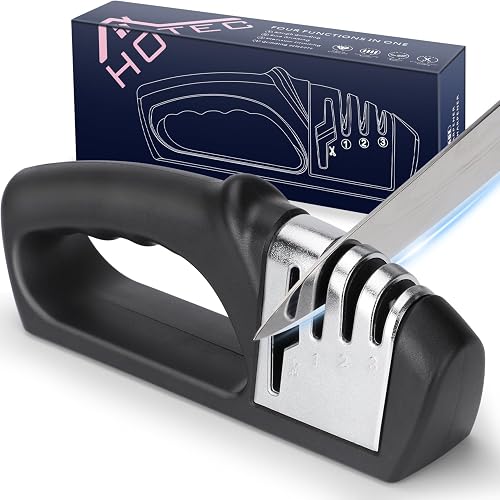
HOTEC 4in1 Knife Sharpener

Narcissus Knife Sharpener Silver
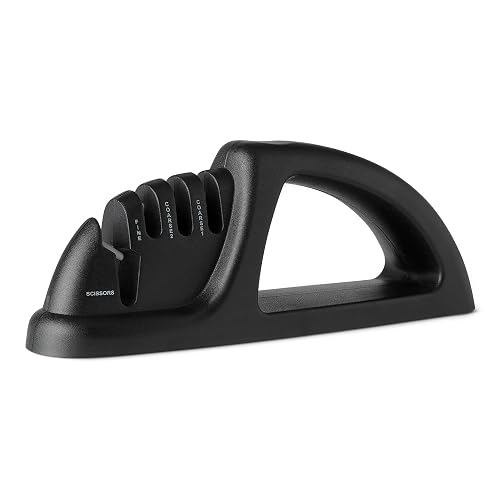
Amazon Basics 4-in-1 Kitchen Knife Sharpener

dskiley Electric Knife Sharpener 3-Stage

lk dog 4-in-1 Kitchen Knife Sharpener
More Details On Our Top Picks
The Bogoni kit leans toward controlled sharpening, not brute force. The rolling format, diamond disc, ceramic disc, and leather strop suit home kitchens that keep a mix of chef knives and pocket knives in rotation, and the 15-degree and 20-degree angle options help separate delicate edges from tougher utility work.
That mix makes sense for households that sharpen occasionally but still want cleaner results than a basic pull-through tool usually gives. The trade-off is setup discipline, since guided sharpening rewards a steady hand and a little patience, and the kit feels most useful for anyone comfortable following a fixed angle.
Strong Points
- Diamond and ceramic discs cover both shaping and finishing.
- 15-degree and 20-degree guides help match common knife styles.
- Leather strop adds a final edge refinement step.
- Works across kitchen and pocket knives, which broadens household use.
- Rolling motion keeps the process more deliberate than rushed.
Points To Note
- Guided sharpening takes a little more attention than a powered option.
- The process suits steady hands better than hurried touch-ups.
Feature Snapshot
Who It Suits Best
Home cooks who want a guided, hands-on sharpener with more control than a basic slot tool fit this kit well.
A Better Fit Elsewhere
Narcissus Knife Sharpener Silver suits busier kitchens that want electric speed and less manual handling.
HOTEC keeps the layout simple, which helps in a busy kitchen where a sharpener should live in a drawer and disappear until needed. The 3-stage knife path, plus the separate scissors slot, gives it a wider day-to-day role than the Bogoni kit, though it gives up some of that kit’s finesse.
Its ceramic stone, tungsten carbide plates, and diamond rods cover the main sharpening stages in a straightforward way. The honest read is that this style suits quick upkeep better than precision hobby work, and that makes it a sensible fit for households that value speed and easy storage.
What We Like
- Three sharpening stages support routine edge maintenance.
- Separate scissors slot adds extra household usefulness.
- Mixed abrasive materials handle different edge needs.
- Manual format stays compact and easy to store.
Room For Improvement
- Manual operation asks for more repeated passes than electric models.
- The design favors convenience over fine angle control.
- Quick touch-ups suit it better than major edge repair.
Core Details
Built With In Mind
Households that want one compact sharpener for knives and scissors will find the HOTEC format easy to live with.
Skip It When
Bogoni Rolling Knife Sharpener Classic Kit is the more fitting choice for anyone who wants guided angle control and a more polished finish.
Electric sharpening changes the pace entirely, and that is the main appeal here. Narcissus uses diamond abrasives for stainless steel and ceramic knives, with a scissors sharpener and a metal dust collection box that keeps cleanup more contained than an open tray setup usually does.
For a home that sharpens often, the faster workflow matters more than a long manual ritual. The trade-off is the usual one for powered sharpeners, less tactile control and more dependence on the machine’s preset path, so this fits best in kitchens that value speed over hand technique.
Highlights
- Electric operation trims the time spent on routine sharpening.
- Diamond abrasives work on stainless steel and ceramic knives.
- Scissors sharpener expands usefulness around the kitchen.
- Metal dust collection box supports neater cleanup.
Softer Spots
- Powered sharpening leaves less room for manual adjustment.
- The electric format takes more counter space than a handheld tool.
Details At A Glance
Whose Shelf It Belongs On
Busy home kitchens and frequent cooks get the most out of the Narcissus model.
Where A Sibling Pick Shines
HOTEC 4in1 Knife Sharpener suits smaller spaces better when a manual tool and scissors slot are enough.
This one keeps the formula familiar, but the nonslip base and included glove make the setup feel more reassuring for a first sharpening routine. In a kitchen where the tool will be set on a counter and used a few times a month, that steadiness matters more than flash.
Compared with HOTEC, the appeal here is less about extra function and more about a tidy, confidence-building layout. The manual structure still asks for attention, yet the glove and base help it feel better suited to cautious users who want a straightforward starting point.
Bright Spots
- Nonslip base helps keep the tool planted during use.
- Safety glove adds an extra layer of handling comfort.
- Four-in-one format keeps the tool versatile.
- Manual design stores easily in a drawer or cabinet.
Minor Gripes
- Manual sharpening still needs patience and a steady rhythm.
- The format suits regular upkeep better than major edge recovery.
Technical Sheet
Made For
First-time manual sharpeners and cautious home cooks will find the Amazon Basics model easy to place in a routine.
Another Choice May Suit
Narcissus Knife Sharpener Silver fits quicker-paced kitchens better, especially where an electric model makes more sense.
The dskiley model is built around a three-stage electric path, so it suits kitchens where older knives need more than a quick touch-up. The 100 percent diamond wheels and 20-degree precision angle point toward repeatable results, and that precision helps keep weekly maintenance from drifting all over the place.
That said, electric convenience usually comes with a firmer shape to the process, and this one is no exception. It feels most sensible for cooks who want restoration, polishing, and routine upkeep in a single station rather than a compact manual tool tucked into a drawer.
Upsides
- Three-stage design supports restore, sharpen, and polish steps.
- Diamond wheels suit harder working edges.
- 20-degree guide helps repeat a consistent angle.
- Electric format cuts down on manual effort.
Areas To Watch
- The electric footprint asks for dedicated counter space.
- Guided operation leaves less room for custom technique.
Quick Facts
Right Fit For
Home cooks who want an electric sharpener for regular restoration work get the most out of the dskiley model.
Look Elsewhere When
Amazon Basics 4-in-1 Kitchen Knife Sharpener makes more sense for a smaller counter and a simpler manual routine.
The lk dog sharpener sits in a familiar middle ground, with tungsten steel and ceramic slots handling the main sharpening stages and a scissors function broadening everyday use. That kind of layout tends to work well in a family kitchen where the tool gets pulled out for more than just knives.
Compared with the more specialized Bogoni and dskiley picks, this one looks like the practical all-rounder in the group. It should suit households that want one tool for routine upkeep, but it does not promise the same angle guidance or electric speed as the more focused options.
Best Bits
- Four-in-one setup handles more than knife edges alone.
- Tungsten steel and ceramic slots cover common sharpening stages.
- Scissor sharpening adds another useful household function.
- Black and red finish gives it a tidy, familiar look.
Small Caveats
- Manual slot use still depends on even pressure and patience.
- The multi-slot design is more general-purpose than specialized.
Feature Rundown
The Right Fit
General household kitchens that need one simple tool for knives and scissors are the strongest match for the lk dog sharpener.
Reach For A Different Pick When
Narcissus Knife Sharpener Silver is the better route for anyone who wants electric speed and a dust collection box.
How To Choose The Right knife sharpeners for kitchen knives
Match The Sharpener To The Knife Angle
Angle control matters more than most people expect. Many kitchen knives are ground around 15 degrees or 20 degrees per side, and a sharpener that guides that angle helps preserve the blade shape instead of grinding it into something vague and uneven.
Rolling systems and guided slots usually help the most here. Manual pull-through tools are faster, but the trade-off is less precision, which can matter on thinner chef knives or ceramic blades that need a steadier path.
Choose The Right Level Of Automation
Electric sharpeners save time in a kitchen that sees daily chopping, trimming, and prep. They suit larger households, rental kitchens, and anyone who wants repeatable results without spending much effort at the counter.
Manual sharpeners stay smaller, quieter, and easier to store. The compromise is obvious, since they ask for more control and a bit more patience, but that simplicity still makes sense for light maintenance or occasional touch-ups.
Look Past The Number Of Stages
Stage count sounds technical, yet the real point is sequence. A coarse step removes wear, a finer step refines the edge, and a polishing stage smooths the finish, so a 3-stage or 4-in-1 layout often covers more than one kitchen problem.
Extra stages are useful only when the household actually needs them. For basic upkeep, a simpler tool can be easier to live with, while older blades or mixed knife sets benefit from more than one abrasive surface.
Think About Storage, Cleanup, And Hand Feel
A compact sharpener fits better in small kitchens, especially where drawer space is tight. Nonslip bases, dust collection boxes, and included gloves are not flashy features, but they shape the day-to-day experience more than a glossy finish ever will.
Cleanup matters too. A tool that sheds less residue or tucks away neatly gets used more often, and that usually matters more than an extra marketing claim on the box.
Things Worth Knowing First
Common Shopping Slip Ups
Many shoppers focus on speed and skip angle control, then end up with a sharpener that feels rough on nicer knives. Another common miss is buying a tool that looks versatile but lacks the abrasive stages needed for genuinely tired edges.
Storage is easy to overlook as well. A large electric unit can dominate a small counter, while a slim manual model may fit better in a drawer and still cover the same household workload.
The Upgrade Payoff
Higher-tier sharpeners usually cost more because they add better abrasive materials, steadier guides, or powered operation. Diamond surfaces, ceramic finishing steps, and more precise angle layouts all raise the build cost, but they also bring smoother control and less guesswork.
The upgrade makes the most sense for frequent cooking, mixed knife collections, and households that want a sharper edge with less trial and error. For light use, a simpler manual sharpener often covers the job without adding clutter or complexity.
Final Thoughts
The strongest choice in this group depends on how the kitchen actually runs. Guided rollers suit careful hands, manual 4-in-1 tools suit compact storage, and electric models earn their place where speed matters most. For most homes, a sharpener that matches the knife angle and the routine will age better than one loaded with features that never get used.
