

Blind corner cabinets waste space until a well-built organizer changes the routine. The right half-moon pullout or swivel tray makes canned goods, spices, and awkward back-corner storage easier to reach without digging through a dark cavity.
This roundup focuses on fit, motion, cabinet opening size, and the details that matter in daily kitchen use. You’ll see which options suit tighter openings, which favor smoother hardware, and which models make the most sense for a full-size cabinet upgrade.
Quick Look At Our Shortlist
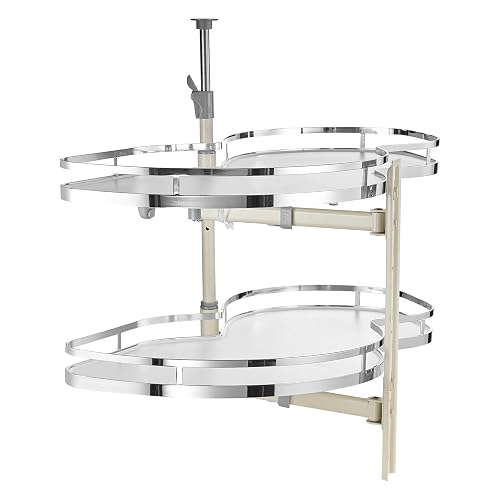
VEVOR Swing Right Blind Corner Cabinet, 2 Tier Adjustable Tray

Hardware Resources 32″ Blind Corner Cabinet Organizer, White Half-Moon Trays

Rev-A-Shelf 32″ Kidney Shaped Dual Tier Lazy Susan, Adjustable Chrome Post
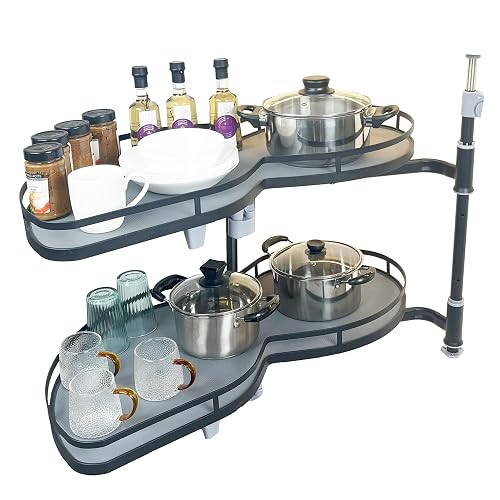
HANKEY Swing Left Blind Corner Cabinet Pull Out Organizer, 2-Tier

Rev-A-Shelf 33″ Pull Out Half Moon Shelves for Blind Corner Cabinets, White

Rev-A-Shelf 33″ Almond Polymer Two-Tier Half-Moon Optimizer, Pivot and Slide Hardware

Rev-A-Shelf 39″ Pullout Half Moon Shelves for Blind Corner Cabinets, White
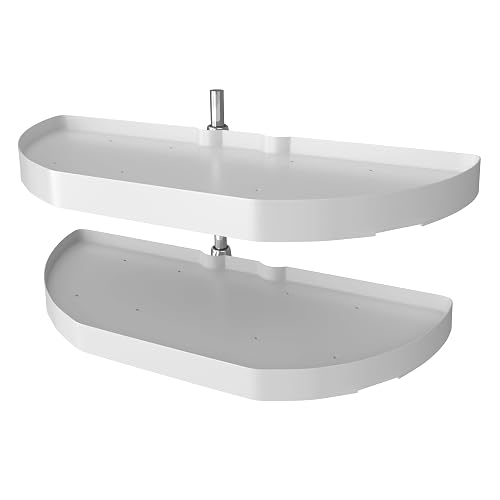
Rev-A-Shelf 31” Pullout Half Moon Shelves for Blind Corner Cabinets, White
More Details On Our Top Picks
A right-opening blind-corner pullout like this matters most in a full-size kitchen where the far cabinet corner usually turns into dead space. The two-tier layout gives you separated storage for tall bottles above and shorter pantry items below, and the height-adjustable trays add a little room for irregular containers.
The soft-close motion suits a busy kitchen better than a clunky pullout, though the trade-off is a more involved install than a simple rotating shelf. You may find it a better match than the Hardware Resources tray system if your cabinet is built around a single right-side access pattern.
Strong Points
- Two levels help separate larger items from smaller everyday staples.
- Height adjustment adds useful flexibility for mixed container sizes.
- Soft-close movement keeps the cabinet feel calmer in daily use.
- Right-open layout suits cabinets built around that swing direction.
Things To Consider
- Cabinet fit matters, so precise measuring comes before anything else.
- Installation calls for more patience than a simple shelf insert.
- The right-open layout does not suit every blind-corner setup.
Feature Snapshot
Who It Suits Best
You get the most from this pick in a larger kitchen with a right-opening blind corner and a mix of tall and short storage items.
A Better Fit Elsewhere
Rev-A-Shelf 31” Pullout Half Moon Shelves for Blind Corner Kitchen Cabinets suits tighter cabinet openings more cleanly, especially in smaller kitchens with less clearance.
Hardware Resources takes a more traditional half-moon route than the swing-style VEVOR unit, and that makes sense for cabinets where simple motion matters more than a flashy mechanism. The polymer trays are meant to pivot in and out independently, so you can reach one shelf without moving the other.
The 11.5-inch opening fit is the number that will matter most in real kitchens, especially in older layouts where blind corners can feel cramped. For everyday pantry storage, that narrower entry can be the difference between a useful retrofit and a frustrating one.
What We Like
- Independent tray movement helps you access stored items in stages.
- Polymer construction keeps the look clean and easy to wipe down.
- Two trays add practical vertical storage without changing the cabinet footprint.
- Left or right cupboard compatibility broadens where it can work.
Points To Note
- The 11.5-inch opening requirement needs careful measuring.
- Polymer is lighter than metal, so it may feel less substantial to some households.
- Cabinet contents need periodic tidying to keep the trays moving smoothly.
Core Details
Whose Shelf It Belongs On
You’ll appreciate this most in a standard blind-corner kitchen where the opening width is already confirmed and you want a straightforward tray system.
Swap It Out When
VEVOR Swing Right Blind Corner Cabinet suits households that prefer a right-side swing mechanism and more adjustable tray positioning.
The kidney-shaped shelves make this one feel closer to a classic corner base cabinet solution than a blind-corner pullout, and that difference matters. You get a dual-tier setup with an adjustable chrome post, which is useful for spice jars, cans, and other small containers that benefit from clear vertical separation.
It suits kitchens that need rotating access more than slide-out reach. The honest read is that this style works best when your cabinet geometry favors a corner base layout, not a true blind corner retrofit like the Hardware Resources or HANKEY picks.
Highlights
- Dual tiers create organized storage for small kitchen staples.
- Rotating access keeps items visible without digging to the back.
- Adjustable chrome post helps the system adapt to cabinet setup.
- Kidney shape uses corner volume efficiently in base cabinets.
Small Caveats
- It fits corner base cabinet use better than blind-corner retrofits.
- Wooden shelves usually need a little more care around moisture and spills.
- Hardware fit can take patience during installation.
At A Glance
Right Fit For
You’re in the best position for this pick when your cabinet is a true corner base and you want rotating shelves rather than a pullout frame.
Reach For A Different Pick When
Hardware Resources 32″ Blind Corner Cabinet Organizer is the cleaner match for a blind-corner kitchen that needs independent swing trays.
HANKEY follows the same blind-corner swing logic as the VEVOR unit, but it’s built for a left-opening cabinet instead of a right-opening one. That direction choice sounds small until you’re standing in a real kitchen, where the wrong swing path can make the whole organizer awkward.
The two-tier slide-out format gives you a clean way to separate pantry items, and the soft-close feature helps the cabinet feel less abrupt in day-to-day use. For a 36-inch left-open cabinet, this is the kind of setup that feels tailored rather than improvised.
Bright Spots
- Left-open orientation suits a specific cabinet layout cleanly.
- Two tiers improve storage sorting for mixed pantry goods.
- Soft-close movement is easier on cabinet hardware in regular use.
- Two-tier access works well in busy households with frequent retrieval.
Honest Caveats
- The left-open setup only works for the correct cabinet direction.
- Installation can feel more involved than a simple shelf insert.
- Cabinet clearances should be checked carefully before ordering.
Details At A Glance
Best Suited To
You’ll like this most in a left-opening blind corner cabinet where soft-close motion and layered storage both matter.
Another Choice May Suit
VEVOR Swing Right Blind Corner Cabinet fits better for right-opening layouts and households that need the mirror-image configuration.
This Rev-A-Shelf model leans into the familiar half-moon pullout format, which is exactly why it works for so many blind-corner kitchens. The included hardware matters because it turns the shelf set into a more complete retrofit, rather than something you have to piece together.
At 33 inches, it sits in the middle of this lineup and gives you a practical balance between footprint and storage reach. For most kitchens, that middle-ground sizing is easier to live with than the wider 39-inch version or the narrower 31-inch option.
Positives
- Included hardware simplifies the upgrade path.
- Two sliding shelves improve access to back-corner items.
- White finish blends into many standard cabinet interiors.
- Midrange sizing offers a versatile cabinet fit.
Areas To Watch
- Half-moon pullouts still depend on careful cabinet measurements.
- Sliding hardware needs proper alignment during installation.
- White surfaces can show scuffs more clearly in heavy use.
Feature Card
The Right Fit
You’ll get the most out of this in a standard blind-corner kitchen that needs a middle-sized, ready-to-install pullout solution.
Skip It When
Rev-A-Shelf 31” Pullout Half Moon Shelves makes more sense for a tighter cabinet opening that can’t comfortably take the 33-inch format.
The pivot-and-slide hardware gives this Rev-A-Shelf unit a more engineered feel than the simpler tray systems earlier in the list. That matters in a cabinet where motion has to stay smooth while still pulling stored items fully out of the blind zone.
The almond polymer finish is a practical detail, not a decorative one, since it keeps the look warmer than stark white while staying easy to match in many interiors. You’ll notice the value most in a 16-1/8-inch blind opening, which is a narrow fit that rewards precise planning.
Reasons To Buy
- Pivot-and-slide hardware creates a more refined access motion.
- Two-tier layout supports better sorting of pantry contents.
- Almond polymer blends well with warm cabinet finishes.
- Narrow opening compatibility helps certain tighter layouts.
Worth Noting
- The 16-1/8-inch opening requirement is specific.
- Precision installation matters more with moving hardware assemblies.
- Polymer surfaces still benefit from regular wipe-downs in kitchen use.
Technical Sheet
Who Should Grab It
You’re in the right lane with this pick when your cabinet opening is narrow, your layout is already measured, and you want a more refined moving system.
Where A Sibling Pick Shines
Hardware Resources 32″ Blind Corner Cabinet Organizer suits households that prefer a simpler independent tray setup over a pivot-heavy assembly.
The 39-inch frame pushes this Rev-A-Shelf option into larger-cabinet territory, which is useful in kitchens with more generous blind-corner dimensions. You get the same two-shelf sliding idea, but stretched across a wider footprint that can hold a more substantial stash of pantry goods.
Because the minimum opening width is listed at 19.25 inches, this is a pick for measured layouts rather than casual retrofits. Compare that to the 31-inch model, and you’ll see why this one suits bigger openings where extra span is the point.
Best Bits
- Wider format suits larger blind-corner cabinets.
- Two shelves support organized storage for bulkier kitchen items.
- White finish fits many cabinet interiors without visual clutter.
- Clear opening-width guidance helps narrow the fit question quickly.
Minor Gripes
- It needs a wider opening than the smaller Rev-A-Shelf option.
- Large formats reward careful measuring before installation begins.
- The bigger span may feel excessive in compact kitchens.
Quick Facts
Built With In Mind
This one suits larger blind-corner cabinets where the extra span is useful and the opening width is already confirmed.
Look Elsewhere When
Rev-A-Shelf 31” Pullout Half Moon Shelves is the cleaner fit for tighter cabinets that need less width and a smaller footprint.
The 31-inch size gives this Rev-A-Shelf pullout a smaller footprint than the 33- and 39-inch versions, which is exactly why it belongs in tighter blind corners. That narrower scale helps in kitchens where you need real access, not a system that crowds the cabinet opening.
The 13.25-inch minimum opening width is the number to watch, and it opens the door for more compact cabinet layouts than some of the broader picks above. For small kitchens, that can be the difference between a practical organizer and a cabinet that stays frustratingly half-used.
Upsides
- Smaller footprint suits tighter blind-corner cabinets.
- Two shelves still give you layered access.
- White finish keeps the cabinet interior looking clean.
- Lower opening-width requirement broadens compatibility.
Room For Improvement
- The smaller size may feel limited in larger kitchens.
- Careful installation still matters for smooth sliding motion.
- White surfaces can show marks sooner in heavy-use cabinets.
Core Details
Perfect Match For
You’ll like this most in a smaller kitchen or a tighter blind corner where a compact organizer makes the most sense.
Not Your Match When
Rev-A-Shelf 39″ Pullout Half Moon Shelves suits larger cabinets that need more span and a wider opening allowance.
How To Choose The Right half moon lazy susans for blind corner
Match The Cabinet Geometry First
Start with the cabinet layout, not the shelf style. A swing-out blind-corner organizer suits a true blind cabinet, while kidney-shaped or pullout half-moon shelves belong in different corner formats.
Opening width matters just as much. A 13.25-inch opening, an 11.5-inch opening, and a 19.25-inch opening each point to very different fit ranges, so the tape measure decides faster than the product photos.
Choose Motion Based On Daily Use
Swing trays help you reach items in stages, which suits households that keep pantry staples in a deep blind corner. Sliding half-moon shelves work better when you want straightforward access and less hardware complexity.
Pivot-and-slide systems bring smoother movement, but the trade-off is a more demanding install. For busy kitchens, the better choice is usually the one that stays easy to live with after the cabinet is closed.
Think About Capacity And Container Shape
Two tiers make a real difference for spice jars, cans, and bottles because they stop the cabinet from becoming one deep stack. Taller items benefit from height-adjustable trays, while smaller items sit more neatly on fixed shelves.
Polymer finishes are easier to wipe down, while wooden shelves bring a warmer look and may ask for a little more care. The better material depends on whether you value quick cleanup or a more furniture-like cabinet interior.
Choose The Right Fit For The Kitchen Layout
Left-open and right-open organizers are not interchangeable, and that detail should sit near the top of your checklist. A mirrored layout choice can save you from a frustrating install that never swings the way your cabinet needs.
For small kitchens, compact models reduce crowding inside the opening. In larger kitchens, wider frames can be worth the extra space because they give you more storage reach without forcing the back corner to stay wasted.
Things Worth Knowing First
Common Shopping Slip Ups
The biggest mistake is measuring the cabinet door opening and forgetting the interior clearance. Another common miss is choosing a left-open or right-open model that points the wrong way for your cabinet.
Hardware details matter too. A unit with included parts can simplify the job, but a larger moving assembly still asks for careful alignment and a little patience.
When Paying More Pays Off
Higher-tier models usually cost more because of the hardware, not just the shelves. Pivot-and-slide mechanisms, soft-close movement, and adjustable tray systems add moving parts that can improve daily convenience.
The upgrade is worth it in a kitchen that sees constant use, especially when the blind corner holds pantry items you reach every day. In a lightly used cabinet, a simpler two-shelf pullout often makes more sense.
Frequently Asked Questions
What size blind corner cabinet do you need for these organizers?
You need to match the organizer to the cabinet opening and the internal layout. The listed products cover different widths, so the opening measurement is the first number to confirm.
Are half-moon shelves better than swing trays?
They solve the same storage problem in different ways. Half-moon shelves favor simple access, while swing trays are better for cabinets built around a moving arm system.
Can left-open and right-open models be swapped?
No, the swing direction has to match the cabinet. A mirrored layout usually means you need the opposite opening side.
Do polymer shelves hold up well in a kitchen?
Polymer is a practical material for cabinet interiors because it’s easy to wipe down. The trade-off is that it may not feel as substantial as wood or metal in your hands.
Which style works best for a narrow cabinet opening?
The smaller Rev-A-Shelf 31-inch pullout suits tighter openings better than the wider models. Narrower fit ranges matter most in compact kitchens where every inch counts.
Closing Thoughts
You get the best results from a half-moon blind-corner organizer when the cabinet fit, opening direction, and motion style all line up with your kitchen. For a straightforward retrofit, the Rev-A-Shelf models keep the decision simple, while VEVOR and HANKEY make more sense for swing-style cabinets with a clear left-or-right layout. The right pick turns a hard-to-reach cabinet into storage you’ll actually use, and that’s the real point.
