

Broken glassware, chipped mugs, and cracked ceramic edges all need a repair that fits the item, not just the damage. The picks below focus on formulas and kits that suit kitchen use, craft repair, and decorative restoration, with attention to clear finishes, water exposure, and heat handling. You also get a split between quick-bond gels, silicone sealant, and kintsugi kits, so you can match the fix to the object on your shelf. That matters most for anyone repairing dishes, bowls, or display pieces that still need to look presentable.
Quick Look At The Shortlist

Porcelain Super Glue Gel 1.75 oz
Ceramic Glue Repair Kit by SWIFFAR

Silicone RTV 4500 Clear 2-Pack
Super Glue Dishwasher and Glass Safe 3g Tube
Ceramic Glue Repair Kit 30g by Vigorder
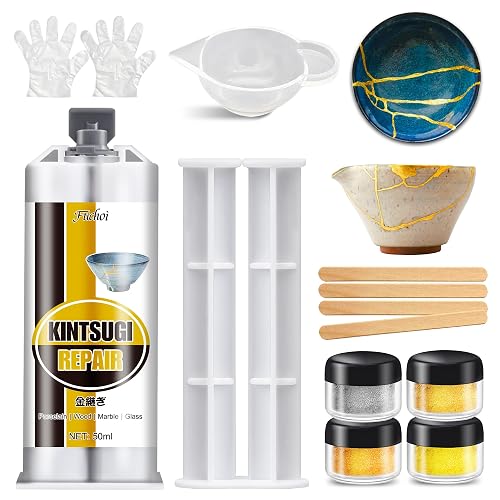
Fuchoi Kintsugi Repair Kit Gold and Silver 50ml
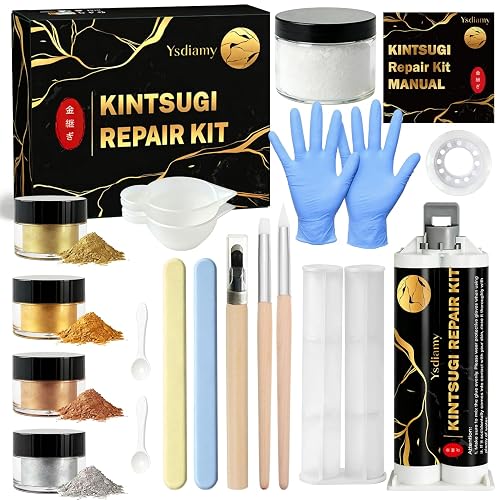
Ysdiamy Kintsugi Repair Kit with Gold Powder
More Details On Our Top Picks
Gel format matters here because it gives you more control on a chipped mug handle or a vertical plate edge, where thin liquid glue can run. The anti-clog cap is a real convenience for occasional repair jobs, and the clear finish keeps the seam from calling attention to itself. For kitchen pieces that still need to look tidy, that balance is the point.
The trade-off is simple, gel glues are usually about precision and surface contact, not gap spanning on large missing sections. You may also find the small bottle better suited to targeted fixes than repeated shop use. Compared with the broader-purpose ATLASBOND pick, this one feels more focused on neat ceramic touch-ups.
Strong Points
- Gel texture helps you place adhesive neatly on curved or upright surfaces.
- Clear finish suits dishes and mugs that stay in view on the table.
- The anti-clog cap supports longer storage between small repair jobs.
- Heat and water resistance suit everyday kitchen handling better than basic craft glue.
Things To Consider
- The 1.75 oz bottle is better for spot repairs than frequent large projects.
- Gel adhesive works best on tight-fitting breaks, not wide missing sections.
- Cleanup still calls for care, since cured cyanoacrylate leaves little room for mistakes.
Feature Snapshot
Who It Suits Best
That belongs in your cabinet if you want a tidy adhesive for chipped ceramic, glass rims, or small decorative fixes around the kitchen.
A Better Fit Elsewhere
Vigorder Ceramic Glue Repair Kit 30g suits you better for larger repair stacks or repeated household fixes that need more material on hand.
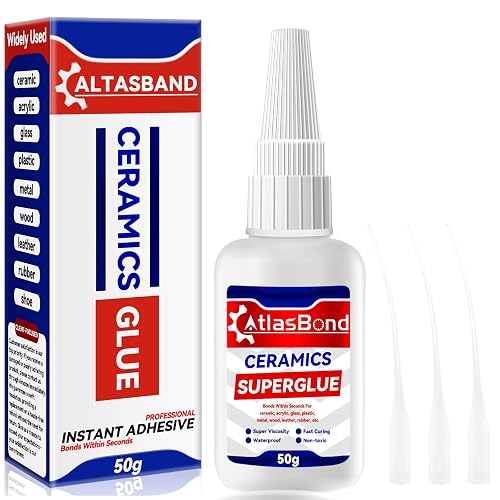
ATLASBOND casts a wider net than the gel-only KRAFTPROTZ option, which helps around the house when one repair project spills into another. The listing points to porcelain, pottery, china, wood, glass, plastic, shoes, and crafts, so you get a glue kit that fits more than one job type. That breadth can be useful in a busy home workshop, provided you are comfortable choosing the right application for each material.
The honest read is that multi-material strength is useful, but it also means you need to keep the seam size and surface shape in mind. It suits a shelf of mixed repair tasks, from mug chips to a cracked small accessory, though specialty users may still prefer a more focused formula. Compared with SWIFFAR, this one puts broader compatibility ahead of a narrower repair profile.
What We Like
- Covers several common household materials, which cuts down on separate bottles.
- Clear adhesive finish helps visual repairs stay discreet on shelves or tables.
- Useful for mug and dish restoration, plus light craft work.
- The kit format makes it easier to keep a repair option ready at home.
Softer Spots
- Broad compatibility does not replace the need to match the glue to the break.
- You may prefer a more focused formula for repeated dishware-only repairs.
- Visible repairs still benefit from careful alignment before the bond sets.
Core Details
Who Should Grab It
You get the most from this pick in a mixed-use home where ceramic, glass, and hobby repairs all share the same bench.
Another Choice May Suit
Sil-Bond Silicone RTV 4500 fits better for you if the job calls for a sealant with more flexibility around seams and food-contact surfaces.
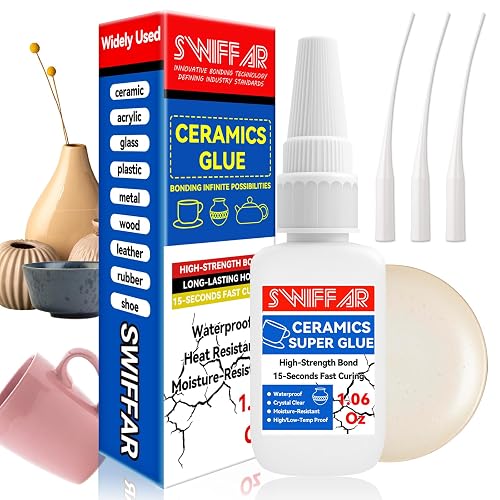
SWIFFAR sits in a useful middle ground for mug and porcelain repairs, especially where you want a clear bond and practical moisture resistance. The quick-drying claim matters in real homes because a repaired cup or dish often needs to return to storage without sitting around for long. Compared with the more general ATLASBOND kit, this one feels better aligned to focused ceramic work.
There is still a trade-off, because fast-setting glue leaves less room to reposition a crooked seam. That makes careful alignment the main skill, not force. For people repairing everyday kitchen pieces, that tends to be enough, and the waterproof and heat-resistant notes add confidence for regular use.
Highlights
- Clear finish works well for visible cup and plate repairs.
- Quick-drying behavior suits small jobs that need to return to use soon.
- Waterproof and heat-resistant notes match kitchen conditions better than basic craft glue.
- The repair-kit format suits routine household fixes without much setup.
Areas To Watch
- Fast drying leaves less time for seam adjustment.
- Focused ceramic use means it is less of a general-purpose household adhesive.
- Visible repairs still benefit from patient surface prep and close fit.
Details At A Glance
Built With In Mind
You get the most from this kit in a home that needs tidy ceramic fixes without turning the repair into a weekend project.
Look Elsewhere When
Fuchoi Kintsugi Repair Kit Gold and Silver suits you better if you want the repair to become part of the decor, not disappear into it.
Sil-Bond takes a different path from the cyanoacrylate glues above, because silicone sealant stays flexible after curing, which matters around seams and joined edges. That flexibility can help in a kitchen setting where the joint sees movement or repeated contact, and the clear finish keeps the bead visually quieter. For food-contact surfaces, the name itself tells you this one is meant for a more specific job than a tiny ceramic chip.
The trade-off is that sealant is not the same as a thin glue, so you should expect a more deliberate application and a cleaner seam line. It suits people sealing rather than spot-bonding, and the two-pack format is handy for multi-step projects. Compared with KRAFTPROTZ and SWIFFAR, it offers a different repair feel, more gasket-like than brittle.
Best Bits
- Silicone body keeps some flex after curing, which helps on seams.
- Clear color works well where you want the repair to stay subdued.
- Two tubes give you more coverage across separate repair jobs.
- Food-contact safe labeling makes it a logical choice for kitchen sealing tasks.
Points To Note
- Sealant behaves differently from instant glue, so application takes more care.
- It suits seams and joints better than tiny decorative chips.
- Tube-based sealant can be messier to store once opened.
Technical Sheet
Whose Shelf It Belongs On
This belongs with you if your repair work is about sealing, joining, or handling kitchen seams rather than patching a tiny break.
Swap It Out When
Super Glue Dishwasher and Glass Safe 3g Tube is the tighter fit for you when the job is a small, fast glass repair rather than a flexible seal.
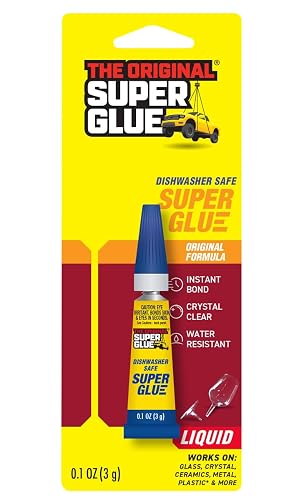
This tiny tube is built for the kind of repair that happens when a glass edge chips or a small household item needs a fast fix. The dishwasher-safe and glass-safe notes make it stand out from the more craft-oriented options, since you are dealing with a repair that may see regular washing. The compact size also makes sense in a drawer or toolbox where space is limited.
The limitation is obvious, because a 3g tube is for focused use, not a long repair list. That said, compact packaging often helps with freshness and storage control, especially for occasional maintenance. Compared with the bigger Vigorder kit, this one suits a smaller, more immediate job.
Reasons To Buy
- Glass-safe use case makes it relevant to a glass repair shelf.
- Dishwasher-safe note matters for kitchen pieces that get washed often.
- Small tube fits easily in a utility drawer or travel repair pouch.
- Simple format works well for fast, low-fuss fixes.
Minor Gripes
- 3g capacity is limited for larger household projects.
- Small packaging rewards careful storage after opening.
- Focused use means it is less flexible than a broader repair kit.
Quick Facts
Made For
You will like this most for small, tidy repairs on glass items that need to return to regular kitchen use.
Reach For A Different Pick When
ATLASBOND Ceramic Glue by ATLASBOND is the better fit for you when the repair bench also includes porcelain, pottery, and mixed household materials.
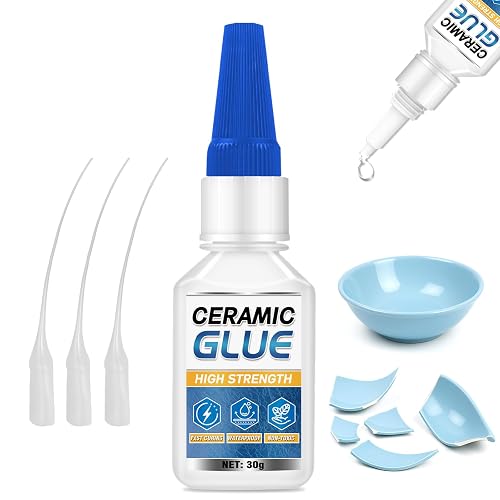
Vigorder leans into volume, and that matters once you start handling repeat chips, cracked handles, or multiple pieces around the house. The 30g size gives you more material to work with than the small tube above, so it fits a household that keeps finding new repair jobs. The waterproof and high-temperature notes also make it a practical match for kitchenware that sees heat and regular washing.
The trade-off is that larger kits can feel less minimal for someone repairing one cup and moving on. Storage also matters, because a bigger adhesive container deserves a dry, tidy spot once opened. Compared with the more decorative kintsugi kits, this one is about plain restoration first, not visible artistry.
Plus Points
- 30g size gives you more room for repeat household repairs.
- Waterproof and high-temperature notes fit common kitchen use.
- Useful on pottery, porcelain, mugs, dishes, and glass.
- Good fit for homes that want one adhesive on hand for several break types.
Room For Improvement
- The larger size is less compact than a travel-friendly tube.
- Plain repair focus means it lacks the decorative appeal of kintsugi kits.
- Stored glue works best when you keep the cap and nozzle clean.
Feature Rundown
Right Fit For
You will get the most from this one in a home where repair work happens often enough to justify a larger bottle.
Where Another Pick Shines
Super Glue Dishwasher and Glass Safe 3g Tube is the better match for you when you only need a compact adhesive for one-off glass fixes.
Fuchoi changes the goal of the repair, because the crack becomes part of the visual story instead of something to hide. The gold and silver finish leans into kintsugi, a Japanese repair style that highlights breaks with metallic lines, so it suits keepsakes, display bowls, and meaningful gifts. For a beginner who wants the process to feel guided rather than purely technical, that kind of framing can be reassuring.
The practical trade-off is that decorative repair asks for a different mindset than a plain invisible fix. You are choosing presentation as much as bond strength, so this is better for pieces you value emotionally or visually. Compared with the plain SWIFFAR kit, it is the more expressive route.
Bright Spots
- Gold and silver finish creates a decorative repair look.
- Food-safe adhesive note keeps it relevant to dishware and bowls.
- Kintsugi style suits meaningful keepsakes and display pieces.
- 50ml size gives you room for several decorative projects.
Small Caveats
- Decorative repair is a different goal from a hidden seam.
- The style may not suit every kitchen piece you want to return to plain use.
- Presentation-focused work rewards patience and tidy setup.
Core Details
Best Suited To
This fits you best when the piece has sentimental weight and you want the repair to feel intentional, not invisible.
Skip It When
SWIFFAR Ceramic Glue Repair Kit by SWIFFAR is the cleaner choice for you if the repair should disappear into the item rather than become a feature.
Ysdiamy is the most complete craft-minded option in this group, because it leans into the full kintsugi process instead of just providing adhesive. That makes sense for adults or beginners who want a guided restoration project for ceramic pieces, glass, porcelain, or jade. The gold powder detail helps the seam read as part of the final object, which gives the repair a more finished look.
The trade-off is that complete kits ask for more time and a bit more patience than a plain tube of glue. They make sense for display pieces, gifts, and cherished dishware, less so for a quick kitchen fix before dinner. Compared with the Fuchoi kit, this one feels more like a full project set than a decorative adhesive alone.
Standout Traits
- Complete kintsugi format gives you a more guided repair project.
- Gold powder adds a polished decorative look to visible seams.
- Works across ceramics, glass, porcelain, and jade.
- Good for beginners who want structure, not a bare adhesive tube.
Honest Caveats
- Complete kits take more setup than simple glue-only options.
- Decorative restoration fits keepsakes better than everyday utility items.
- More parts in the kit mean more pieces to store neatly.
Feature Card
Perfect Match For
You should place this on your shortlist if you want the repair itself to feel like part of the finished object.
Where A Sibling Pick Shines
Super Glue Dishwasher and Glass Safe 3g Tube is the better fit for you when speed and simplicity matter more than decorative presentation.
How To Choose The Right food safe glues for glass
Match The Bond To The Job
Start by separating spot bonding from sealing. Cyanoacrylate glue, the fast-bonding type used in several picks here, works well on tight breaks and small chips, while silicone sealant is the better fit for seams that need flex. That distinction matters in a kitchen because a mug handle and a sink edge do not ask for the same behavior.
Clear formulas help visible pieces stay tidy, but appearance should follow function. A decorative kintsugi kit makes sense for display ware, while a plain gel glue fits everyday dishware that needs to look discreet. The right choice usually comes down to the shape of the break and how the item lives in your home.
Pay Attention To Water And Heat Notes
Dishwasher-safe, waterproof, and heat-resistant claims point to different stress points, so read them as use cues rather than interchangeable labels. A dinner plate that gets washed often needs different handling from a vase or serving bowl. For glass and ceramic items used near hot water or warm food, those notes are more relevant than a flashy bottle size.
Silicone sealant usually brings more flexibility, while a super glue gel brings tighter, less forgiving bonds. Neither is automatically better. The fit depends on whether the repair needs to stay rigid, bend a little, or simply hold a clean seam.
Think About Size, Storage, And Repeat Use
Small tubes suit occasional touch-ups and compact drawers, especially when you only repair one item at a time. Larger kits make more sense for a home that sees regular breaks or multiple craft projects. Storage also matters, because adhesive tends to perform best when the cap, nozzle, and tube stay clean.
For beginners, a complete kit can lower friction because it packages the repair process more clearly. For more experienced hobbyists, a plain adhesive may be easier to control and less cluttered on the bench. Your best match is the one that fits both the break and the way you like to work.
Things Worth Knowing First
Common Shopping Slip Ups
One common mistake is choosing a strong adhesive without checking whether the item needs flexibility. Another is buying a decorative kintsugi kit for a hidden repair, where a plain clear bond would be more appropriate.
Shoppers also overlook storage and tube size. A tiny 3g tube works nicely for quick fixes, but it can feel short on supply once multiple chips show up around the house.
What The Higher Tier Buys
More complete kits usually cost more because they include extra materials, not just adhesive. Gold powder, multi-part restoration contents, or larger fill volumes add convenience and presentation value.
The upgrade makes sense for keepsakes, display ceramics, or repeated household repairs. For a single chip on a glass or mug, a simpler tube often does the job without extra clutter.
Frequently Asked Questions
Can food safe glue be used on drinking glasses?
Yes, some formulas are built for glass repairs, but the product page should clearly mention glass use. A tiny, clean break is the easiest kind of repair to manage.
What is the difference between glue and sealant?
Glue is usually for bonding two surfaces tightly together, while sealant is meant to fill and cushion seams. Silicone sealant also stays flexible after curing.
Are kintsugi kits only for decoration?
They are mainly about visible restoration, so the seam becomes part of the look. That makes them a strong fit for keepsakes and display pieces.
Does dishwasher-safe mean every repair is suitable for hot wash cycles?
No, the item shape, break size, and cure quality still matter. The label points to better wash tolerance, not a universal fix.
Which option suits a beginner best?
A complete kintsugi kit is often the easiest starting point for a guided project. A simple clear gel is better for a small, plain repair.
Final Thoughts
Your best match depends on whether the repair should disappear, stay flexible, or become part of the object’s look. For plain kitchen fixes, the gel glues and compact tubes keep things straightforward. For seams and display pieces, silicone sealant and kintsugi kits bring a different kind of value. Pick the formula that suits the item on your counter, not the idea of a repair in general.
