

Propane grill griddles make sense for breakfasts on the patio, smash-style burgers, and batch cooking that would otherwise crowd a skillet. The right plate needs enough surface area, steady heat retention, and a shape that fits the grill you already own. Cast iron brings heft and heat hold, while coated aluminum keeps the setup lighter and easier to handle. The trade-off sits between maintenance and convenience, so the best choice depends on how often the griddle stays on the cooker and how much cleanup fits the routine.
The Shortlist At A Glance
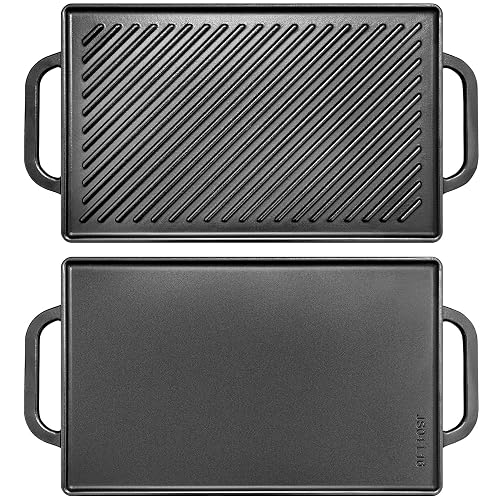
GGC Cast Iron Reversible Griddle 13 x 8.25 Rectangular
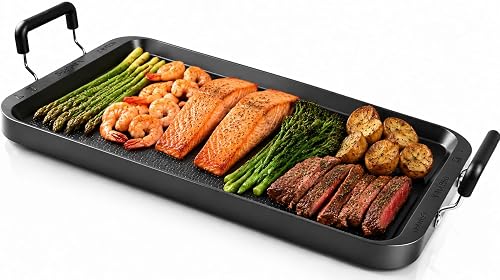
Stove Top Griddle for Gas Stove 17 Warp-Resistant Double Burner Griddle Pan

EWFEN Reversible Grill Griddle 16.7×9.5 Pre-Seasoned Cast Iron

Utheer 25×16 Nonstick Cast Iron Griddle for Gas Grill

GGC Reversible Cast Iron Griddle 16.5 x 9.5 Rectangular
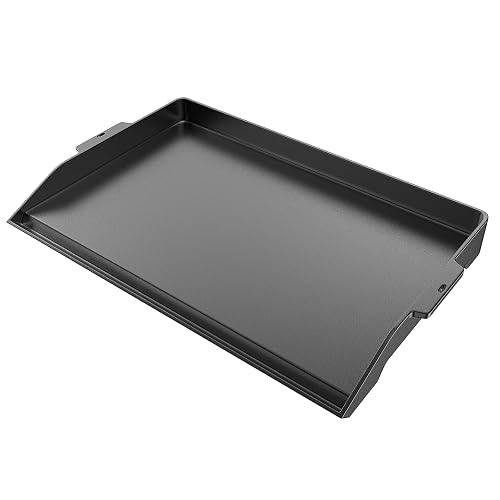
Utheer 23 x 16 Cast Iron Griddle for Gas Grill and Stove Top Flat Top
More Details On Our Top Picks
A 13 by 8.25 inch footprint keeps this GGC plate aimed at smaller gas grills, backyard burners, or a stove-top backup that does not swallow the cooking zone. The reversible layout gives one flat side for eggs and sandwiches, plus a ribbed side that leaves sear marks on meats and vegetables.
Cast iron holds heat well, so the surface suits steady breakfast runs and short-order cooking in a busy kitchen or on a tailgate. The honest trade-off is weight and care, since cast iron rewards dry storage and seasoning discipline more than hurried cleanup.
Strong Points
- Reversible design adds two cooking surfaces in one plate.
- Compact size fits tighter grill layouts without crowding burners.
- Cast iron’s heat retention helps keep pancakes and eggs more even.
- Ribbed side supports grill-style marks on smaller portions.
Small Caveats
- Hand care matters, especially after greasy cooks.
- Smaller footprint limits batch cooking for larger groups.
- Heavier than coated-aluminum options, so storage takes a bit more effort.
Feature Snapshot
Who It Suits Best
Compact gas grills, apartment patios, and occasional breakfast cooks fit this plate well.
A Better Fit Elsewhere
GGC Reversible Cast Iron Griddle 16.5 x 9.5 Rectangular suits households that want more width without stepping up to a very large outdoor surface.
Vayepro takes a lighter path here, using aluminum instead of cast iron, so the panel should feel easier to move from the stove to the counter or out to a campsite. The double-burner span is the key feature, since wider coverage helps with pancakes, bacon, and breakfast-for-several cooking without constant rotation.
Ceramic nonstick surface treatment changes the ownership rhythm, because cleanup tends to be simpler than with raw iron and lower-oil cooking feels more practical for fast weekday meals. The compromise sits in heat feel, since coated aluminum usually offers less of the heavy, slow warmth that cast iron brings in picks like the GGC plates.
Upsides
- Wide format covers two burners for fuller cooking space.
- Aluminum construction keeps handling easier than heavier cast iron.
- Ceramic nonstick finish supports lower-stick cooking and simpler wipe-downs.
- Fits breakfasts, camping kits, and casual indoor meals with the same surface.
Worth Noting
- Lightweight build usually gives up some heat mass versus cast iron.
- Coated surfaces deserve gentler utensils and cleaning habits.
Core Details
Built With In Mind
Busy weeknight cooks, campers, and anyone who wants a lighter griddle for regular movement should look here first.
Where A Sibling Pick Shines
EWFEN Reversible Grill Griddle 16.7×9.5 Pre-Seasoned Cast Iron fits cooks who want heavier heat retention and a more traditional iron feel.
Cast iron is the point here, and EWFEN leans into that with a reversible 16.7 by 9.5 inch format that suits a propane grill, oven, campfire, or stovetop. The handles matter in real use, because moving a hot iron plate from burner to serving area is less awkward with a proper grip point.
Pre-seasoned iron usually shortens the setup step and gives the cooking surface a head start for eggs, toast, and hard sears once the seasoning layer builds with use. The trade-off is familiar cast-iron upkeep, so this suits cooks who do not mind drying, oiling, and occasional maintenance.
Best Bits
- Reversible layout broadens the menu from breakfast to grilled proteins.
- Handles make repositioning easier in a hot cooking area.
- Pre-seasoned finish reduces the first-use prep burden.
- Cast iron rewards patient cooks with steady heat behavior.
Areas To Watch
- Weight is part of the package, so storage and lifting take planning.
- Cast iron asks for routine care after washing.
- Large enough for two burners, though not as broad as the biggest plates in this list.
Technical Sheet
Whose Shelf It Belongs On
Experienced home cooks, campsite cooks, and anyone who prefers cast iron over coated cookware will find the fit strongest here.
Another Choice May Suit
Vayepro Stove Top Griddle for Gas Stove 17 Warp-Resistant Double Burner Griddle Pan works better for lighter handling and lower-maintenance cleanup.
A 25 by 16 inch surface changes the mood of a cookout fast, because this Utheer plate gives room for burgers, breakfast stacks, and party food without constant shuffling. The ceramic surface is meant to cut sticking and reduce oil use, while the cast iron base keeps the whole thing anchored with more heat mass than thin stamped cookware.
That size suits tailgates and larger patio sessions, although the scale asks for a grill with enough support space underneath. Cleaning should stay manageable for a coated surface, but the broader footprint also means more surface to dry and store after the meal ends.
Highlights
- Large cooking area works well for groups and mixed menus.
- Cast iron base supports steady heat across a broad span.
- Ceramic surface helps with food release and lighter oil use.
- Useful for tailgating, parties, and busy backyard cooking.
Points To Note
- Large dimensions require a grill with enough room to support it safely.
- Storage takes more cabinet or rack space than the smaller GGC plates.
- Surface care matters to preserve the nonstick layer.
Details At A Glance
Right Fit For
Large patios, tailgaters, and families that cook in batches will get the most from this oversized layout.
Look Elsewhere When
GGC Cast Iron Reversible Griddle 13 x 8.25 Rectangular is the calmer choice for compact grill spaces and lighter storage needs.
This GGC version sits in a comfortable middle zone, with a 16.5 by 9.5 inch footprint that feels easier to fit than the larger Utheer plates but less cramped than the tiny 13 inch model. The reversible surface lets the same pan handle flat breakfast work and ribbed grilling, which keeps it useful across seasons and cooking styles.
For most home grills, that balance matters more than raw size, since a mid-size griddle is less likely to overpower the grate area or force awkward burner spacing. Cast iron still means added weight and routine seasoning care, so the payoff favors cooks who want a long-term piece rather than a grab-and-go pan.
Positives
- Middle-size format fits a wide range of propane grill layouts.
- Reversible design expands the menu without adding extra cookware.
- Cast iron supports strong heat retention for better browning.
- Useful for both stovetop backups and outdoor sessions.
Room For Improvement
- Heavier than coated-metal options, so lifting takes more effort.
- Needs the usual cast-iron care after washing and drying.
- Not as expansive as the biggest party-sized griddles in this list.
Core Details
The Right Fit
Home cooks who want a balanced iron plate for weeknight meals and weekend grilling will find the fit strong here.
Where A Sibling Pick Shines
Utheer 25×16 Nonstick Cast Iron Griddle for Gas Grill suits larger gatherings where extra surface area matters more than compact storage.
The 23 by 16 inch layout makes this Utheer plate feel built for crowd-sized cooking, and the X-shaped reinforcing ridges suggest a sturdier underside than many flatter griddle designs. Pre-seasoned iron with a nonstick coating gives it a more finished feel out of the box, which suits backyard hosts who do not want much startup fuss.
That same scale also changes the ownership story, because a large flat top needs room in storage and enough burner support to sit well on the grill. Compared with the smaller GGC cast-iron pieces, this one is the obvious step up for bigger meals, but the size is more than many casual cooks need.
Reasons To Buy
- Large surface supports batch cooking for parties and camping meals.
- X-shaped reinforcing ridges add a structural detail that stands out.
- Pre-seasoned nonstick coating reduces initial setup work.
- Cast iron helps hold heat during long cooking sessions.
- Works across grill and stove-top use, so it earns cabinet space.
Minor Gripes
- Size may feel excessive for smaller patios or solo cooking.
- Heavier format asks for careful lifting and storage.
- Coated cast iron still benefits from gentle cleaning habits.
Feature Card
Made For
Hosts, tailgaters, and campers cooking for several people at once will get the clearest value from this oversized plate.
Swap It Out When
Vayepro Stove Top Griddle for Gas Stove 17 Warp-Resistant Double Burner Griddle Pan makes more sense for lighter handling and smaller storage spaces.
How To Choose The Right griddles for propane grill
Surface Size And Burner Coverage
Surface area sets the tone. A compact plate, such as the GGC 13 by 8.25 inch model, suits breakfast duties and smaller grill frames, while 23 by 16 inch surfaces make sense for crowd cooking and side-by-side batches.
Burner coverage matters just as much. A double-burner griddle bridges heat zones more smoothly, which helps keep pancakes, hash browns, and burgers moving in the same session.
Material, Heat Hold, And Care
Cast iron stores heat and resists temperature swings, so it works well for searing and steady browning. The trade-off is weight, plus seasoning and drying discipline after washing.
Coated aluminum or ceramic-coated surfaces feel lighter and easier to clean. They usually fit casual cooks who want quick setup and less maintenance, even though they give up some heat mass.
Flat Side, Ribbed Side, Or Both
Reversible plates add flexibility without taking more storage space. Flat sides suit eggs, pancakes, tortillas, and sandwiches, while ribbed sides leave grill marks on vegetables and meats.
That flexibility helps in mixed-use households where the same griddle may handle weekday breakfasts and weekend barbecue. A single-purpose flat top can still work, but the reversible route stretches usefulness.
Weight, Storage, And Handling
Large cast-iron griddles ask for planning. Handles, smaller footprints, and manageable thickness can matter just as much as cooking area, especially in tight patio cabinets or RV storage.
A lighter aluminum or coated option may be easier to move in and out of the house. The better choice depends on whether the griddle stays parked on the grill or rotates in and out of storage often.
Things Worth Knowing First
Common Shopping Slip Ups
One common mistake is choosing by length alone and forgetting burner layout. A plate can look spacious on paper and still sit awkwardly on a real grill.
Another miss is ignoring upkeep. Cast iron asks for drying and seasoning, while coated surfaces need gentler cleaning to stay in shape.
What The Higher Tier Buys
More expensive models usually bring larger surfaces, added reinforcement, or more refined coatings. Those extras matter for hosts who cook often and want less compromise from the first use.
The upgrade pays off most for households that grill several times a week or cook for groups. Casual weekend use can stay comfortably in the midrange, where size and care stay more manageable.
Final Thoughts
The strongest griddle choice comes down to fit, not flash. The GGC compact plate suits smaller grills, the Vayepro keeps handling easy, and the larger Utheer models make sense for heavier meal loads. Cast iron still anchors the category because it holds heat so well, but coated surfaces earn their place through simpler day-to-day use. A clear match here saves frustration later, and that matters more than chasing extra square inches.
