

Commercial steamers for food solve a simple problem: holding portions hot, presentable, and ready to serve without crowding the pass or overcomplicating service. That matters in cafeterias, catering setups, buffet lines, and kitchens that need steady output through a long shift. The six picks below cover portable steam tables, display warmers, and a compact stovetop steamer for smaller-scale prep.
Quick Look At The Shortlist

Winco FW-S500 Commercial Portable Steam Table Food Warmer

VEVOR 5-Tier Commercial Food Warmer Display
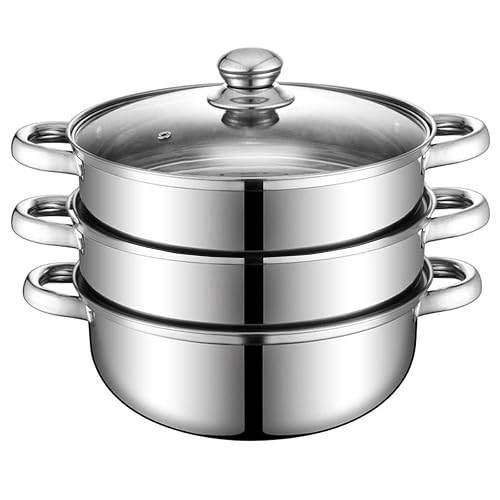
Steamer Pot for Cooking 11 inch Steamer Pot

VEVOR Commercial Food Warmer, 8 Pans + 2 Pots

ROVSUN 72QT Electric Commercial Food Warmer 1500W

3-Pan Commercial Food Warmer 1500W Stainless Steel
More Details On Our Top Picks
Winco’s portable steam table makes sense in service lanes that need a straightforward holding station rather than a showpiece. Stainless steel helps with wipe-downs after a rush, and the full-size pan fit keeps the layout familiar for standard buffet pans. The trade-off is simple: portability usually brings a more utilitarian feel than a fixed built-in unit.
For catering crews and cafeteria lines, that portability can save time during setup and teardown. The 1200W output points to steady heat support for held dishes, not a dramatic cooking role. One thing worth considering, though, is that large portable warmers can still demand decent counter or floor space once pans and lids are in place.
Strong Points
- Stainless steel construction suits repeated wipe-downs after service.
- Full-size pan compatibility keeps buffet planning simple.
- Portable format works well for temporary serving stations.
- 1200W output supports steady hot holding for line service.
Things To Consider
- Portable gear can feel less anchored than fixed steam tables.
- Large footprint may challenge tighter prep counters.
- The industrial look is plain rather than decorative.
Feature Snapshot
Who It Suits Best
Catering crews, cafeterias, and buffet operators that need a portable, standard-layout holding unit fit this model well.
Where A Sibling Pick Shines
VEVOR Commercial Food Warmer, 8 Pans + 2 Pots suits larger, busier service lines that need more holding space than the Winco FW-S500.
The 5-tier layout gives this VEVOR display a very different job from the Winco unit above, because presentation matters here as much as holding heat. LED lighting and an adjustable shelf make the cabinet easier to arrange for burgers, pizza slices, breads, and fried items in a front-of-house setting. The stainless steel frame keeps the look businesslike, not flashy.
The temperature range from 86°F to 230°F suggests a broad holding window for a display case, and the 120L chamber gives it a useful amount of room for small-format service. For café counters, concession stands, and self-serve lines, that combination can be handy. The honest read is that the display format fits visibility-focused service better than back-of-house bulk holding.
Highlights
- Five-tier layout improves vertical merchandising on the counter.
- LED lighting helps food remain visible in service areas.
- Adjustable shelf supports different tray heights and portions.
- 120L capacity offers room for mixed display items.
- Stainless steel frame suits frequent wipe-down routines.
Room For Improvement
- Display-first design is less suited to bulk kitchen holding.
- The cabinet style may need more counter planning than open steam tables.
- Front-of-house use usually calls for regular glass and surface cleaning.
Core Details
Built With In Mind
Counter-service operators, concession setups, and display-heavy food stations are the clearest fit for this warmer.
Look Elsewhere When
Winco FW-S500 Commercial Portable Steam Table Food Warmer is the better choice for crews that need a simpler open-top holding table instead of a display cabinet.
This one is a different sort of steamer altogether, because it’s cookware rather than a powered holding unit. The 3-tier layout is useful for vegetables, dumplings, stock, and sauces in a home kitchen or a small prep space, and the 18/8 stainless steel construction points to a familiar, easy-to-maintain material. For smaller operations, it keeps the process compact and direct.
The 11-inch size makes more sense for batch cooking than for buffet service, so it sits apart from the larger electric warmers in this list. That trade-off is the point: less capacity, less floor presence, and far more versatility on a stovetop. It fits kitchens that want steam cooking without bringing in a dedicated commercial cabinet.
Upsides
- Three-tier setup allows separate steaming in one stack.
- 18/8 stainless steel is a familiar durable cookware material.
- 11-inch format suits compact stovetops and smaller prep areas.
- Lid inclusion helps retain steam during cooking.
Softer Spots
- Cookware format does not replace a heated serving station.
- Smaller capacity limits bulk buffet use.
- Stovetop operation depends on the cooktop already in place.
At A Glance
Right Fit For
Home cooks, small prep kitchens, and batch-style stovetop cooking make the best match for this pot.
Another Choice May Suit
3-Pan Commercial Food Warmer 1500W Stainless Steel is the more direct pick for catered service or counter holding.
Among the powered warmers here, this VEVOR setup feels built for heavy service rather than casual holding. Eight pans plus two pots create a broad serving matrix, and the 1800W rating suggests it’s aimed at busier buffet lines, banquets, and catering events. The protective shield, undershelf, wheels, and replaceable 1/1 pan point to a service-first layout.
The wheels matter more than they sound, especially in facilities where the line changes by the hour or the room gets reset between shifts. Stainless steel should keep cleanup manageable, though a unit this large usually asks for more storage planning and more floor discipline. Compare that to the Winco FW-S500, and this one clearly leans into volume over portability.
Reasons To Buy
- Eight pans and two pots support mixed menu holding.
- 1800W output suits busier catering and buffet demand.
- Wheels help with repositioning during setup and cleanup.
- Protective shield adds a practical service barrier.
- Undershelf creates useful storage under the main deck.
Minor Gripes
- Larger footprint needs more room than compact warmers.
- High-capacity setups usually take longer to organize.
- Best fit is clear, but it is not the most portable option.
Details At A Glance
Whose Shelf It Belongs On
Caterers, banquet teams, and high-volume buffet operators are the clearest match for this warmer.
Skip It When
Winco FW-S500 Commercial Portable Steam Table Food Warmer makes more sense for smaller teams that need an easier moving footprint.
ROVSUN takes the buffet formula and leans into presentation, with an acrylic shield and stainless steel Bain Marie layout that suit self-serve service. Nine pans plus an overshelf and undershelf create a fuller station than the smaller two- or three-pan options in this list. For restaurant buffets, that extra organization can make the line feel calmer and more ordered.
The 72QT capacity and 1500W power place it in a middle zone between the lighter Winco portable unit and the heavier VEVOR 8-pan setup. That middle ground is useful for operators who need real holding capacity without jumping straight to the largest footprint available. The catch is that more structure usually means more surfaces to maintain, especially around the shield and shelf areas.
Best Bits
- Nine-pan layout supports a broad buffet spread.
- Acrylic shield helps define the serving line.
- Overshelf and undershelf improve station organization.
- 72QT capacity gives room for restaurant-scale service.
- 1500W rating suits steady hot holding.
Areas To Watch
- More structure means more surfaces to clean.
- Large station setup takes planning on smaller counters.
- Does not pivot to portability like the Winco option.
Spec Overview
Made For
Restaurant buffets, self-serve counters, and organized catering stations fit this model well.
Reach For A Different Pick When
VEVOR Commercial Food Warmer, 8 Pans + 2 Pots suits larger event teams that need wheels and a more rugged service frame.
This three-pan warmer keeps the formula tighter than the larger buffet stations, and that makes it easier to place in smaller catering setups. The 86°F to 185°F range gives practical control for holding service dishes, while the 6.9 QT pan size and 21 QT total capacity keep the footprint focused rather than sprawling. For compact counters, that restraint is a real advantage.
Compared with the ROVSUN and VEVOR stations, this model asks for less room and less visual complexity. It also feels more approachable for teams that need a straightforward electric holder instead of a multi-tier display. The honest trade-off is obvious: less capacity than the larger units, but also less clutter to manage.
Positives
- Three-pan layout keeps service simple and organized.
- 1500W output supports daily holding tasks.
- Temperature control helps match different dishes to service needs.
- Stainless steel surface suits regular cleaning.
- Compact size works well on tighter counters.
Points To Note
- Three-pan capacity limits large buffet spread.
- Smaller station means less flexibility for mixed menus.
- Compact footprint can still feel busy during peak service.
Feature Rundown
The Right Fit
Small catering teams, compact buffets, and restaurant counters with limited room fit this warmer well.
A Better Fit Elsewhere
ROVSUN 72QT Electric Commercial Food Warmer 1500W suits service lines that need more compartments and a fuller presentation setup.
How To Choose The Right commercial steamers for food
Match Capacity To Service Pace
Capacity matters more than flashy trim in this category. A three-pan warmer fits small counters and tighter prep zones, while eight or nine-pan stations make sense for banquets, cafeterias, and buffet lines that need several dishes out at once.
Power follows the same logic. A 1200W unit suits moderate holding, while 1500W and 1800W models support busier lines that see steadier traffic. The right match keeps food service smooth without forcing staff to rebuild the layout around the warmer.
Choose Between Open Holding And Display Style
Open steam tables are practical for back-of-house service and fast refill routines. Display warmers add visibility, which helps in counters where presentation matters as much as heat retention.
The trade-off is maintenance and footprint. Display cases usually ask for more cleaning around glass, shelves, and shields, while open tables keep things simpler and easier to reposition. For a kitchen that resets often, a plain stainless table usually feels less fussy.
Check Materials, Mobility, And Layout
Stainless steel is common for a reason: it handles frequent wipe-downs and fits the hard-working look expected in food service. Wheels, undershelves, and shields change the day-to-day experience more than many shoppers expect, especially during event setup or line changes.
Portable units suit temporary serving stations, but fixed or larger stations usually hold more food and feel steadier in a crowded room. That’s where the right layout becomes less about looks and more about workflow.
What To Weigh Before You Click
Hidden Buying Traps
Capacity claims can sound interchangeable, yet the actual pan count and pan depth decide how useful a warmer feels in service. A compact unit may be enough for a café line, but it can feel cramped fast in catering work.
Another common miss is choosing a display model for a back-of-house job, or a bulk steam table for a front counter that needs presentation. The better move is to map the warmer to the service style first, then the footprint.
The Case For Spending Up
Higher-tier units usually add more zones, more structure, or more service-friendly parts like shields, shelves, and wheels. Those features raise the price because they also raise convenience, speed, and layout control.
The upgrade makes sense for banquet teams, high-volume buffets, and restaurants that need the line to stay organized through long service windows. Smaller kitchens often gain more from a simpler model that cleans up quickly and takes less room.
Closing Thoughts
Commercial steamers for food work best when the shape matches the job, not just the menu. The Winco and BOOTOP PIN units cover simpler holding needs, the VEVOR and ROVSUN options lean into bigger service setups, and the display warmer serves a very different front-of-house role. For smaller kitchens, the right answer often comes down to space, pan count, and how often the line changes during service. Choose the layout that keeps the workflow calm, and the rest tends to fall into place.
