

Home canning puts a lot of pressure on one tool: you need steady output, clean separation, and a setup that matches your batch size. Some kitchens need a compact hand-crank mill for weekend sauce, while others want an electric unit that moves through crates of ripe fruit without turning the counter into a mess. This roundup focuses on the real differences that matter, from hopper size and screen options to stand stability and cleanup.
Quick Look At The Shortlist

Weston Deluxe Electric Tomato Strainer 82-0250-W
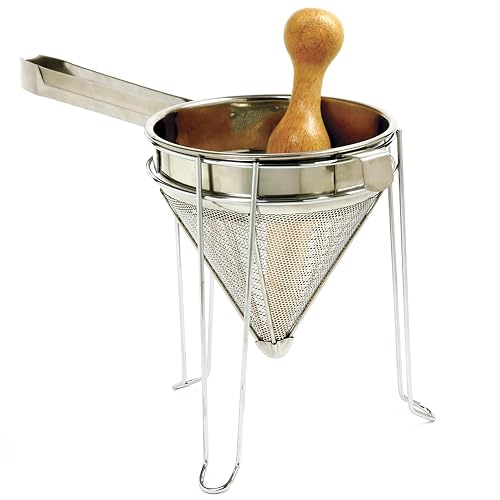
Norpro 642 Stainless Steel Chinois with Stand and Pestle Set

Winco CCB-8R Stainless Steel Reinforced Bouillon Strainer 8 inch
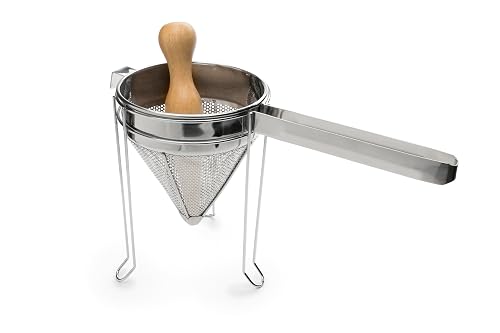
Farm to Table Chinois Set Stainless Steel 3-Piece

Gemfino Stainless Steel Food Mill With 3 Milling Discs

Gemfino Stainless Steel Food Mill With 3 Milling Discs Blue D
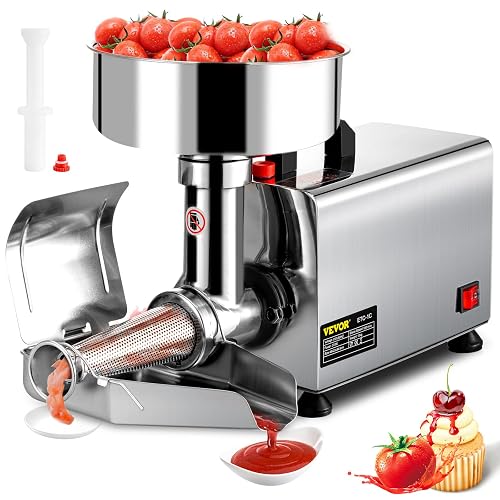
VBENLEM 110V Electric Tomato Strainer 370W Commercial Grade Tomato Milling Machine

Johnny Apple Sauce Maker Model 250 Clamp Based Food Strainer with Electric Motor
More Details On Our Top Picks
Counter space gets crowded fast during sauce season, and this Weston unit is built for that kind of workload. The 1 gallon hopper gives you room for a substantial tomato load before refilling, while the 250 watt motor points to a faster pace than hand-crank mills.
The three screen sizes, 1.5 mm, 3 mm, and 6 mm, let you shift from smooth puree to a looser finish for salsa or jellies. The trade-off is that an electric machine brings more cleanup and more storage demand than a simple chinois, so it suits serious batch cooks better than occasional snack-size prep.
Reasons To Buy
- Large hopper reduces refill stops during sauce runs.
- Three screen sizes give you texture control for different batches.
- Electric drive helps move through ripe fruit with less hand work.
- Good fit for kitchens handling canning in volume.
Worth Noting
- Electric design takes more cabinet space than a manual mill.
- More parts usually means more cleanup after a long session.
- Best used on a stable prep surface.
Feature Rundown
Who It Suits Best
You get the most from this machine in a busy kitchen where tomato season means repeated large batches and you want adjustable texture without much manual effort.
Where A Sibling Pick Shines
Gemfino Stainless Steel Food Mill With 3 Milling Discs suits hands-on cooks who want manual control and simpler storage, especially for smaller countertops.
A chinois is a cone-shaped fine strainer, and this Norpro setup leans into that format with a stand and pestle included. That pairing matters in a kitchen where you want a smoother tomato finish for jelly, sauce, or broth without buying a full electric mill.
The steel build should suit steady use, though the narrow cone style asks for a little patience with thicker pulp. Compared with the Weston electric unit, this one is quieter and more compact, but it puts the work in your hands and rewards a slower, more deliberate pace.
What We Like
- Stand helps keep the cone stable over a bowl or pot.
- Pestle gives you direct control over pressure and pace.
- Good for fine finishing on sauces and jellies.
- Stainless steel construction suits regular kitchen use.
Points To Note
- Manual pressing takes more effort than motorized options.
- Best results come with smaller batches of soft produce.
- The narrow cone can slow down thicker tomato mixtures.
Core Details
Who Should Grab It
You suit this pick best when you make smaller canning runs and want a finer texture than a coarse food mill typically leaves behind.
A Better Fit Elsewhere
Weston Deluxe Electric Tomato Strainer 82-0250-W is the smarter match for heavy tomato batches and anyone who wants speed over hand pressure.
The Winco basket keeps things plain and sturdy, which is exactly the appeal for basic stock, broth, and tomato draining jobs. It feels like the kind of tool that lives in a working kitchen because it has few moving parts and no learning curve.
Compared with the Norpro chinois, this Winco model is simpler and less specialized, so it fits broader straining chores rather than very fine finishing. You may find it especially useful for hot liquids and quick transfers, though it does not offer the texture control of a multi-screen mill.
Highlights
- Reinforced steel body suits routine kitchen use.
- Simple shape makes cleanup straightforward.
- Good general-purpose basket for broth and sauce prep.
Small Caveats
- Less precise than a chinois or food mill.
- Best for basic straining, not fine pulp control.
Details At A Glance
Built With In Mind
You fit this pick best when your tomato work is secondary to soup stock, broth, and quick kitchen draining.
Look Elsewhere When
Norpro 642 Stainless Steel Chinois with Stand and Pestle Set makes more sense for cooks chasing a finer tomato finish with a supported cone.
Three-piece sets make sense for kitchens that want the basket, stand, and pestle together instead of piecing things together later. This Fox Run setup is aimed at cooks who rotate between broths, sauces, and compotes, so the value sits in flexibility more than speed.
It sits between the Norpro and the Winco in spirit, because it offers the supported chinois format without adding electric complexity. The honest read is that this style rewards steady hand work and a little space on the counter, so it suits a measured canning routine more than a hurried one.
Bright Spots
- Three-piece format covers the core straining setup in one package.
- Useful for more than tomato work, including broths and compotes.
- Stand and pestle help create a stable workflow.
Areas To Watch
- Manual process takes patience on larger tomato loads.
- Stores more easily than an electric mill, but still needs cabinet room.
Feature Snapshot
Perfect Match For
You suit this set best when you want one manual strainer that can handle tomato work and also pull duty for soups or fruit mixtures.
Swap It Out When
VBENLEM 110V Electric Tomato Strainer 370W Commercial Grade Tomato Milling Machine makes more sense for frequent high-volume sessions and a faster pace.
Food mills sit in a sweet spot for tomato canning because they do more than a strainer basket but stop short of a full powered appliance. This Gemfino version uses three milling discs, so you can pick a finer or coarser output depending on whether you want sauce, puree, or a thicker mash.
The silicone handle adds comfort during longer crank sessions, and the dishwasher-safe note helps with cleanup after sticky produce. The trade-off is that hand-crank mills still ask for more attention than electric machines, so they reward steady, smaller-batch work.
Upsides
- Three discs give you texture flexibility.
- Manual control helps you stop at the finish you want.
- Silicone handle adds comfort during repeated turning.
- Dishwasher-safe construction simplifies cleanup.
Room For Improvement
- Hand crank pace is slower than an electric strainer.
- Best suited to a moderate amount of produce at a time.
Quick Facts
Whose Shelf It Belongs On
You fit this mill best when you want manual texture control and a tool that can handle tomatoes, potatoes, and jam without much fuss.
Another Choice May Suit
Weston Deluxe Electric Tomato Strainer 82-0250-W is better for bigger canning days, especially when speed matters more than hand control.
This Gemfino mill keeps the same three-disc layout but adds a few practical touches for daily kitchen use. The listing also calls out a multifunctional spoon, which is a small but helpful extra when you need to scrape, stir, or guide food through the mill.
Because it’s still a hand-crank tool, it works best for cooks who value control and don’t mind a slower pace than an electric unit like Weston or VBENLEM. The blue finish gives it a bit more personality on the shelf, though your real payoff is the familiar food-mill workflow and the simpler footprint.
Standout Traits
- Three milling discs support several texture outcomes.
- Includes a multifunctional spoon for kitchen handling.
- Hand-crank format stays compact for storage.
- Works well for tomato sauce and mixed fruit prep.
Softer Spots
- Manual turning is slower than motorized options.
- Smaller footprint means more batches for larger canning runs.
Feature Card
Who Will Love This
You fit this pick best when you want a manual mill with a few helpful extras and you usually process smaller to mid-size tomato batches.
Reach For A Different Pick When
VBENLEM 110V Electric Tomato Strainer 370W Commercial Grade Tomato Milling Machine suits larger batch sessions better, especially for cooks who want less hand work.
Commercial-grade wording matters here because this VBENLEM unit is aimed at throughput, not casual countertop use. The 370 watt motor and stated output range of 90 to 160 kg/h point to a machine built for long tomato sessions, sauce work, and a kitchen that processes in volume.
Compared with the Weston electric model, this one leans more aggressively into high-output territory, so it makes the most sense where tomatoes arrive by the crate. The trade-off is size, noise, and the need for enough workspace to handle a bigger machine, which keeps it squarely in serious prep zones.
Best Bits
- High output suits large harvest batches.
- Pure copper motor points to heavier-duty use.
- Stainless steel body fits hard-working prep areas.
- Electric drive reduces repetitive hand strain.
Honest Caveats
- Needs more room than a manual mill.
- Best fit for large batches, not occasional sauce night.
- Commercial scale can feel excessive in smaller kitchens.
Core Details
The Right Fit
You suit this machine best when your tomato season means repeated, high-volume processing and a commercial footprint feels normal in your kitchen.
Where Another Pick Suits Better
Weston Deluxe Electric Tomato Strainer 82-0250-W gives you a gentler scale for home kitchens that still want electric help without going full commercial.
This Johnny Apple Sauce Maker feels built for kitchens that want a clamp-mounted workflow instead of a larger countertop machine. The Model 250 format gives you a familiar strainer-and-motor setup, which is handy for apples, tomatoes, salsa, and pumpkin puree.
Because the clamp base anchors the unit to a work surface, it suits a sturdy prep table or counter edge better than a cramped island. The honest read is that this style works well for mixed fruit and vegetable projects, but the setup makes the most sense when you already have a solid place to mount it.
Strong Points
- Clamp base helps steady the unit during use.
- Electric motor reduces the effort of repeated pressing.
- Useful for several produce types, not just tomatoes.
- Good bridge between manual mills and larger electric machines.
Minor Gripes
- Needs a suitable edge or table for clamping.
- Stores like a powered appliance, not a small hand tool.
- Best on a stable work surface for repeat sessions.
Technical Sheet
Made For
You fit this pick best when your kitchen handles apples, tomatoes, salsa, and other mixed produce on a regular basis.
Not Your Match When
Winco CCB-8R Stainless Steel Reinforced Bouillon Strainer 8 inch makes more sense for simple draining tasks and cooks who want a lighter, no-motor tool.
How To Choose The Right Tomato Strainers For Canning
Match The Tool To Your Batch Size
Batch size drives everything. A 1 gallon hopper on the Weston makes sense for long sauce days, while a chinois or an 8 inch bouillon strainer works better for smaller kitchen sessions and finishing work.
Manual mills sit in the middle, especially for home canners who make several quarts at a time but do not want a commercial machine taking over the counter. Bigger output usually brings more cleanup, more storage space, and more setup time, so scale matters as much as speed.
Think About Texture Before You Think About Power
Texture control is the main reason to choose one strainer over another. A food mill with multiple discs lets you move between smooth puree and a coarser sauce, while a chinois leans toward finer liquid and a cleaner finish.
The trade-off is simple: more control often means more parts or more manual work. You get better tailoring for salsa, jelly, or sauce, but the process slows down a bit compared with a single-purpose basket.
Look At Cleanup, Storage, And Mounting
Cleanup becomes a real factor once tomato pulp gets involved. Stainless steel surfaces are easier to maintain than mixed-material builds, and dishwasher-safe parts can save time after a long canning run.
Storage matters too. Clamp-mounted and electric units need more room than a basic hand strainer, so compact kitchens usually do better with a food mill or chinois unless volume justifies the footprint.
Choose By How Often You Canning Season Actually Runs
A weekend sauce project calls for a different tool than a full harvest window. Occasional canners usually get enough value from a manual mill, while frequent cooks often prefer the steadier pace of an electric model.
That’s where the balance shifts. The more often you process tomatoes, the more useful sturdier motors, larger hoppers, and supported work surfaces become.
What To Weigh Before You Click Ahead
Mistakes Worth Dodging
Many kitchen setups fail because the tool is either too large for the counter or too small for the harvest. A commercial model looks impressive, but it can be awkward in a modest home kitchen.
Another common miss is ignoring the final texture you want. A coarse strainer and a fine chinois do different jobs, so the right answer depends on whether you want smooth sauce, jelly-ready liquid, or a little body left in the mix.
Where The Extra Money Goes
Higher-tier options usually spend their cost on motor strength, output capacity, and sturdier materials. That’s why electric units with larger hoppers or pure copper motors sit above simpler manual strainers.
The upgrade makes sense for frequent canners, mixed fruit processing, or anyone handling heavy harvests. For smaller kitchen routines, a manual mill often gives you enough control without the footprint or complexity.
Frequently Asked Questions
What type works best for smooth tomato sauce?
A food mill with multiple discs gives you the most control over texture. A chinois also works well when you want a very fine finish.
Is an electric model worth it for home canning?
It makes sense for large batches and repeated harvest days. Smaller sauce sessions usually do fine with a manual tool.
Do stainless steel strainers hold up well in the kitchen?
Stainless steel is a practical choice because it handles regular use and wipes down easily. It also fits both manual and powered designs.
What size setup suits a smaller kitchen?
A hand-crank food mill or a simple chinois fits tight storage better than a full electric machine. You keep the counter clearer and avoid extra bulk.
Why do some strainers come with stands or clamps?
Those pieces stabilize the tool during use and help keep both hands free. That matters most during longer sauce sessions.
Closing Thoughts
For tomato canning, the right strainer comes down to pace, texture, and how much counter room you can spare. Weston and VBENLEM serve the high-volume end, while Norpro, Fox Run, and the two Gemfino mills fit more modest, hands-on routines. Winco stays useful for simple draining, and the Johnny Apple Sauce Maker adds clamp-mounted flexibility for mixed produce work. Choose the tool that matches your harvest rhythm, and the whole process feels far less cluttered.
