

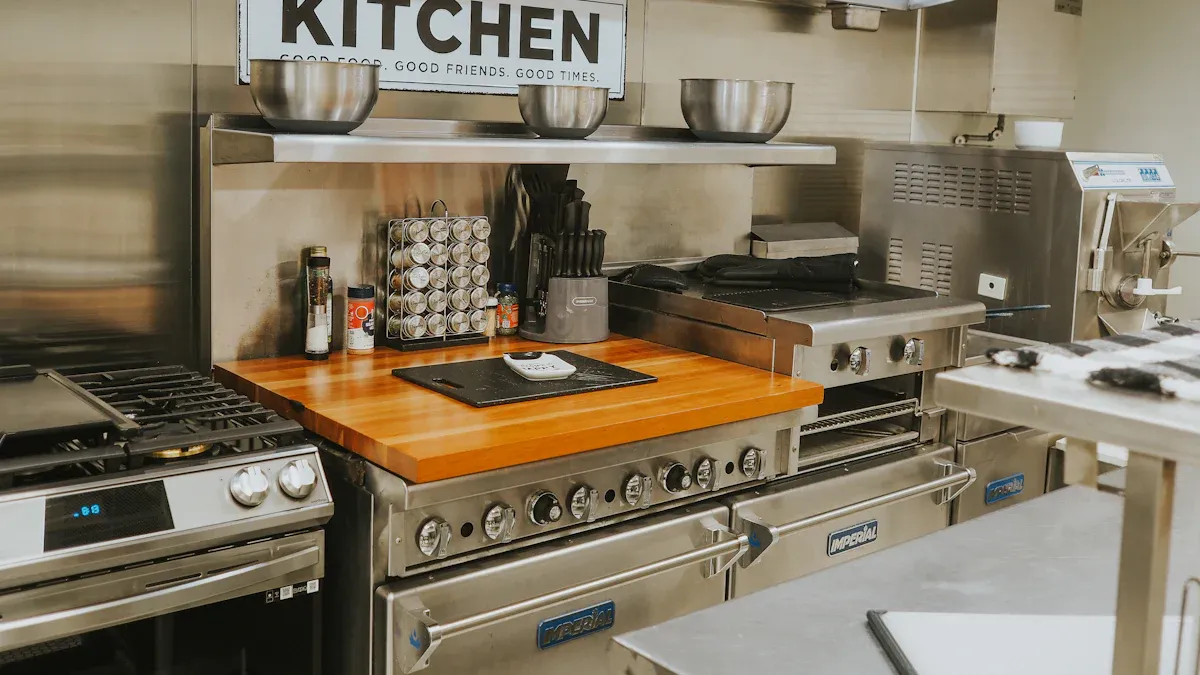
A well-organized kitchen is key to running an efficient cooking space. You will find that professional chefs have mastered kitchen organization, allowing them to create delicious meals quickly. When chefs arrange their kitchens effectively, they minimize unnecessary movements and enhance workflow. In this post, you will learn about various strategies, such as prep solutions, labeling techniques, and container usage, that can transform your own kitchen into a well-oiled machine.
Key Takeaways
Utilize prep and storage solutions like moveable racks and under-table storage to maximize kitchen efficiency.
Implement effective labeling techniques to manage food storage and expiration dates, ensuring safety and organization.
Choose the right containers, such as airtight and clear designs, to keep ingredients fresh and easily accessible.
Regularly declutter your kitchen to maintain an organized space, making cooking more enjoyable and efficient.
Keep essential cooking tools within reach to streamline your workflow and enhance your overall cooking experience.
Kitchen Organization Strategies
Prep and Storage Solutions
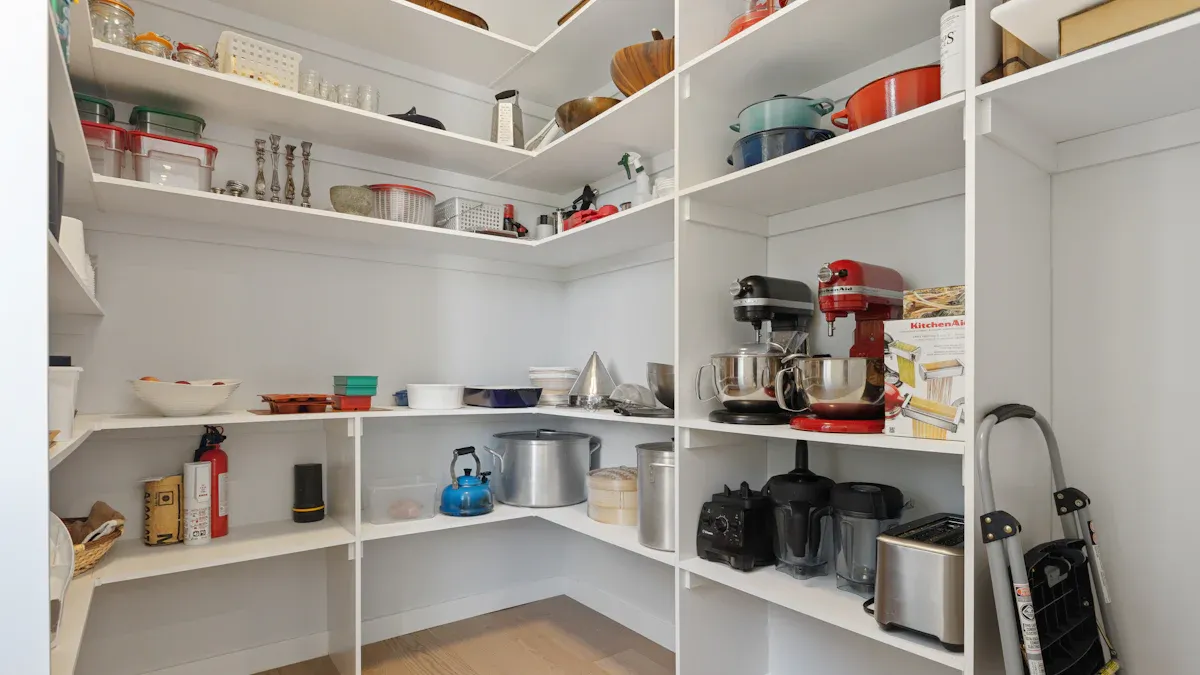
Professional chefs utilize various prep and storage solutions to maximize efficiency in their kitchens. Here are some effective strategies:
Storage Solution | Description |
|---|---|
Moveable racks | Useful for protecting prepared foods with covers that prevent contamination while allowing visibility. |
Under-table storage | Maximizes space by utilizing the area beneath counters for drawers or shelves for easy access. |
Storage bins | Helps in organizing items, especially in fridges, by grouping similar items together for efficiency. |
Organization items | Includes bins, can rolls, and other tools to enhance kitchen organization and functionality. |
These solutions help you store ingredients and tools efficiently, making your workspace more functional.
When arranging your prep station, consider the following principles to enhance workflow:
Principle/Setup | Description |
|---|---|
Workflow Direction | A left-to-right setup is natural for right-handed cooks, with raw ingredients on the left and finished products on the right. |
Ergonomics | Cutting surfaces should be at a comfortable height to prevent strain and enhance speed. |
Tool Accessibility | Keep frequently used tools within immediate reach in the ‘golden triangle’ of the workspace. |
Vegetable Prep | Use a scrap container next to the cutting board to minimize trips to the trash. |
Meat and Poultry Prep | Implement color-coded cutting boards to prevent cross-contamination. |
Breading Station | Follow a strict left-to-right flow for efficiency in breading processes. |
Deep-Frying Station | Arrange with safety in mind, ensuring raw items start on the left and finished items drain on the right. |
Allergen-sensitive Area | Use distinct color-coded tools and containers to prevent allergen cross-contact. |
Station Reset Discipline | Establish routines for start-of-shift, mid-shift, and end-of-shift resets to maintain efficiency. |
These principles help you create a streamlined workspace that enhances your cooking speed and reduces clutter.
Decluttering and Workflow
Decluttering is crucial for maintaining an efficient kitchen. A cluttered space often leads to inefficiency and mess. The fewer unnecessary items you have, the easier it is to organize your kitchen for maximum efficiency. Here are some tips to help you declutter effectively:
Declutter regularly by removing items you no longer use or need.
Implement smart storage solutions like drawer dividers and lazy Susans.
Designate zones for different kitchen activities to streamline workflow.
Utilize vertical space by installing hooks and shelves.
Maintain a recurring cleaning routine to keep the kitchen organized.
To keep your kitchen organized, set aside time every few months to declutter. Categorize items into ‘keep’, ‘donate’, and ‘discard’. Regular decluttering prevents the build-up of unnecessary items.
A well-planned cabinet layout supports a natural flow between key areas like the stove, refrigerator, and sink, reducing unnecessary steps. Accessibility improves when you consider reach and height, making frequently used items easier to access. Maximizing corner cabinets with smart solutions prevents wasted space and helps keep the kitchen organized.
By implementing these kitchen organization ideas, you can create a more efficient workspace that enhances your cooking experience.
Labeling and Date Management
Effective Labeling Techniques
Labeling plays a crucial role in kitchen organization. It helps you quickly identify ingredients and manage your food storage effectively. Here are some effective labeling techniques used by professional chefs:
Label Type | Purpose |
|---|---|
Expiration date codes | Clearly indicate prep/open and discard/use-by dates for prepped ingredients. |
Day dots and color-coded labels | Provide a quick visual cue for FIFO (first in, first out) during busy periods. |
Grab-and-go labels | Include essential information like allergen details for ready-to-sell items. |
Allergen and special-handling labels | Reduce cross-contact risk by marking containers with necessary warnings. |
Batch, station, and prep labels | Help track prep flow and maintain consistency among team members. |
Using these labeling techniques ensures that you maintain an organized kitchen and enhance food safety.
Managing Expiration Dates
Managing expiration dates is vital for food safety, especially for perishables like meat and dairy. Implementing a ‘first in, first out’ (FIFO) system helps you use older items before newer ones. This method minimizes spoilage and waste, ensuring that your kitchen remains efficient. Here are some strategies to manage expiration dates effectively:
Utilize kitchen organization apps to track inventory and expiration dates.
Organize pantry items into categories for easier access and monitoring.
Use airtight containers and label them to prevent spoilage and waste.
Conduct regular inventory audits to maintain accurate records.
By following these practices, you can ensure that your food storage remains safe and organized. Remember, keeping track of expiration dates not only helps reduce waste but also enhances the overall safety of your kitchen.
Tip: Regularly review your inventory and adjust your labeling system as needed. This will help you stay on top of your food storage and maintain a clean, organized kitchen.
Using Containers and Baskets
Choosing the Right Containers
Professional chefs rely on various containers to keep their kitchens organized. The right containers help store ingredients safely and efficiently. Here are some types of containers you should consider:
Container Type | Features | Purpose |
|---|---|---|
Airtight Containers | Prevent moisture and pests, essential for dry goods storage | Clumping and spoilage prevention |
Clear Containers | Visibility of inventory levels, simplifies ordering | Efficient inventory management |
Stackable Designs | Space-saving, keeps storage organized | Maximizes storage efficiency |
Using airtight containers seals in flavors and nutrients. You can find them in various sizes: small for snacks, medium for leftovers, and large for bulk items. For perishables like fresh produce, meat, and dairy, use a mix of vented and airtight containers. Leafy greens need airflow to avoid wilting, while cut vegetables benefit from being sealed to maintain crispness.
Organizing Small Items Efficiently
To keep small kitchen items organized, you can use several strategies. Here are some effective methods:
Store Sharp Tools Securely: Use magnetic strips or knife blocks to keep knives safe and organized.
Sort and Organize Smallware and Utensils: Utilize drawer dividers and clear containers to easily access tools like whisks and spatulas.
Protect Fragile and Specialty Equipment: Arrange delicate items in padded areas to prevent damage.
Clear containers and open shelving improve visibility and accessibility in your kitchen. They allow you to see all available ingredients at a glance. This visibility makes it easier to create accurate grocery lists and reduces the time spent searching for items. By organizing your kitchen this way, you streamline your workflow and enhance efficiency.
Tip: Regularly check your containers for cleanliness. Use food-safe disinfectants to sanitize areas after food preparation, especially after handling raw meats.
By implementing these container and basket strategies, you can create a more organized and efficient kitchen space.
Essential Kitchen Tools
Must-Have Cooking Tools
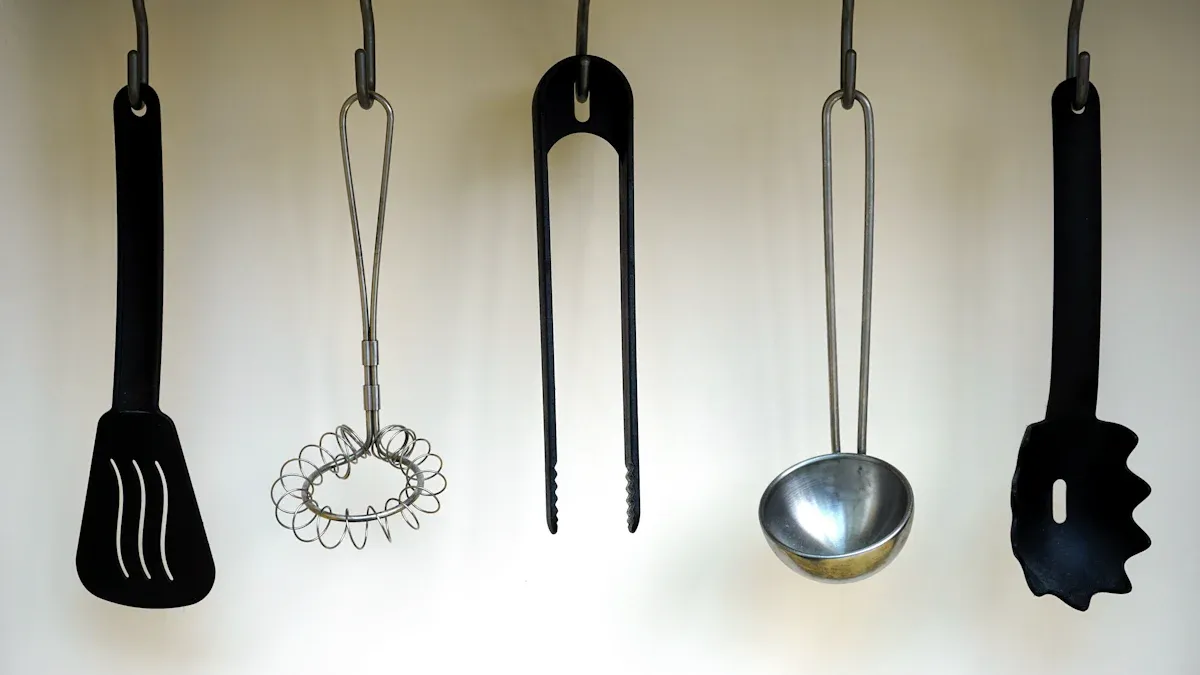
Every professional chef relies on specific kitchen tools to enhance their cooking efficiency. Here’s a list of must-have tools that you should consider for your kitchen:
Chef’s Knife: This versatile tool is essential for chopping, slicing, dicing, and mincing.
Y Peeler: It allows for efficient peeling with minimal wrist strain.
Turner: Use this tool for precise plating and flipping.
Whisk: Perfect for emulsifying and aerating ingredients.
Ladle: Ideal for portioning sauces, soups, and stocks.
Tongs: These are great for flipping and handling hot items safely.
Kitchen Shears: Use them for cutting herbs and opening packages.
Kitchen Scale: This tool ensures accurate measurements for recipes.
Instant-Read Thermometer: Vital for checking internal temperatures of cooked foods.
Plating Tweezers: These help with the detailed placement of garnishes.
Having these tools in your kitchen will streamline your food preparation and improve your overall cooking experience.
Organizing Cookware
Organizing your cookware effectively can significantly enhance your kitchen’s efficiency. Here are some tips to help you store your pots and pans:
Use Pull-Out Cabinets: Store pots and pans in base cabinets with pull-outs for easy access. Position these cabinets under or next to your hob for a smooth workflow.
Stand Pans Upright: Instead of stacking them, store pans like files to avoid a ‘pan avalanche’. This method allows for quick access and prevents damage.
Utilize Dividers: Keep utensils and lids organized with inner dividing systems. This prevents clutter and makes it easier to find what you need.
By implementing these organization strategies, you can create a workspace that promotes efficiency and reduces stress during cooking. Remember, a well-organized kitchen not only saves time but also enhances your cooking experience.
Tip: Regularly assess your kitchen tools and cookware. Discard or donate items you no longer use to maintain an efficient workspace.
In this blog, you explored essential strategies for organizing your kitchen like a professional chef. You learned to:
Utilize prep and storage solutions for efficiency.
Implement effective labeling and date management techniques.
Choose the right containers for optimal organization.
Keep essential tools accessible for a smoother workflow.
By applying these techniques, you can transform your kitchen into a more efficient space. Remember, an organized kitchen reduces stress and enhances creativity. Embrace these practices, and enjoy the benefits of a well-structured cooking environment! 🍽️
FAQ
What are the best ways to organize my kitchen?
Start by decluttering and categorizing items. Use containers for storage, label everything, and designate zones for different tasks. This approach maximizes efficiency and keeps your kitchen tidy.
How often should I declutter my kitchen?
Aim to declutter every few months. Regularly assess your items and remove anything you no longer use. This practice prevents clutter from building up and maintains an organized space.
What containers work best for food storage?
Airtight containers are ideal for dry goods, while clear containers help you see inventory levels. Stackable designs save space and keep your kitchen organized.
How can I manage expiration dates effectively?
Implement a ‘first in, first out’ (FIFO) system. Label items with expiration dates and conduct regular inventory checks to ensure you use older items first.
Why is labeling important in the kitchen?
Labeling helps you quickly identify ingredients and manage food storage. It enhances organization and ensures food safety by preventing cross-contamination and spoilage.