
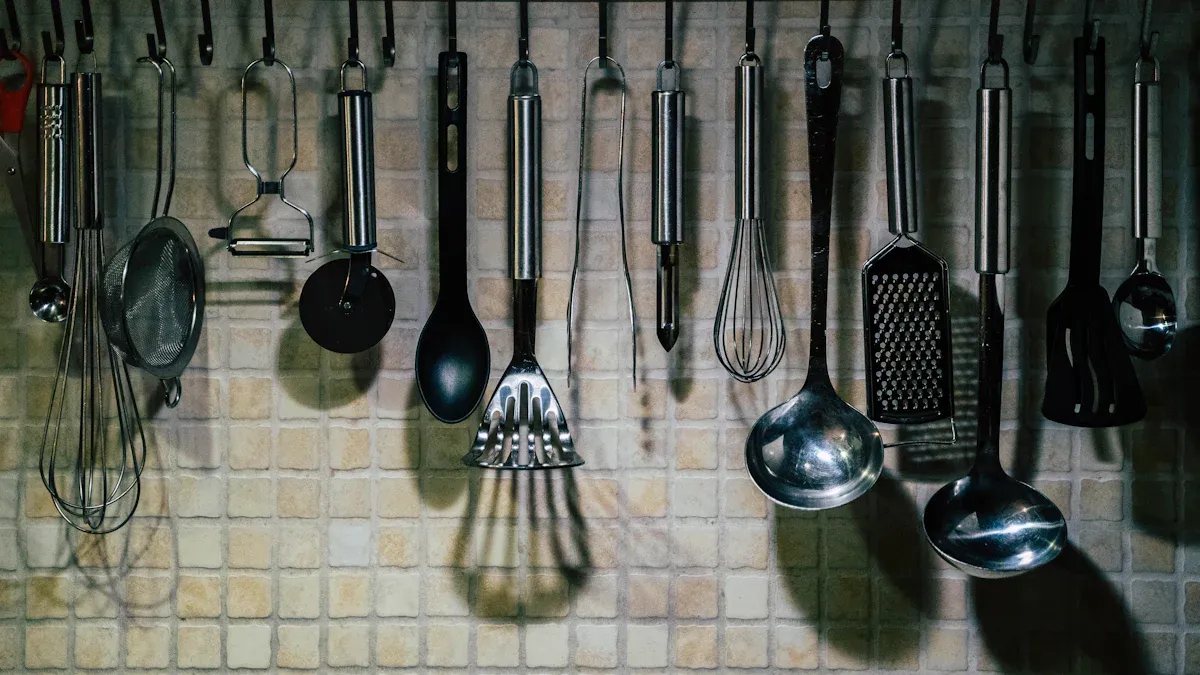
Having the right kitchen tools can make all the difference in your cooking journey. Imagine slicing through vegetables with ease or whipping up a delicious meal without the hassle. Essential kitchen tools simplify your tasks and elevate your culinary experience. Recent surveys show that great cooks often own a variety of tools, like tongs and steak knives, which boosts their confidence in the kitchen. As you explore this kitchen tools checklist, consider your cooking habits and what essentials you might need to enhance your skills.
Skill Level | Ownership of Tongs | Ownership of Steak Knives | Ownership of Mandolin | Ownership of Zester |
|---|---|---|---|---|
Great Cooks (21%) | 94% | 95% | 55% | 65% |
Less-Confident Cooks | 85% | 84% | 30% | 37% |
Key Takeaways
Invest in a high-quality chef’s knife to enhance your cutting skills and make meal prep easier.
Choose the right cutting board material to protect your knives and ensure safe food preparation.
A versatile cast iron skillet can elevate your cooking by retaining heat and providing even cooking.
Use measuring tools like cups and scales for accurate ingredient measurements, especially in baking.
Organize your kitchen with essential tools like a spice rack and food storage containers to streamline your cooking process.
Cutting Essentials
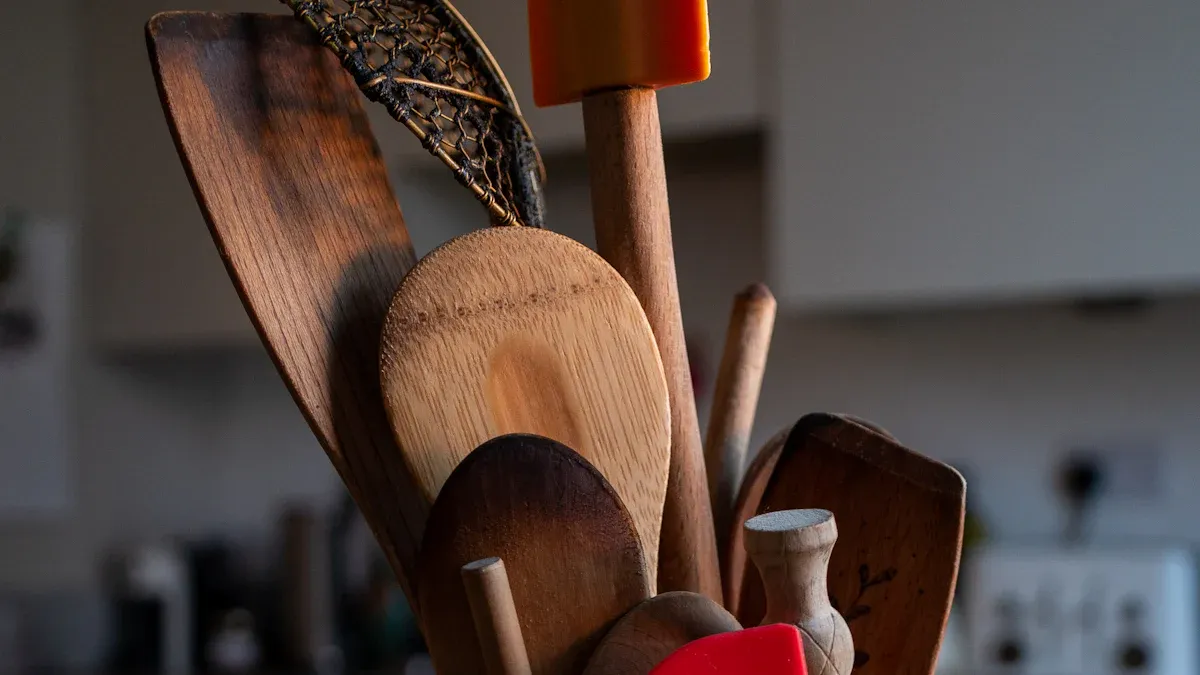
When it comes to cutting tools, having the right ones can make your kitchen experience smoother and more enjoyable. Here are three must-have cutting essentials that every home cook should consider.
Chef’s Knife
A chef’s knife is the workhorse of your kitchen. This versatile tool can handle various tasks, from slicing vegetables to mincing herbs. Typically ranging from 7 to 10 inches, its design allows you to tackle everything from delicate ingredients to tougher ones. The slightly curved profile of the blade enhances your cutting techniques, making it easier to chop and dice efficiently. Remember, the choice of a chef’s knife should reflect your cooking style and comfort. Investing in a high-quality knife will pay off in the long run, as it will last longer and perform better.
To keep your chef’s knife in top shape, follow these maintenance tips:
Clean it immediately after use with warm water and mild soap.
Dry it thoroughly to prevent rust.
Sharpen it regularly using honing steel or a whetstone.
Store it safely in a knife block or on a magnetic strip.
Paring Knife
The paring knife is perfect for delicate tasks like peeling fruits or deveining shrimp. Its small size allows for precision, making it an essential tool for intricate work. When using a paring knife, keep it sharp to reduce the force needed for cutting. Always point the blade away from yourself while washing, and curl your fingers inward when holding food to protect them. Remember, using the right knife for specific tasks is crucial for safety.
Cutting Board
A sturdy cutting board is just as important as your knives. It provides a safe surface for all your chopping and slicing needs. When choosing a cutting board, consider the material. Here’s a quick comparison of popular options:
Material | Pros | Cons | Best Use |
|---|---|---|---|
Wooden | Gentle on knives, highly durable | Can absorb moisture and bacteria if not maintained | Lower-risk foods like vegetables, fruits, and bread |
Plastic | Easy to clean, dishwasher safe, affordable | Can develop knife scars where bacteria can grow | Raw meats, seafood, and poultry |
Bamboo | Environmentally friendly, less porous | Can dull knives, prone to cracking | Lower-risk foods like fruits, vegetables, and cheese |
Glass/Marble/Stone | Nonporous, easy to clean | Hard surface can dull knives quickly | Chopping herbs, slicing bread, serving board |
Composite | Balance of durability and knife-friendliness | Can develop grooves where bacteria may hide | All-purpose cutting |
Choosing the right size cutting board is also essential. A board that’s too small can lead to messy preparation, while one that’s too large may be cumbersome. Aim for a size that fits your kitchen space and meets your cooking needs.
With these cutting essentials, you’ll be well-equipped to tackle any recipe that comes your way!
Cooking Gear
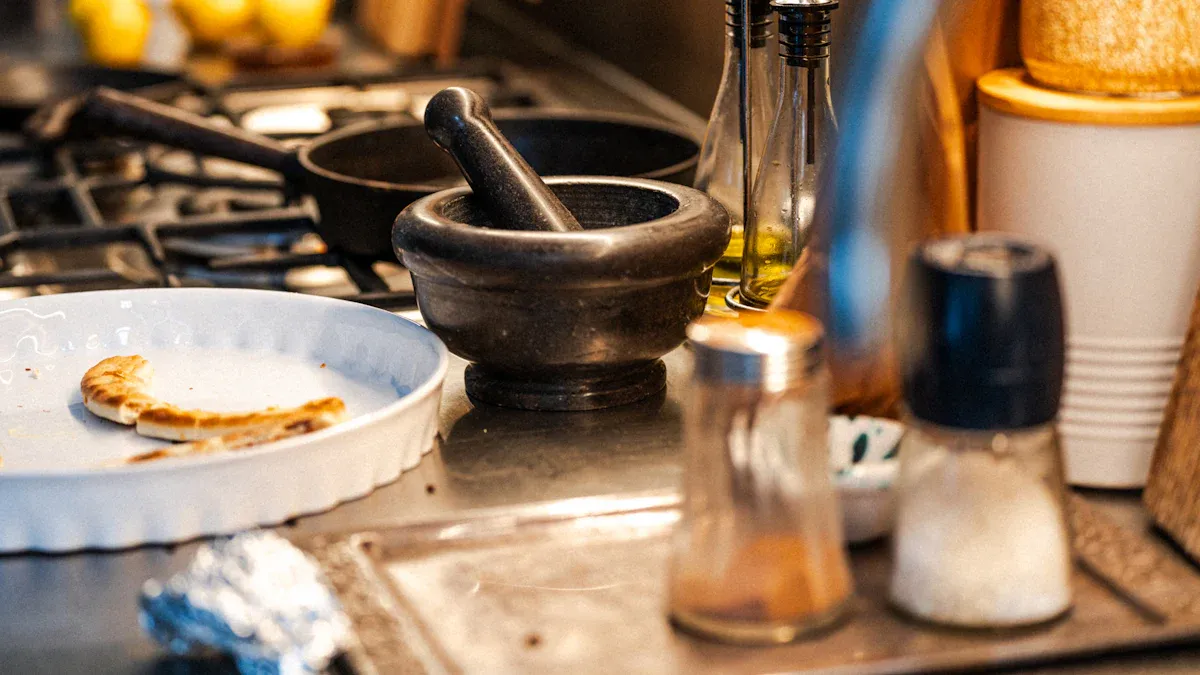
When it comes to cooking, having the right gear can make all the difference. Here are three essential cooking tools that every home chef should have in their kitchen.
Pots and Pans
Pots and pans are the backbone of your cooking arsenal. They come in various shapes and sizes, each designed for specific tasks. Here are some must-have types:
Frying pans: Perfect for sautéing and frying.
Saucepans: Great for making sauces, boiling pasta, or heating soups.
Stockpots: Ideal for making large batches of soups, stews, or stocks.
You might also want to consider nonstick and stainless steel cookware for versatility. Nonstick pans make cooking and cleaning easier, while stainless steel offers durability and even heat distribution.
Type of Cookware | Key Characteristics | Ideal Uses |
|---|---|---|
Saucepan | Straight-sided, deep, flat bottom | Slow-cooking sauces, heating soup, steaming rice |
Chef’s Pan | Shallower, rounded bottom, easy stirring | Cream-based sauces, risotto, browning butter |
Stockpot | High sides, thick base | Making stocks, large batches of chili, slow-simmering sauces |
Cast Iron Skillet
A cast iron skillet is a versatile tool that every kitchen should have. It excels at retaining heat, making it perfect for searing meats and baking cornbread. Here are some advantages of using a cast iron skillet compared to other cookware:
Advantage | Cast Iron Skillet | Other Cookware Types |
|---|---|---|
Heat Retention | Holds heat for longer periods | Heats quickly but loses heat fast |
Cooking Speed | Takes less time to heat up and cool down | Varies, often slower for even cooking |
Maintenance | Requires less care, more durable | Requires regular seasoning and care |
Nonstick Surface | Natural nonstick when seasoned | Often has nonstick coatings that can wear off |
Heat Distribution | Distributes heat evenly, ideal for slow cooking | May have hot spots, less even distribution |
To keep your cast iron skillet in top shape, avoid using a dishwasher. Instead, clean it with mild soap and a non-abrasive sponge. After washing, dry it completely and apply a thin layer of oil to maintain its seasoning.
Immersion Blender
An immersion blender is a game-changer in the kitchen. This handy tool allows you to blend soups directly in the pot, reducing mess and the risk of burns from transferring hot liquids. Here are some of the many uses for an immersion blender:
Pureeing soups
Making tomato sauces
Frothing milk
Creating salad dressings
Whipping cream
Many immersion blenders come with attachments like mini food processors and whisks, making them even more versatile. With this tool, you can tackle a variety of cooking tasks with ease.
Investing in these essential cooking tools will enhance your culinary experience and make cooking more enjoyable!
Measuring Tools
Accurate measurements are crucial in cooking. They can make or break a recipe, especially in baking, where precision is key. Think of it this way: baking is a science. You need precise ingredient measurements to achieve the chemical reactions necessary for that perfect cake or bread.
Measuring Cups
Measuring cups come in various types, each designed for specific tasks. You’ll find dry measuring cups and liquid measuring cups. Dry measuring cups are typically used for ingredients like flour and sugar, while liquid measuring cups are perfect for liquids like water and milk.
Here’s a quick look at some popular measuring cup sets:
Measuring Cup Set | Type | Key Features |
|---|---|---|
Simply Gourmet 7 Piece Measuring Cups Set | Dry | Best for accuracy and durability, available in multiple brands. |
Pyrex Prepware 2-Cup Measuring Cup | Liquid | Clear measurement markings, nonporous glass, durable, and classic design since 1925. |
Kitchen Scale
A kitchen scale is another essential tool for precise measurements. It allows you to weigh ingredients, ensuring accuracy, especially when following recipes that list ingredients by weight. Many chefs prefer using a scale because it reduces the risk of errors.
Mathematics plays a crucial role in cooking, impacting everything from ingredient measurement to recipe scaling. Modern cooks often rely on precise measurements, which are typically detailed in recipes that specify ingredients in both volume and weight.
Measuring Spoons
Measuring spoons are just as important as measuring cups. They help you measure smaller quantities accurately. A typical set includes:
1 tablespoon
1 teaspoon
1/2 teaspoon
1/4 teaspoon
(sometimes) 1/8 teaspoon
(sometimes) 1/2 tablespoon
Using the right measuring tools ensures that your dishes turn out just as intended. So, make sure you have these essentials in your kitchen!
Food Prep Tools
When it comes to food preparation, having the right tools can make your life a lot easier. Here are three essential food prep tools that you should consider adding to your kitchen.
Can Opener
A reliable can opener is a must-have in any kitchen. You want something that makes opening cans quick and easy. The EZ-Duz-It can opener is a favorite among many home cooks. It’s durable, easy to use, and features sharp blades that cut through cans effortlessly. If you prefer an electric option, the Hamilton Beach Smooth Touch is a great choice. It opens cans safely and smoothly, making it perfect for those who want to avoid the hassle of manual can openers.
Vegetable Peeler
A good vegetable peeler can speed up your prep time significantly. Modern peelers come with sharper blades and ergonomic designs that make them comfortable to hold. They can handle everything from tough squashes to delicate fruits. This tool not only saves you time but also reduces waste, allowing you to get the most out of your ingredients. If you’re new to cooking, a vegetable peeler can help you feel more confident in the kitchen.
Cheese Grater
Cheese graters come in various types, each serving a unique purpose. Here’s a quick overview of some popular options:
Type of Cheese Grater | Ideal Cheese Types | Specific Uses |
|---|---|---|
Box Grater | Soft cheeses | Great for melting, allows for multiple shredding sizes |
Microplane Grater | Hard cheeses | Perfect for fine shavings, ideal for sprinkling |
Rotary Grater | Hard cheeses | Efficient for tableside serving |
Flat/Paddle Grater | Semi-soft cheeses | Creates larger shreds, melts evenly |
Hand Crumbling | Crumbly cheeses | Preserves texture, best for salads and toppings |
With these food prep tools, you’ll find that preparing meals becomes a breeze. Investing in quality tools not only enhances your cooking experience but also boosts your confidence in the kitchen.
Kitchen Essentials
Every kitchen needs a few essentials to keep things running smoothly. Let’s dive into three key components that can elevate your cooking experience: food storage containers, a spice rack, and a dinnerware set.
Food Storage Containers
Food storage containers are vital for keeping your ingredients fresh and organized. They come in various materials, each with unique benefits. Here’s a quick look at some popular options:
Material | Benefits |
|---|---|
Soapstone | Non-reactive, non-porous, heat resistant; ideal for storing spices, pickles, tea, and coffee. |
Brass | Durable, corrosion-resistant, antimicrobial; suitable for acidic foods like pickles. |
Copper | Kills bacteria, provides essential minerals; beneficial for storing water. |
To maximize your kitchen space, use matching containers that nest neatly. This helps keep your cabinets organized and makes it easier to find what you need. Consider separating lids from containers for compact storage. You can also use baskets to catch various sizes, making organization a breeze.
Spice Rack
An organized spice rack can transform your cooking routine. It allows for quick access to your favorite flavors, saving you time and reducing stress during meal prep. Here are some benefits of having a well-organized spice rack:
Quick Access: You’ll spend less time searching for spices and more time cooking.
Culinary Inspiration: An organized rack encourages you to experiment with new flavors.
Keeping your spices organized also helps you track expiration dates, ensuring your dishes are flavorful and of high quality.
Dinnerware Set
A complete dinnerware set is essential for any kitchen. It typically includes:
Soup Bowls: Perfect for liquid-based dishes like soups and stews.
Dessert Plates: Smaller plates for serving sweet treats after meals.
Cups and Saucers: Essential for serving beverages like tea and coffee.
Serving Platters and Bowls: Great for presenting larger portions and shareable dishes.
Additional Accessories: Items like gravy boats and salt shakers enhance the dining experience.
Investing in these kitchen essentials will not only improve your cooking efficiency but also elevate your dining experience.
Having a well-equipped kitchen makes cooking more enjoyable and efficient. You can whip up delicious meals with the right tools at your fingertips. Take a moment to assess your kitchen inventory. Are you missing any essentials? Recent surveys show that many kitchens lack a good selection of knives, peelers, kitchen shears, cutting boards, and locking tongs. Investing in these tools can elevate your cooking experience. So, why not start today? A few thoughtful additions can transform your kitchen into a culinary haven!
FAQ
What are the most essential kitchen tools for beginners?
For beginners, focus on a chef’s knife, cutting board, pots and pans, measuring cups, and a can opener. These tools will help you tackle basic recipes and build your cooking skills.
How do I maintain my kitchen knives?
Keep your kitchen knives sharp by honing them regularly. Clean them immediately after use and dry them thoroughly. Store them safely in a knife block or on a magnetic strip to prevent damage.
Can I use plastic cutting boards for raw meat?
Yes, you can use plastic cutting boards for raw meat. They are easy to clean and dishwasher safe. Just ensure you sanitize them properly after use to avoid cross-contamination.
What’s the best way to organize my kitchen spices?
Organize your kitchen spices in a dedicated spice rack. Label each container for easy access. Keep frequently used spices at the front and store them in a cool, dry place to maintain freshness.
How do I choose the right size pots and pans?
Choose pots and pans based on your cooking needs. For everyday use, a medium-sized saucepan and a large frying pan are ideal. Consider your kitchen space and storage options when selecting sizes.