

Countertop utensil storage looks small on paper, then starts shaping how a kitchen works every day. A good holder keeps spatulas, spoons, and tongs close at hand, cuts drawer clutter, and avoids the awkward reach into a crowded utensil bin. The right pick also needs to fit your space, your decor, and how many tools you keep near the stove.
That’s where this roundup helps. You’ll see wooden, ceramic, and rotating options, plus compact caddies and larger divided designs for busy cooking zones. Each one suits a different setup, from a narrow galley counter to a family kitchen that never seems to stop moving.
The Shortlist At A Glance
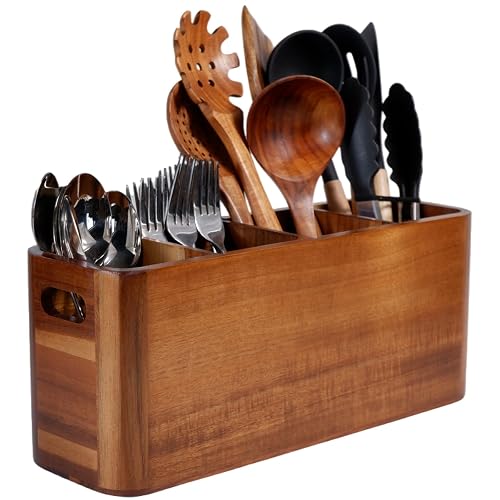
Liberal Brightdeer Wooden Kitchen Utensil Holder Organizer
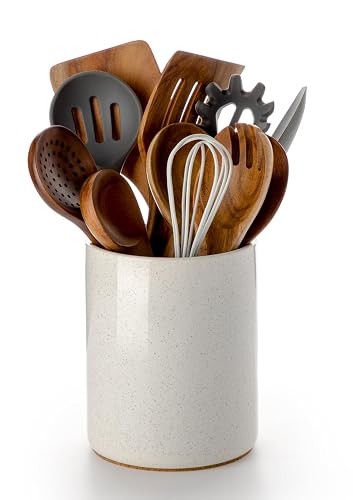
Nucookery Ceramic Kitchen Utensil Holder 6.4″ Sand
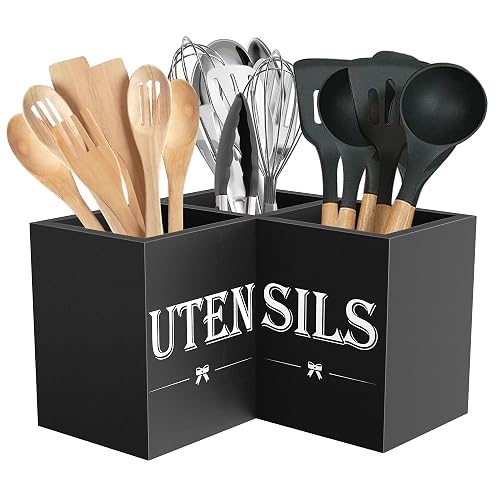
Suli Extra Large Utensil Holder Countertop Wood Black

ALELION Acacia Wood Utensil Holder Organizer

ALELION Black Kitchen Utensil Holder for Countertop
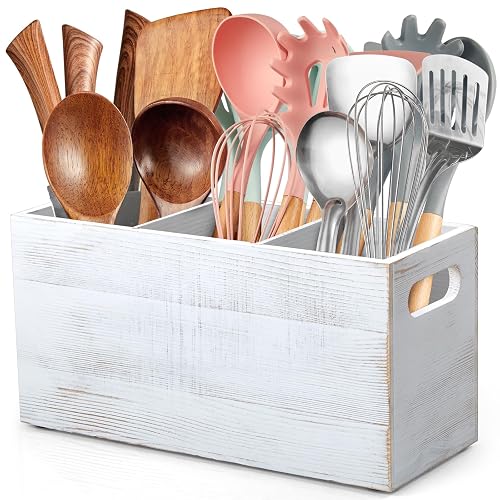
ALELION Rustic White Utensil Holder with Removable Divider

VaeFae Acacia Silverware Caddy with Handle Medium

MIKIGEY 360° Rotating Extra Large Ceramic Utensil Holder
More Details On Our Top Picks
The four-compartment layout gives this acacia holder a practical edge in a busy cooking zone. You can separate spatulas, wooden spoons, whisks, and silverware instead of letting everything settle into one deep cup.
That structure matters most on a counter that stays active through meal prep, since the divided shape keeps tall tools from leaning into each other. The honest trade-off is footprint, because the larger body needs more space than a simple single-bin crock.
What We Like
- Four sections help keep tools grouped by type.
- Acacia wood brings a warmer look than plain ceramic.
- The extra-large size suits kitchens with many daily-use utensils.
- Silverware and cooking tools can share the same organizer without becoming tangled.
Things To Consider
- The broader shape takes more counter space than compact crocks.
- Divided storage can feel a little rigid for oversized serving tools.
- Wooden finishes usually look best with light wiping, not soaking.
Feature Snapshot
Who It Suits Best
You benefit most from this one if your counter stays crowded with cooking tools and you want clear separation without using drawer space.
A Better Fit Elsewhere
VaeFae Acacia Silverware Caddy with Handle Medium suits you better for portable serving setups and shared tables, since the handle makes it easier to move around the kitchen.
Ceramic changes the feel right away, and this sand-toned crock brings a more finished look than the wooden caddies around it. The 6.4-inch profile keeps it visually calm on a countertop, which suits kitchens that lean rustic or farmhouse.
The non-slip base matters in a real working kitchen, because a heavier ceramic body can still shift less when you grab a spoon fast. The trade-off is the usual one for ceramic, since it feels solid but can be less forgiving than wood around hard knocks or cramped sinks.
Bright Spots
- The ceramic body gives the holder a polished, decor-forward look.
- A non-slip base helps keep it steady during daily reach-ins.
- The 6.4-inch size works well on smaller counters.
- Cleaning tends to stay simple because ceramic does not trap residue the way open-grain wood can.
Small Caveats
- Ceramic can feel less forgiving than wood in tight, busy kitchens.
- The shorter profile may not suit very long utensils as neatly as taller holders.
- The single-crock format offers less sorting than a divided organizer.
Core Details
Who Should Grab It
You’ll like this most if your countertop is part storage and part decor, especially in a farmhouse-style kitchen with a shorter utensil lineup.
Skip It When
ALELION Rustic White Utensil Holder with Removable Divider makes more sense for you if sorting different tool types matters more than a smooth ceramic finish.
Suli is built for utensil-heavy kitchens, plain and simple. The claim of room for 40 utensils points to a caddy that can absorb a broad mix of spatulas, spoons, and serving tools without forcing you to rotate stock constantly.
The removable dividers add useful flexibility, since you can open one section for oversized tools and keep the rest sorted. The catch is that a high-capacity organizer can dominate a counter, so it suits cooks who value storage density more than a minimal look.
Reasons To Buy
- Very high utensil capacity suits large households and frequent cooks.
- Three removable dividers let you change the layout as your tool mix changes.
- The black wood finish creates a stronger visual anchor than lighter caddies.
- Space-saving design still keeps tools within easy reach of the stove.
Worth Noting
- The larger body needs enough clear counter area to feel comfortable.
- Divider pieces add flexibility, but they also add one more part to keep track of.
- Black surfaces can show dust more clearly than lighter wood tones.
- The size makes it a better fit for utility than for a very compact kitchen vignette.
Feature Card
Best Suited To
You fit this best when your kitchen handles a lot of cooking and you want a single holder that can absorb the clutter instead of spreading it across the counter.
Where A Sibling Pick Shines
Liberal Brightdeer Wooden Kitchen Utensil Holder Organizer suits you better if you want a smaller divided layout with less visual bulk.
This ALELION model keeps the formula simple: acacia wood, three compartments, and a shape that looks comfortable beside everyday cooking gear. It’s a cleaner visual match than the black version in the next slot, especially in kitchens that lean warm and natural.
You may find the three-section layout easier to live with than a single open crock, because it sorts tools without overcomplicating the setup. The trade-off is that three compartments can still leave less freedom for oversized utensils than a more open barrel-style holder.
Highlights
- Acacia wood adds a warm, natural look to the counter.
- Three compartments help keep similar tools grouped together.
- The large footprint gives it enough room for active prep zones.
- Works well with farmhouse and rustic kitchen decor.
Areas To Watch
- Three sections are useful, but they still limit how freely long tools can spread out.
- Wooden surfaces usually need gentle cleaning rather than full soaking.
Details At A Glance
Whose Shelf It Belongs On
You suit this pick if you want a wooden organizer that looks intentional on the counter without pushing into showy decor territory.
Swap It Out When
MIKIGEY 360° Rotating Extra Large Ceramic Utensil Holder works better for you if fast access matters more than a wood finish.
This black ALELION caddy leans more modern than the acacia version above, and that darker finish can settle into contemporary kitchens cleanly. The three-compartment layout keeps it practical, so the visual shift does not come at the expense of day-to-day order.
Its strongest appeal shows up beside darker hardware, matte appliances, or a monochrome counter setup. The small compromise is maintenance visibility, since dark surfaces tend to show dust and fingerprints more plainly in a bright kitchen.
Positives
- The black finish gives it a sharper, more contemporary look.
- Three compartments support basic sorting for cooking tools and silverware.
- It blends well with dark cabinet pulls and modern appliances.
- The wooden body keeps it in the same family as other natural countertop organizers.
Areas To Watch
- Dark finishes can make dust more noticeable in bright light.
- Three sections are useful, though not as flexible as a divider system.
- The styling is tailored, so it may feel less neutral than lighter wood tones.
Quick Facts
Made For
You fit this best if your kitchen has a darker, cleaner visual theme and you want the utensil holder to blend in rather than stand out softly.
Look Elsewhere When
Nucookery Ceramic Kitchen Utensil Holder 6.4″ Sand makes more sense for you if you want a lighter decorative touch and a steadier ceramic feel.
The removable divider makes this white ALELION organizer more adaptable than the fixed-layout wooden caddies above. You can open the center area for a bulky ladle or keep the sections split for a tighter utensil mix.
That flexibility matters in mixed-use kitchens where the same crock may need to handle cooking tools one day and serving utensils the next. The soft trade-off is that moving parts add a little more handling, so this suits people who like adjusting storage more than setting it once and forgetting it.
Best Bits
- The removable divider gives you more control over the internal layout.
- The rustic white finish keeps the look light and airy.
- Three compartments still provide structure without making the piece feel busy.
- The style works across farmhouse, cottage, and casual modern kitchens.
Points To Note
- A movable divider adds flexibility, but it also adds one more part to keep track of.
- White surfaces tend to show smudges faster than darker finishes.
- The design is still compact enough for normal counters, not oversized prep islands.
Feature Rundown
The Right Fit
You benefit most from this one if your utensil mix changes often and you want a holder that can adapt to small serving pieces or larger cooking tools.
Another Choice May Suit
Suli Extra Large Utensil Holder Countertop Wood Black suits you better if sheer storage volume matters more than a flexible divider.
The handle changes the whole story here. Instead of staying fixed as a countertop crock, this acacia caddy can move from prep area to table to patio setup with far less fuss than the stationary holders in the list.
It also stretches beyond utensils, since the design can hold paper plates, cups, forks, spoons, pens, condiments, and BBQ tools. That flexibility makes it a strong fit for shared spaces, though the open-caddy shape naturally gives you less compartment separation than the divided kitchen-only picks.
Standout Traits
- The handle makes carrying and re-positioning simple.
- Its open caddy shape works for utensils and small party items alike.
- Acacia wood keeps the look warm and natural.
- The medium size suits kitchens, serving tables, and outdoor setups.
Minor Gripes
- The open format gives you less internal sorting than a divider-based organizer.
- Wood care still matters, especially after heavy use near drinks or condiments.
- Medium size may feel modest beside the larger kitchen-dedicated crocks in this list.
Technical Sheet
Perfect Match For
You suit this best if you host casual meals, move supplies between spaces, or want one caddy that can serve more than a single kitchen role.
Reach For A Different Pick When
Liberal Brightdeer Wooden Kitchen Utensil Holder Organizer suits you better if you want fixed divider-style storage near the stove.
The rotating base gives this ceramic holder a very different feel from the fixed wooden caddies earlier in the list. In a busy kitchen, being able to turn the crock toward the tool you want can make quick reach-ins feel more natural.
The 7.3-inch size and extra-large shape point to a holder that can carry a fuller tool set while still presenting a neat profile. The trade-off is that the motion feature and ceramic body work best on a stable counter with enough space to let the base move comfortably.
What We Like
- The 360-degree base makes tool access easier from multiple angles.
- The ceramic body gives it a clean, polished look.
- Extra-large sizing works for fuller kitchen utensil collections.
- The wooden rotating base adds warmth beneath the ceramic bowl.
Softer Spots
- The moving base needs a stable, open counter area.
- Ceramic can feel less forgiving than wood in tighter spaces.
- The rotating feature is most useful near a central prep zone, not at the edge of a cluttered counter.
Feature Overview
Built With In Mind
You suit this best if your counter gets a lot of traffic and you want access to utensils from several angles without moving the whole holder.
Where Another Pick Suits Better
Nucookery Ceramic Kitchen Utensil Holder 6.4″ Sand works better if you want a simpler, non-rotating crock with a smaller footprint.
How To Choose The Right wooden utensil holders for countertop
Match Capacity To Your Kitchen Habit
The first question is how many tools stay out on the counter every day. A four-compartment wood organizer like Liberal Brightdeer suits a cooking zone with separate spoons, spatulas, and silverware, while a single ceramic crock makes more sense for a lighter setup.
Capacity is about more than count, though. Wide, open holders make tall tools easier to grab, while divided interiors keep smaller utensils from sliding into one pile.
Choose Material For The Look You Want
Wood brings warmth, grain, and a more traditional countertop feel. Ceramic gives you a cleaner decorative shape and usually wipes down more easily, which matters in a kitchen that sees sauce splashes and flour dust.
The trade-off is feel as much as maintenance. Wood tends to look friendlier beside cutting boards and butcher-block counters, while ceramic pairs neatly with crisp white cabinets or farmhouse decor.
Think About Placement And Movement
Countertop space changes the best choice fast. Large divided organizers work well near the stove, but they can crowd a narrow galley counter, and a rotating ceramic holder needs enough room to turn without bumping nearby appliances.
Portable caddies with handles serve a different role altogether. They work better for serving, outdoor meals, or a kitchen that doubles as a prep and hosting space.
Look Past Style To Daily Care
Cleaning matters because utensil holders collect crumbs, oil mist, and water rings. Smooth ceramic usually asks for less fuss, while wood needs gentler care and should stay dry enough to avoid finish wear.
Divider systems also deserve a quick look. Removable inserts add flexibility, but they create more parts to manage, which is fine for organized kitchens and mildly annoying for anyone who wants a set-it-and-forget-it holder.
Things Worth Knowing First
Hidden Buying Traps
Shoppers often focus on color first and space second. That leads to holders that look right but swallow too much counter area, especially with extra-large wood caddies or rotating ceramic bases.
Another common miss is underestimating tool length. Long spatulas and ladles need depth and height, not just a pretty shape.
Where The Extra Money Goes
Higher-tier holders usually spend more on material weight, finish quality, and flexibility. Ceramic with a stable base, acacia with cleaner joinery, or a divider system that changes layout all cost more than a plain open bin.
That upgrade makes sense when the holder sits in a visible spot and gets used all day. A basic crock works fine for light use, but a busier kitchen benefits from sturdier construction and smarter organization.
Frequently Asked Questions
How tall should a countertop utensil holder be?
It should be tall enough to hold your longest spatulas or spoons without tipping them forward. Short crocks work for compact tools, while deeper holders suit fuller utensil sets.
Is wood or ceramic better for countertop storage?
Wood usually brings a warmer look and matches rustic kitchens well. Ceramic feels more polished and often wipes clean a bit more easily.
Do divided utensil holders actually help?
They do, especially in kitchens with many daily tools. Separation keeps spoons, spatulas, and serving pieces from collapsing into one pile.
What size works best for a small kitchen?
A compact single crock or a medium caddy fits best in tight spaces. Oversized holders can crowd the prep area and make the counter feel busier.
Are rotating utensil holders worth considering?
They make sense in active kitchens where several people reach for tools from different angles. The rotating base needs stable counter space, so it works best in a more open layout.
Final Thoughts
The right holder depends on how your counter works day to day. A divided wooden organizer suits heavy cooking, a ceramic crock fits cleaner decor, and a handled caddy adds portability for serving or outdoor meals. Once you match capacity, material, and footprint to your kitchen, the right choice becomes obvious. Pick the one that makes your setup calmer, not busier.



