

Induction cooking changes the brief. Flat bottoms, responsive heat control, and enough surface contact matter more than flashy curves, especially for households that want fast stir-fry results without wrestling a pan around the hob. Carbon steel still carries much of the classic wok feel, while stainless and hybrid builds lean into easier maintenance. The right choice depends on how often the pan gets used, how much cleanup tolerance exists, and whether the priority is control, durability, or convenience.
The Shortlist At A Glance
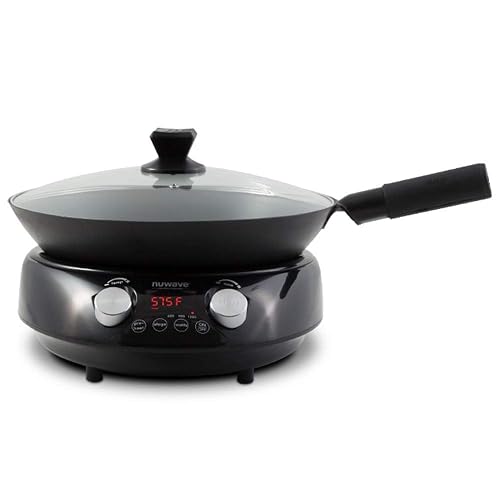
Nuwave Mosaic Induction Wok

FGJ 13-Inch Carbon Steel Wok

Made In Cookware 13″ Seasoned Carbon Steel Wok
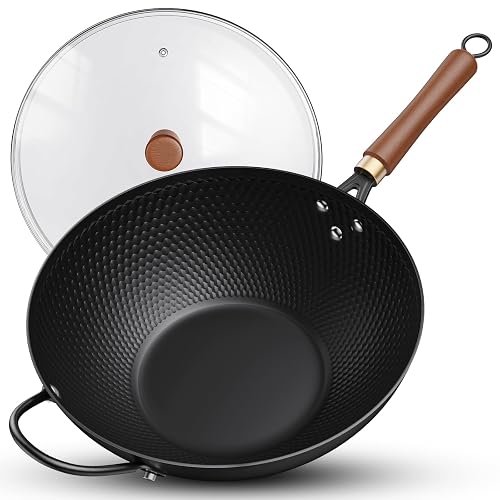
Todlabe Wok with Lid 13-Inch Carbon Steel

LOLYKITCH 13-Inch Stainless Steel Wok
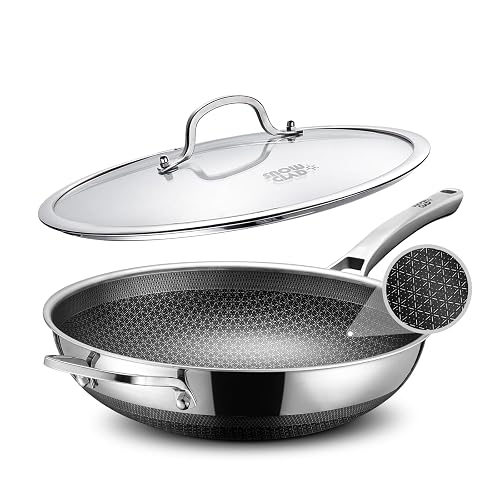
SNOWCLAD 13-Inch Hybrid Wok
Precise temperature bands make this Nuwave a different kind of wok, more dialed-in than the simpler carbon steel pans in this roundup. The 5-degree steps between 100°F and 575°F suit cooks who want control for sautéing, searing, and gentler finishes on an induction hob.
The included 14-inch carbon steel wok gives the setup a traditional profile, while the listed 600, 900, and 1500 watt levels point to a more managed cooking style. That mix works well in a busy kitchen, though the electronic approach may feel less hands-on than a plain pan for cooks who prefer a purely manual setup.
Strong Points
- Wide temperature range supports several cooking styles.
- 5-degree increments give unusually fine control.
- The included carbon steel wok supports classic stir-fry motion.
- Useful for households that want repeatable heat settings.
Points To Note
- Electronic controls add complexity compared with basic cookware.
- The setup leans more specialized than a simple flat-bottom wok.
- Carbon steel still needs routine drying and seasoning care.
Feature Snapshot
Who It Suits Best
Serious home cooks who want measured heat control on induction benefit most, especially for meals that need more than one temperature stage.
Where Another Pick Suits Better
Made In Cookware 13″ Seasoned Carbon Steel Wok suits cooks who want a simpler, more manual feel without the added controls.
FGJ takes a practical route with a pre-seasoned carbon steel body and a flat bottom, which is the right geometry for induction hobs. The 5.8-quart capacity gives enough room for family portions, and the glass lid makes it easier to monitor braises, noodles, or covered rice dishes without lifting the cover every minute.
Compared with the more technical Nuwave above, this one feels closer to a straightforward kitchen workhorse. The trade-off is that carbon steel usually asks for more care than stainless steel, so drying and oil maintenance remain part of the routine.
What We Like
- Flat bottom sits naturally on induction surfaces.
- 5.8-quart capacity suits family-size portions.
- Glass lid helps track moisture and browning.
- Pre-seasoned finish shortens the first-use prep work.
Minor Gripes
- Carbon steel needs regular drying after washing.
- The lid adds parts to store and clean.
- Nonstick claims depend on seasoning habits over time.
Core Details
Made For
Weeknight cooks who want a familiar carbon steel wok with enough room for family meals and a lid for covered finishes will find the format especially practical.
A Better Fit Elsewhere
SNOWCLAD 13-Inch Hybrid Wok fits households that want easier cleanup and a more modern stainless build.
This one leans into a pared-back, professional style. The 13.5-inch total diameter, 5.5-inch cooking surface, and 22-inch overall length create a long-handled profile that suits cooks who like room to toss ingredients without crowding the pan.
Compared with FGJ’s lid-ready approach, Made In is the cleaner, more stripped-down choice, and that can feel right in a kitchen built around direct high-heat movement. The shallow 3.82-inch depth also keeps it nimble, though cooks who want extra capacity for saucier meals may prefer something roomier.
Upsides
- Seasoned carbon steel supports quick heat response.
- Long handle gives leverage during tosses.
- Compact cooking surface keeps ingredients in focus.
- Induction compatibility fits modern hobs cleanly.
Room For Improvement
- The cooking surface is relatively small for batch cooking.
- Carbon steel still asks for seasoning maintenance.
- No lid means less flexibility for covered dishes.
Details At A Glance
Built With In Mind
Home cooks who want a lean, pro-style wok for fast tossing and direct heat management will get the most from this shape.
Swap It Out When
Todlabe Wok with Lid 13-Inch Carbon Steel suits cooks who want more covered-cooking flexibility than this stripped-back design offers.
Todlabe sits in the useful middle ground between a barebones wok and a more feature-heavy setup. The pre-seasoned carbon steel construction develops a natural oil patina, which is the thin layer that helps food release more easily as the pan gets used and cared for properly.
For households that cook fried rice, noodles, vegetables, or eggs on rotation, that seasoning-driven surface makes practical sense. The lid adds another layer of control, although the extra piece also means more storage and a little more cleanup than the simpler Made In option.
Best Bits
- Pre-seasoned surface reduces first-use prep.
- Flat bottom works cleanly on induction hobs.
- 5.6-quart capacity suits everyday family cooking.
- Lid broadens the range of covered dishes.
Small Caveats
- Carbon steel still needs dry storage and upkeep.
- The lid adds another part to wash.
- Natural patina builds gradually, not instantly.
Feature Rundown
Right Fit For
Busy kitchens that want a covered wok for daily stir-fry, rice, and quick sauced dishes will get a lot of use from this format.
Look Elsewhere When
LOLYKITCH 13-Inch Stainless Steel Wok suits cooks who prefer a less maintenance-heavy material and a detachable-handle setup.
LOLYKITCH takes a different route from the carbon steel pans above, using uncoated tri-ply stainless steel. Tri-ply means three bonded layers, a construction that usually helps distribute heat more evenly and gives the pan a more polished, lower-maintenance profile for induction and glass cooktops.
The detachable handle is a useful storage touch in compact kitchens, though the trade-off is one more moving part to keep track of. The brushed interior and glass lid make this a sensible match for cooks who want durability and straightforward cleanup more than the seasoning ritual that carbon steel asks for.
Highlights
- Uncoated tri-ply build suits frequent use.
- Detachable handle helps with storage.
- Glass lid expands covered cooking options.
- Stainless steel simplifies day-to-day upkeep.
Softer Spots
- Uncoated steel does not behave like classic nonstick.
- The handle mechanism adds another part to manage.
- Tri-ply cookware often feels heavier than thin pans.
Spec Overview
Whose Shelf It Belongs On
Home cooks who want stainless convenience, easier storage, and a wok that feels ready for daily use will get the best match here.
Another Choice May Suit
SNOWCLAD 13-Inch Hybrid Wok fits cooks who want a more coated-feeling surface and dishwasher-friendly positioning.
SNOWCLAD leans toward convenience, with a hybrid nonstick build, a lid, and dishwasher-friendly positioning. That makes it easier to live with than the carbon steel options, especially in kitchens where cleanup speed matters as much as heat behavior.
The stainless-steel base keeps it in the induction conversation, while the broiler and oven-safe claims broaden how it can move from hob to finish. The honest read is that hybrid coatings tend to appeal to cooks who want less upkeep and more consistency, though they rarely deliver the same old-school character as seasoned carbon steel.
Bright Spots
- Hybrid surface aims for easier food release.
- Dishwasher-friendly setup suits busy routines.
- Works across induction, oven, and broiler use.
- Lid gives more covered-cooking flexibility.
Areas To Watch
- Hybrid cookware usually feels less traditional than carbon steel.
- Coated surfaces can wear differently over time.
- Less suited to cooks chasing classic wok patina.
Core Details
The Right Fit
Households that value low-maintenance cleanup and flexible cooktop-to-oven use will find this the easiest wok to live with.
Reach For A Different Pick When
Made In Cookware 13″ Seasoned Carbon Steel Wok suits cooks who want a leaner, more traditional feel on an induction hob.
How To Choose The Right woks for induction hob
Flat Bottom First, Then Material
Induction hobs need strong surface contact, so a flat bottom matters more than the rounded shape that defines traditional wok cooking. Carbon steel gives the quickest, most classic response to heat, while stainless steel and hybrid builds usually trade some character for simpler upkeep.
The choice comes down to routine. Busy weeknight cooks often prefer a lower-maintenance finish, while people who want that familiar high-heat stir-fry feel usually lean toward seasoned carbon steel.
Capacity Should Match The Real Pan Load
Size can look similar on a product page, yet usable volume changes a lot once ingredients, sauce, and steam enter the picture. A 13-inch wok with a lid works well for most family meals, but deeper shapes suit saucier dishes and larger batches.
Shallower pans can feel more agile for tossing. Deeper ones reduce splatter and help with covered cooking, which matters in kitchens that handle noodles, rice, or braised vegetables on a regular basis.
Handles, Lids, And Cleanup Matter Too
Long handles improve leverage, while detachable handles save cabinet space. That detail sounds small until a narrow pantry or crowded drawer makes storage a daily annoyance.
Lids are useful for simmering and holding heat, though they add cleaning and storage steps. Stainless and hybrid surfaces usually suit cooks who want simpler cleanup, while carbon steel asks for drying and seasoning as part of normal ownership.
A Quick Reality Check
Common Shopping Slip Ups
Many shoppers focus on diameter alone and miss the bottom shape. On induction, that flat contact point matters more than a dramatic rim or a wide lip.
Another common miss is overlooking maintenance. Carbon steel rewards routine care, but stainless and hybrid surfaces better suit kitchens where quick cleanup matters more than seasoning rituals.
Where The Extra Money Goes
Higher-tier woks usually cost more because of material quality, layered construction, precise shaping, or added controls. That shows up in better heat spread, sturdier handles, or more thoughtful lid and storage design.
The upgrade makes sense for frequent cooks and kitchens that use a wok as a daily pan rather than an occasional specialty piece. For lighter use, a simpler carbon steel option usually covers the basics without adding complexity.
Final Thoughts
Induction-compatible woks work best when the shape matches the hob and the material matches the cook’s routine. Nuwave suits cooks who want exact heat control, while Made In and Todlabe lean more traditional. LOLYKITCH and SNOWCLAD move toward easier upkeep, and FGJ gives a practical middle ground with a lid. The strongest choice is the one that fits the kitchen’s pace, storage space, and tolerance for maintenance.



