

Knife sharpening stones reward patience, but the right setup saves time and removes guesswork. Home cooks, weekend cooks, and hobby sharpeners usually want a stone that matches their skill level, edge goals, and storage space. Some of the picks below lean simple and compact, while others add guides, bases, or a wider grit spread for more control. The useful part is matching the stone to the knife work already happening in the kitchen.
The Shortlist At A Glance
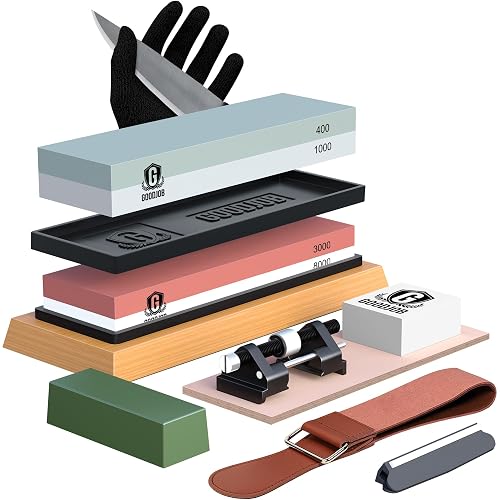
GOODJOB 4-Grit Whetstone Knife Sharpener Set 400/1000 3000/8000 Water Stone

Work Sharp Benchtop Whetstone Knife Sharpener
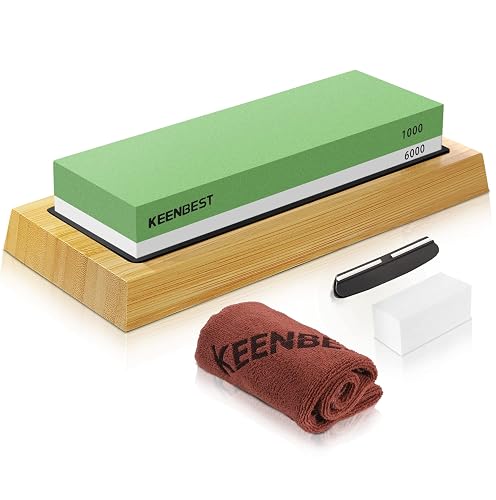
KEENBEST 1000 6000 Grit Whetstone Kitchen Knife Sharpening Stones


KING Whetstone Starter Set 1000/6000 Grit Combination Whetstone
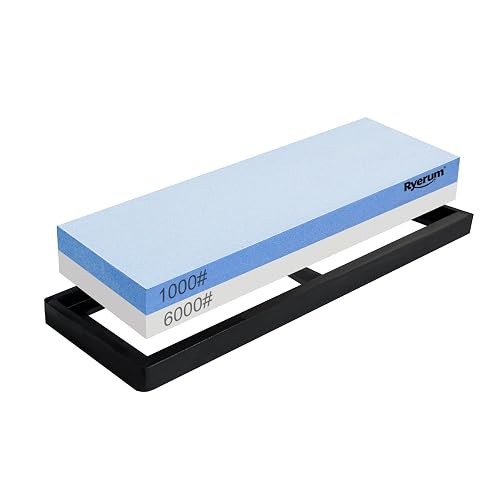
Premium Knife Sharpening Stone Whetstone 1000/6000
More Details On Our Top Picks
The GOODJOB kit stands out for range rather than simplicity. Four grit steps, 400, 1000, 3000, and 8000, cover damaged edges, routine sharpening, and finer finishing in one set. The bamboo base and leather strop push it toward a more complete bench setup, which suits a kitchen drawer that holds several knives and a few tools.
The trade-off is obvious: more pieces mean more setup and more cleanup, especially once water and slurry are involved. Home cooks who want one kit to handle dull chef knives, utility blades, and touch-ups will likely find the structure useful. The gloves add a practical layer for handling stone and blade changes, though the full bundle also asks for a little more storage space than a bare stone.
Strong Points
- Four grit stages make the kit useful for repair, refinement, and edge finishing.
- Bamboo base helps keep the stone stable on a counter.
- Leather strop adds a final edge-refreshing step for polished results.
- Works as a full setup for a busy kitchen bench.
Small Caveats
- The accessory count adds storage and cleanup steps.
- Water stone use usually means periodic rinsing and drying.
- Less convenient for quick touch-ups than a single stone.
Feature Snapshot
Who It Suits Best
Kitchen owners who want a bundled sharpening station instead of a single stone will get the most from this set.
Where A Sibling Pick Shines
KING Whetstone Starter Set 1000/6000 Grit Combination Whetstone suits first-time sharpeners who want fewer pieces and a simpler routine.
The Work Sharp benchtop model brings guidance to a category that usually depends on hand skill. Its sharpening guides can be set to 15 degrees or 17 degrees, or removed entirely for freehand work, which matters in a garage or kitchen where multiple blades need repeatable angles. Pocket knives, fillet knives, and general edged tools fit the broad use case better than a stone meant only for one style of kitchen blade.
Compared with the more manual GOODJOB kit, this one asks less of muscle memory and more of setup discipline. That makes it a strong fit for someone who wants consistency across different blade shapes, though the guide system also introduces parts that need attention and storage. The honest read is that it favors control over simplicity, and that trade-off will suit some households more than others.
Highlights
- Angle guides set to 15 or 17 degrees help repeat the same edge geometry.
- Guides can be removed for freehand sharpening.
- Fits kitchen, pocket, and fillet knives along with other edged tools.
- Benchtop format suits a fixed sharpening station.
Areas To Watch
- Guide pieces add setup and storage steps.
- Less minimal than a basic handheld stone.
- Angle control may feel more involved for casual sharpening.
Core Details
Who Should Grab It
Shoppers who want guided angle control for several knife types will find this model especially practical.
Swap It Out When
GOODJOB 4-Grit Whetstone Knife Sharpener Set 400/1000 3000/8000 Water Stone suits someone who prefers a more traditional stone routine with a larger grit spread.
The KEENBEST stone keeps the formula straightforward with 1000 and 6000 grit on two sides. In plain terms, that means the coarser side handles ordinary sharpening, while the finer side helps smooth and refine the edge. For a standard kitchen setup, that two-step path is often enough without the clutter of a larger kit.
The anti-slip base and angle guide make it friendlier for home use than a bare stone, though the setup still asks for water and a little patience. Compared with the Work Sharp benchtop unit, this one feels less mechanical and more hands-on, which is exactly the point for many cooks. It suits kitchens that want a compact routine rather than a station full of accessories.
What We Like
- Two grit levels cover routine sharpening and finer edge work.
- Anti-slip base supports steadier use on a counter.
- Angle guide helps new sharpeners keep a more even stroke.
- Simple two-sided format keeps the routine easy to learn.
Minor Gripes
- Two-grit format leaves less room for heavy reshaping.
- Still needs water management and drying after use.
- The guide helps, but it does not replace careful hand control.
Details At A Glance
Made For
Kitchen users who want a simple dual-grit stone with a bit of extra stability will find this a sensible fit.
A Better Fit Elsewhere
GOODJOB 4-Grit Whetstone Knife Sharpener Set 400/1000 3000/8000 Water Stone suits sharper repair work and a broader finishing range.
The KING K#-WHET STONE is the stripped-down option in this group, and that can be a strength. Its 1200 grit medium surface sits in the middle of the sharpening process, so it makes sense for ongoing maintenance rather than dramatic edge repair. In a kitchen that already has sharp knives and only needs regular touch-ups, that focus can be exactly right.
Compared with the KEENBEST and GOODJOB sets, this stone asks less of the counter and far less of the budget-friendly accessory stack. The trade-off is range, because a single medium-grit stone does not offer the same finishing flexibility as a two- or four-grit kit. Still, the clean format will suit cooks who want one dependable abrasive surface and little else.
Best Bits
- 1200 grit hits a useful middle ground for routine edge care.
- Simple single-stone design keeps setup and storage easy.
- Good match for knives that only need maintenance work.
Points To Note
- Single grit means less flexibility for finishing or repair.
- Owners usually need a separate base or holder arrangement.
- Not the right fit for badly dulled blades that need more stages.
Quick Facts
Right Fit For
Home cooks who already keep edges in decent shape and want a modest maintenance stone will appreciate this one.
Look Elsewhere When
KING Whetstone Starter Set 1000/6000 Grit Combination Whetstone makes more sense for someone who wants a broader two-stage routine and included accessories.
The KING Starter Set reads like a proper entry point for sharpening at home. The 1000 side handles the main sharpening step, and the 6000 side takes over for finishing, which gives a cleaner learning curve than a more elaborate four-grit bundle. The included knife angle holder and stable plastic base matter in small kitchens, where keeping the blade steady often matters as much as the stone itself.
Compared with the single KING K#-WHET STONE, this set gives more guidance and a broader routine without getting overly complex. The wiping cloth is a small but sensible addition, especially during cleanup after water-stone work. Newer sharpeners and cautious weekend cooks will likely appreciate that the kit already covers the basics without forcing separate accessory shopping.
Positives
- Two-sided grit setup separates sharpening from finishing.
- Angle holder adds extra help for steadier hand placement.
- Plastic base supports a more stable workstation.
- Wiping cloth makes post-use cleanup more convenient.
- Made in Japan, which many shoppers associate with careful stone finishing.
Softer Spots
- Two-sided stones still require water, drying, and storage care.
- Angle holder helps, but it does not replace good hand technique.
- Less expansive than a four-grit kit for deep repair work.
Spec Overview
Whose Shelf It Belongs On
Beginners and careful home cooks who want guidance built into the kit will get the most from this set.
Where Shoppers Go Wrong
GOODJOB 4-Grit Whetstone Knife Sharpener Set 400/1000 3000/8000 Water Stone suits sharper repair needs and a more layered finishing process.
The Premium 1000/6000 stone keeps things close to the center of the category. The dual-sided layout handles ordinary sharpening on one face and finer edge refinement on the other, which fits a lot of weekly kitchen maintenance without asking for a large bundle. Two rubber bases give it a steadier footprint than a bare stone, and that matters on smooth counters.
Compared with the KING starter set, this one trims away the angle holder and cloth, so the setup feels leaner. That makes sense for someone who already knows the basics and wants fewer accessories in the drawer. It’s a neat middle path, though the lack of extras means first-time sharpeners may prefer something more guided.
Upsides
- 1000 and 6000 grit cover the main sharpening workflow.
- Two rubber bases improve stability on the counter.
- Simple layout keeps the routine compact and manageable.
- Fits regular maintenance for a household knife set.
Room For Improvement
- Fewer accessories than the KING starter bundle.
- Less hand-holding for newer sharpeners.
- Still requires water-stone care after use.
Technical Sheet
The Right Fit
Households that want a compact sharpening stone with steadier footing and little extra clutter will find this a sensible match.
Another Choice May Suit
KING Whetstone Starter Set 1000/6000 Grit Combination Whetstone better serves newcomers who want an angle holder and a cleaning cloth included.
How To Choose The Right whetstones for knife sharpening
Grit Pairing Sets The Job
Grit is the abrasive size on the stone, and it drives the whole sharpening process. Coarser numbers remove more metal and help rescue dull edges, while finer numbers refine the edge afterward. For regular kitchen care, a two-stage stone around 1000 and 6000 grit usually covers more ground than a single medium stone. Bigger grit spreads, like the GOODJOB kit, suit households that keep several knives in rotation.
Guidance Matters More Than Many Expect
Angle control shapes the final edge just as much as grit does. Guided sharpeners, such as the Work Sharp benchtop model or the KING starter set, help hold a steadier angle, which is useful for newer sharpeners or mixed knife collections. Freehand stones give more freedom, but they ask for more consistency from the hand. The trade-off sits between convenience and control.
Think About Setup And Cleanup
Water stones usually need soaking or wetting, plus rinsing and drying after use. That adds a little maintenance, but it also gives a smoother sharpening feel for many kitchen tasks. Base design matters too, especially on slick counters or in small spaces where movement becomes annoying fast. A bamboo base, plastic base, or rubber feet can make the difference between steady work and a slipping stone.
Match The Kit To The Knife Work
Home cooks who mostly maintain chef knives and paring knives can stay with a simpler two-grit stone. More varied tool sets, including fillet knives or edged tools, justify a more adaptable setup. A single stone like the KING K#-WHET STONE suits routine maintenance, while a multi-piece set fits a kitchen that needs repair, polishing, and hand protection in one box.
What To Weigh Before You Click Amazon
Hidden Buying Traps
Many first-time sharpeners focus on grit count and ignore the base, guide, or cleanup routine. That leads to a kit that looks complete but feels awkward on the counter. A second mistake is choosing a stone that is too specialized for the knives already in the kitchen. Simpler usually wins for basic upkeep.
Storage also gets overlooked. A multi-piece bundle can be helpful, but it needs space for the stone, holder, and any extras after use. That matters in compact kitchens where a plain stone may fit the workflow better.
The Upgrade Payoff
Higher-tier stones usually cost more because they add structure around the abrasive surface. That structure can mean angle guides, stable bases, extra grit stages, or finishing accessories like a strop. Those additions save time and reduce guesswork for frequent sharpeners.
The upgrade makes sense in households with several knives, more demanding blade care, or a strong preference for consistent angles. For occasional touch-ups, a simpler stone often does the job with less fuss. The extra spend is about control and convenience, not magic.
Closing Thoughts
Whetstones reward the person who wants more control over a blade edge, and the right choice depends on how much guidance and range a kitchen really needs. The GOODJOB kit suits a fuller sharpening station, the Work Sharp favors angle control, and the KING options keep the process simpler. For steady home maintenance, the most useful pick is usually the one that matches the knife drawer already in place. A well-matched stone tends to feel calm rather than complicated, and that is usually the right sign.



