

Bag sealers solve a simple problem that shows up in kitchens, storage drawers, and shipping stations: once a bag is opened, keeping contents neat gets harder fast. The right tool turns loose snack packets, pantry items, and bulk portions into tidy, resealable packages without much fuss. Compact handheld units suit everyday households, while longer heat sealers and vacuum models fit more regular packing routines.
This roundup focuses on six sealers for plastic bags with different footprints, power styles, and sealing formats. Some are built for quick snack closures, others suit thicker sleeves, and one shifts into vacuum sealing for more structured food storage. The main question is not which machine looks strongest, but which one matches the way packaging actually happens at home or in a small workspace.
Quick Shortlist For Fast Comparison

COMTAR Mini Bag Sealer 2-in-1

Jinhong Impulse Heat Sealer 8-inch

Piwerod 12 Inch Impulse Heat Sealer
Jinhong 16 Inch Impulse Heat Sealer

BBDYOY 2in1 Mini Bag Sealer Green
POWOT Precision Vacuum Sealer
More Details On Our Top Picks
COMTAR keeps the format simple: a rechargeable mini body that seals and cuts in one pass. That combination suits kitchen drawers, lunch prep, and travel kits, where a full-size machine would be awkward. The trade-off is scale, since a handheld tool is built for convenience rather than long production runs.
Compared with the longer Jinhong and Piwerod units, this one is the easiest to store and the least fussy to pull out for a quick reseal. The honest read is that it makes the most sense for snack bags and small packaging jobs, especially where a cord would be a nuisance.
Strong Points
- Rechargeable design reduces cord clutter around a prep area.
- Two-in-one function seals and trims open edges.
- Small body fits a drawer or caddy with ease.
- Well matched to chip bags, seasoning packets, and other light household packaging.
Things To Consider
- Handheld format is better for short jobs than repeated batch work.
- Small surface area can feel slow on wider bags.
- Battery care matters for long gaps between uses.
Feature Snapshot
Who It Suits Best
Households that reseal snack bags, pantry packets, and small portions will get the most from this compact format.
Where A Sibling Pick Shines
BBDYOY 2in1 Mini Bag Sealer suits fridge-side kitchen storage better, thanks to its magnet and cutter combo.
The Jinhong unit moves from handheld convenience into a more fixed sealing approach. An impulse heat sealer sends current through a heating strip only during the seal cycle, which keeps the process controlled and better suited to thin poly bags, PE, and PP materials. For a garage packing station or a small kitchen setup, that straightforward format is reassuring.
Compared with COMTAR’s cordless mini tool, this one makes more sense for steadier work and cleaner, straighter seals. The included repair kit adds practical value, though a manual setup still asks for a little attention to alignment and pressure.
Upsides
- Impulse heating suits routine sealing without a complicated setup.
- Designed for common bag materials such as PE and PP.
- Included repair kit adds a useful maintenance buffer.
- Good fit for side tables, packing counters, and food storage stations.
Points To Note
- Manual operation suits patient handling more than rushed packing.
- Fixed placement takes more counter room than a mini handheld unit.
Core Details
Built With In Mind
Small shops, pantry packers, and home storage setups benefit most from this manual, bench-style sealer.
Another Choice May Suit
Piwerod 12 Inch Impulse Heat Sealer makes more sense for households that want a wider sealing span without jumping to a larger machine.
Piwerod sits in the middle of the lineup in a sensible way. The 12-inch sealing width gives more reach than the 8-inch Jinhong model, while staying less bulky than the 16-inch Jinhong unit. That extra span helps with cookie bags, mixed pantry bags, and everyday packaging where a narrow bar would feel cramped.
The source data also points to use with plastic, Mylar, PE, PP, and kraft paper bags, which broadens the practical scope. The trade-off is the same one found in most manual sealers, steady hand placement matters, so quick jobs are easy and careless ones can look uneven.
Highlights
- 12-inch width offers a useful middle ground for common bag sizes.
- Works across several packaging materials, including kraft paper bags.
- Manual operation keeps the setup simple and familiar.
- Included extra elements make maintenance less of a dead end.
Room For Improvement
- Manual control means seal quality depends on alignment and pressure.
- Larger than a handheld mini sealer, so storage takes more planning.
Quick Facts
Whose Shelf It Belongs On
Home packers who want one sealer for mixed bag sizes and everyday kitchen work will find the format especially practical.
Look Elsewhere When
COMTAR Mini Bag Sealer 2-in-1 fits better for tiny kitchens that need a cordless tool with the smallest storage footprint.
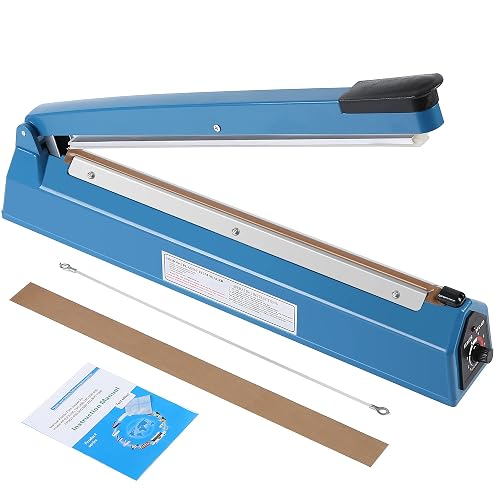
Jinhong’s 16-inch frame is the clear size-focused option in this group. That wider sealing area gives more room for larger food storage bags, foil pouches, and packaging jobs that feel awkward under shorter bars. For a busy prep counter, the extra reach can save repeated repositioning.
Compared with Piwerod’s 12-inch model, this one leans into capacity rather than compactness. The included replacement element helps with maintenance, though the larger body naturally asks for more storage space and a little more patience during setup.
Bright Spots
- 16-inch width handles larger bags more comfortably.
- Works across PE, PP, Mylar, and poly foil bags.
- Replacement element adds practical upkeep value.
- Useful for food storage stations and small restaurant back rooms.
Softer Spots
- Bulkier footprint is less convenient in tight kitchens.
- Manual sealing still rewards a careful hand and steady placement.
Feature Rundown
Who Will Love This
Households and small food prep stations that handle larger bags regularly are the strongest match for this wider manual sealer.
Swap It Out When
COMTAR Mini Bag Sealer 2-in-1 makes more sense for apartment kitchens that need a lightweight cordless tool rather than a full-width machine.
The BBDYOY model takes the same compact idea as COMTAR’s mini sealer and adds a magnet plus a hidden cutter. That small change matters in a real kitchen, because the tool can stay on a refrigerator or metal surface instead of wandering into a drawer. It feels built for quick reseals after breakfast, school lunches, or late-night snack storage.
In contrast to the bench-style Jinhong and Piwerod machines, this one is all about speed and convenience. The green finish is a small style note, but the practical advantage is the magnetic storage, which keeps the tool easy to reach without taking up counter space.
Plus Points
- Hidden cutter adds a second useful function.
- Magnet storage helps keep the tool within reach.
- Rechargeable format works well for everyday kitchen use.
- Compact body suits snack bags and pantry packets.
Minor Gripes
- Small format is less suited to bigger packaging jobs.
- Magnet storage works best on suitable metal surfaces.
Details At A Glance
Right Fit For
Busy kitchens that need a small, reachable sealer for frequent light-duty use will get the most from this layout.
Where Shoppers Go Wrong
Piwerod 12 Inch Impulse Heat Sealer suits anyone who needs a wider sealing span and more control over larger bags.
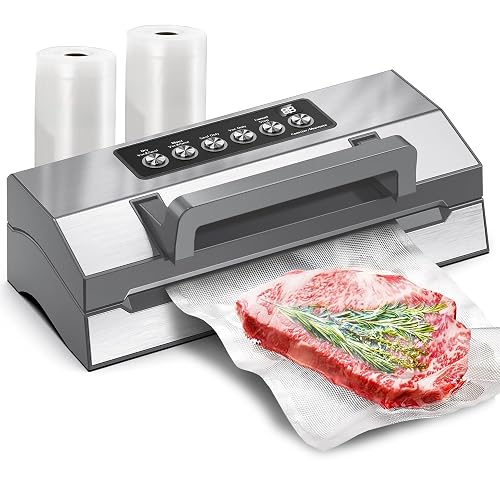
POWOT moves beyond simple bag closing and into a full vacuum sealing setup. A vacuum sealer removes air before the double heat seal closes the bag, which is a more structured approach for food storage stations, bulk portions, and organized freezer use. The built-in cutter, bag storage, hose, and bag roll support all point to a system meant to stay in one place.
Compared with every handheld and impulse model in this list, this is the most complete station-style option. The honest trade-off is size and complexity, so it suits a pantry or countertop workflow better than a quick snack-bag routine. For households that package in volume, the extra hardware is easy to justify.
Reasons To Buy
- Automatic vacuum sealing streamlines a more involved packing routine.
- Double heat seal adds a stronger closure format than basic handheld tools.
- Built-in cutter and bag storage support a cleaner station setup.
- Hose and bag roll support help keep accessories together.
Areas To Watch
- Requires more counter space than the compact mini sealers.
- Feature set suits organized use more than occasional resealing.
At A Glance
Best Suited To
Home cooks and small-volume food packers who want a countertop vacuum station will appreciate the broader tool set here.
Reach For A Different Pick When
BBDYOY 2in1 Mini Bag Sealer suits quick daily resealing better, especially in a kitchen where storage space is tight.
How To Choose The Right sealers for plastic bags
Match The Tool To The Bag Workload
Sealers fall into two broad lanes: compact handheld units and fixed heat sealers. Handheld designs suit snack packets, pantry bags, and light resealing, while bench-style impulse sealers handle wider openings with more consistency. Vacuum systems sit in another category entirely, since they are built for more organized storage routines rather than quick one-off closures.
Bag material matters just as much as size. PE and PP are common in the source data here, while Mylar, poly foil, and kraft paper require a model that clearly lists support for those materials. A mismatch usually shows up as awkward sealing, weak closure lines, or a workflow that feels slower than it should.
Think About Storage, Power, And Setup
Rechargeable mini sealers make the most sense in apartments, small kitchens, and travel kits because they store easily and avoid cord clutter. Manual impulse sealers need a bit more room, but they often feel steadier for repeated use on a counter or packing table. Vacuum sealers take the most space and setup time, yet they repay that effort with a more structured station for regular storage.
Counter space is easy to underestimate. A 16-inch sealer can fit a large bag comfortably, but the body itself needs a home, and that matters in narrow kitchens.
Look Past The Main Job Title
Extra elements, repair kits, cutters, magnets, and built-in storage all change how a sealer feels in daily use. A cutter is useful for opening packaging cleanly, a magnet keeps a mini tool visible, and spare heating elements reduce downtime after wear. These details do not replace the sealing function, but they often decide whether a tool feels convenient or annoying after the first week.
Maintenance also deserves attention. Manual sealers with replaceable elements are easier to keep useful over time, while cordless mini units ask for charging habits and safe storage. For frequent home packaging, that practical layer matters more than a flashy feature list.
What To Weigh Before You Click
Mistakes Worth Dodging
First-time shoppers often focus on size alone and miss the material list. A wide bar does not help much if the sealer is poorly matched to the bag type already in the pantry. Another common slip is ignoring storage needs, which is how a practical tool ends up buried in a drawer.
It also pays to separate quick resealing from larger packing jobs. A mini cordless sealer handles snack bags well, but a countertop packing routine needs a steadier machine with a wider working area. The right match saves time every day.
When Paying More Pays Off
Higher-tier models usually bring more width, better workflow parts, or more complete station features. That can mean built-in cutter storage, a vacuum system, or a longer sealing span that reduces repeated passes. In plain terms, the added cost often goes into convenience and capacity, not just a larger shell.
The upgrade makes sense for households that package in volume or handle thicker, more varied bags. For occasional snack resealing, a simpler mini sealer usually covers the need without taking over the counter.
Closing Thoughts
The strongest match depends on the rhythm of the kitchen or packing station. COMTAR and BBDYOY suit quick, compact resealing, while Piwerod and the two Jinhong units cover a more traditional heat-sealing workflow with different width needs. POWOT stands apart for anyone building a fuller vacuum setup. A sensible choice here comes down to bag size, storage space, and how often sealing actually happens.



