

Paella pans for induction hob need more than wide rims and a shallow bowl, because induction cooking asks for a flat, responsive base and steady heat contact. You also want a shape that suits rice, seafood, and mixed one-pan meals without turning cleanup into a chore. This roundup focuses on material, size, handle design, and stove compatibility so you can match the pan to your kitchen, patio burner, or family table.
Quick Look At The Shortlist
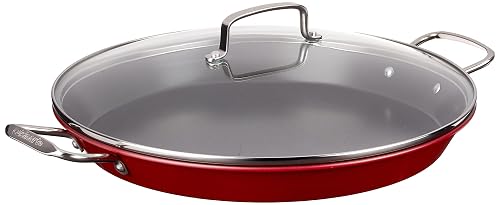
Cuisinart ASP-38CR 15-Inch Paella Pan (Red)
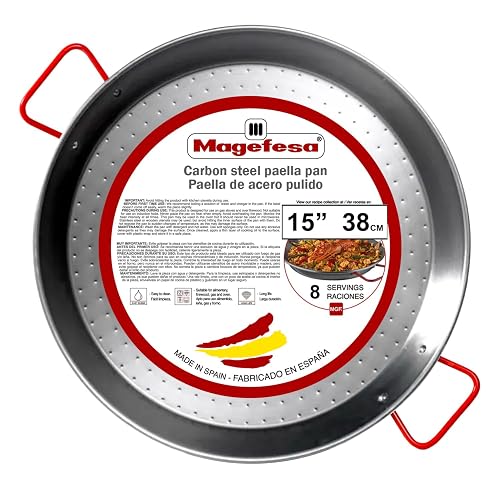
Magefesa 15-Inch Carbon Steel Paella Pan 38 cm
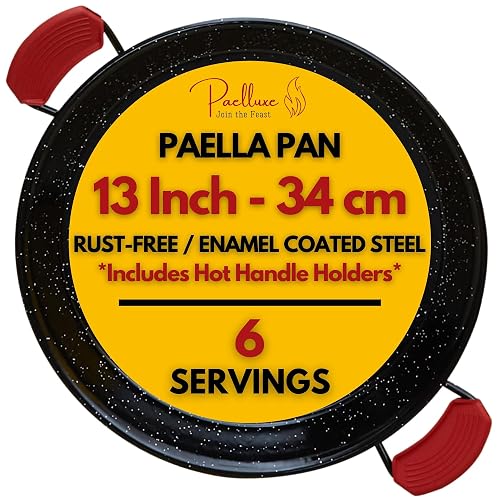
Paelluxe Enameled No-Rust Steel Skillet 13-Inch
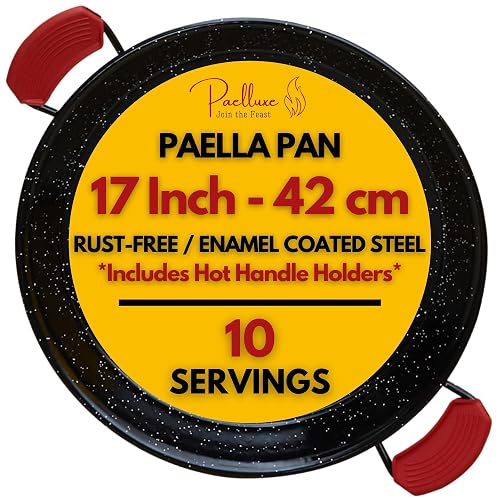
Paelluxe Enameled No-Rust Steel Skillet 17-Inch

Paelluxe Enameled No-Rust Steel Skillet 22-Inch

DELARLO 14-Inch Tri-Ply Stainless Steel Paella Pan

DELARLO 16-Inch 5-Ply Stainless Steel Paella Pan

Inqibee 12-Inch Stainless Steel Paella Pan
More Details On Our Top Picks
The hard-anodized exterior gives this Cuisinart a sturdier feel than many basic pans, and that matters in a busy kitchen where you want even heat without constant fuss. The sloped sides leave room for rice to spread while still giving you enough surface for browning, which makes it practical for weeknight seafood rice or a weekend pan of socarrat-style edges.
You also get stainless steel handles that are designed to stay cooler on the stove, so transport feels less awkward when the pan is full. The trade-off is that the nonstick surface still asks for gentle cleaning, and that usually suits home cooks who prefer easy release over a bare, traditional paella finish.
Strong Points
- Hard-anodized body supports steady heat spread.
- Sloped walls leave a broad cooking area.
- Cool-touch handle design helps with handling at the stove.
- Nonstick coating reduces the need for heavy scrubbing.
- The included lid adds flexibility for covered simmering.
Minor Gripes
- The nonstick finish benefits from soft utensils and careful wash-up.
- It leans more modern than a classic carbon-steel paella pan.
Feature Snapshot
Who It Suits Best
Home cooks who want a polished, easy-release pan for regular stovetop use will get the most from it.
Where A Sibling Pick Shines
DELARLO 14-Inch Tri-Ply Stainless Steel Paella Pan suits you better for induction-ready heat control and a more metal-forward cooking feel.
This Magefesa leans into tradition: carbon steel keeps the build light, and the dimpled surface gives it the classic paella look many home cooks want for outdoor rice. For backyard setups and burner-based cooking, that lighter weight makes rotation and repositioning less of a strain, which is handy during longer cook times.
The honest read is that carbon steel asks for more care than coated pans, because bare steel tends to prefer prompt drying and sensible storage. That trade-off suits you best when flavor, shape, and tradition matter more than low-maintenance convenience.
What We Like
- Carbon steel keeps the pan easy to move.
- The dimpled finish matches traditional paella styling.
- Its size works well for small group meals.
- Simple construction makes storage straightforward.
Points To Note
- Bare steel usually needs prompt drying after washing.
- It suits outdoor burner use more naturally than induction.
- The lighter build can feel less rigid than clad steel.
Core Details
Made For
You get the most from this pan outdoors, especially for traditional rice cooking over a burner.
Another Choice May Suit
Cuisinart ASP-38CR 15-Inch Paella Pan fits you better for indoor use and a lower-maintenance nonstick surface.
This 13-inch Paelluxe keeps things compact without feeling undersized for a couple or a small family. The enameled steel surface is the key detail here, because enamel is a glass-like coating that helps resist rust and cuts down on the upkeep that bare carbon steel usually demands.
That makes it a sensible option for weeknight cooking, especially in smaller kitchens where storage and cleanup matter as much as heat behavior. It is more convenient than the Magefesa, though less tradition-leaning, and the silicone handle holders add a practical touch for busy stove-side movement.
Highlights
- Enameled coating helps reduce rust concerns.
- 13-inch size suits smaller batches well.
- 1.2 mm carbon steel keeps the pan manageable.
- Silicone handle holders add comfort during handling.
- Works on stove burners and in the oven.
Softer Spots
- The smaller size can feel tight for larger portions.
- Enameled surfaces still benefit from careful utensil choice.
Details At A Glance
The Right Fit
This suits you best for smaller households, apartment kitchens, or cooks who want less upkeep.
Skip It When
Paelluxe Enameled No-Rust Steel Skillet 17-Inch fits better for larger family portions and a wider cooking surface.
The 17-inch Paelluxe is where the line starts to feel more communal, because the extra diameter gives you more room for rice, seafood, and the browned edges people tend to fight over. It also spans two stove burners, so you can still use it indoors without immediately thinking about an outdoor setup.
Compared with the 13-inch version, this one gives you more breathing room, though it also asks for more storage space and a more careful lift. For family meals, that trade-off usually makes sense, especially when you want one pan that can move from stovetop to table without looking cramped.
Reasons To Buy
- 17-inch diameter gives the rice more spread.
- Two-burner coverage helps indoor cooking feel realistic.
- Enameled surface keeps upkeep simpler than bare steel.
- The size suits family-style serving very well.
- Silicone handle holders help during transfers.
Areas To Watch
- It needs more cabinet space than smaller pans.
- The wider body can feel bulky when full.
- It still asks for gentle care around the enamel.
Feature Rundown
Whose Shelf It Belongs On
This suits cooks who make paella for family dinners and want more room than a small skillet provides.
Reach For A Different Pick When
Inqibee 12-Inch Stainless Steel Paella Pan makes more sense for smaller kitchens and tighter storage spaces.
The 22-inch Paelluxe is built for big outdoor gatherings, and that scale changes the whole rhythm of the meal. You get a broad cooking field for large rice batches, but the product page is clear that this size is for an outdoor propane burner, not kitchen stoves or ovens.
That limitation sounds strict, yet it’s also useful because it keeps expectations clean and prevents a bad fit in indoor cooking spaces. For backyard hosts who feed a crowd, the roomy surface feels like a stage set for the pan, while the trade-off is obvious storage and setup demand.
Best Bits
- Large surface suits crowd-sized paella sessions.
- Enamel finish makes post-cook cleanup easier.
- Outdoor-only use keeps the fit clear.
- Handle holders help with transport.
Small Caveats
- It is too wide for typical kitchen stovetops.
- It does not suit oven use.
- Storage and handling take more space.
Core Details
Best Suited To
This belongs with hosts who cook outdoors for large groups and already use a propane burner.
Swap It Out When
DELARLO 16-Inch 5-Ply Stainless Steel Paella Pan suits you better for indoor flexibility and a smaller footprint.
Tri-ply means three bonded layers, usually a metal core sandwiched between stainless surfaces, and that construction is the reason this DELARLO stands out for induction hobs. Heat should travel through the base and up the sidewalls more evenly than with simpler single-layer pans, which helps when you want tighter control over rice and aromatics.
It’s also a strong multi-use pan for someone who wants one piece of cookware to cover induction, grills, burners, open fire, and domestic ovens. The trade-off is price pressure typical of clad cookware, so it makes most sense for cooks who value heat consistency over a lightweight feel.
Upsides
- Tri-ply build supports more even heat transfer.
- Induction compatibility is clearly built in.
- Works across several cooking setups.
- Food-grade polished surface helps with reactive ingredients.
- The lid adds extra flexibility for covered cooking.
Worth Noting
- Clad steel usually feels heavier than basic pans.
- The multi-layer build can cost more than simpler steel.
- 14 inches may feel modest for larger gatherings.
Quick Facts
Who Should Grab It
You’ll appreciate this most if you cook on induction and want a pan that can move between indoor and outdoor setups.
Look Elsewhere When
Paelluxe Enameled No-Rust Steel Skillet 17-Inch gives you more serving room for family-style portions.
This DELARLO pushes further into clad-steel territory with five layers, which is exactly the sort of build cooks notice when they want more precise heat behavior. For a paella pan, that means a better chance of even contact across a wide base, especially on induction where the cooktop rewards flat, responsive cookware.
The 16-inch size gives you serious room for 12 to 14 servings, so it sits in the sweet spot between family meals and larger gatherings. The honest caveat is that five-ply cookware usually feels substantial in the hand, yet that extra mass is part of the appeal for cooks who want steadier heat retention.
Standout Traits
- Five-ply construction supports even heat distribution.
- Large 16-inch diameter suits bigger batches.
- Induction-friendly build broadens cooktop use.
- Polished stainless finish suits regular kitchen use.
- The lid expands the pan’s day-to-day usefulness.
Honest Caveats
- Five-ply cookware usually feels weightier than simple steel.
- It takes more storage space than smaller pans.
- Large capacity makes it less handy for solo meals.
Feature Card
Built With In Mind
This is a strong match for home cooks who want induction-ready cookware with a firmer, more substantial build.
Where A Sibling Pick Shines
DELARLO 14-Inch Tri-Ply Stainless Steel Paella Pan works better for you if you want a slightly smaller pan with easier handling.
The Inqibee keeps the format simple: a 12-inch shallow pan with double-riveted handles and induction compatibility. That combination makes it easy to live with in smaller kitchens, especially for cooks who want a paella-style pan that also works as a wide frying pan for searing or one-pan dinners.
Its tri-ply construction gives you the same basic heat-transfer logic seen in the DELARLO options, though in a smaller footprint that is easier to store and lift. You may find the 12-inch size a little tight for larger rice spreads, but for starter induction setups it feels tidy and practical.
Plus Points
- 12-inch size fits compact kitchens well.
- Tri-ply structure supports quick, even heating.
- Double-riveted handles improve handling confidence.
- Dishwasher and oven compatibility add flexibility.
- Shallow form works for paella and daily frying.
Room For Improvement
- The smaller cooking field limits larger paella batches.
- It may feel modest for big family servings.
Feature Rundown
The Right Fit
This suits you best if you want a smaller induction-ready pan for apartment kitchens or simple weeknight rice dishes.
Swap It Out When
Paelluxe Enameled No-Rust Steel Skillet 17-Inch is the better move for larger family meals and more generous surface area.
How To Choose The Right paella pans for induction hob
Material And Heat Behavior
Induction hobs favor cookware with a magnetic base, so stainless steel and some clad constructions are the cleanest match here. Tri-ply and five-ply pans, such as the DELARLO models, spread heat more evenly because the layers help move energy across the base and sidewalls, while carbon steel warms quickly but asks for more upkeep.
Enamel-coated steel sits in the middle. It gives you easier cleaning than bare steel, though it can feel less traditional than a plain carbon-steel pan and usually benefits from gentler handling.
Size, Surface, And Serving Count
Diameter changes how a paella cooks just as much as material does. A 12- or 13-inch pan suits smaller meals and tighter storage, while 17 inches and up starts to make sense for family tables and larger rice spreads.
The serving count on the listing helps, but it’s better to think about your actual stove space and how much browning you want across the rice layer. Too deep a pile crowds the pan, while too much width can outgrow your burners or cabinet space.
Handles, Lids, And Everyday Use
Riveted or double-riveted handles usually feel more secure for lifting a full pan, and that matters once the pan is hot and heavy. Lids are useful for more than paella, because they let you use the pan for simmering, covered rice dishes, and larger one-pan meals.
Handle covers, silicone grips, and cool-touch designs also influence how comfortable the pan feels in real kitchens. They do not change the food, but they do change how often you reach for the pan on a weeknight.
Cleaning And Storage Reality
Bare carbon steel rewards prompt drying and dry storage, while enameled and stainless finishes are usually easier to live with after dinner. Larger pans, especially 16 to 22 inches, need more cabinet space and a steadier hand during cleanup.
That’s why the most useful pan is not always the biggest one. The right fit is the pan you can store, lift, and wash without dreading the next meal.
Things Worth Knowing First
Where Shoppers Go Wrong
One common mistake is choosing size by serving count alone. A 16-inch pan sounds generous, but it still needs a cooktop that can support the footprint and a cupboard that can swallow the diameter.
Another misstep is ignoring finish type. Bare carbon steel brings tradition and responsiveness, yet it also asks for more care than enamel or stainless, so the maintenance load should match your routine.
What The Higher Tier Buys
Clad steel and thicker multi-layer construction usually cost more because they use more material and more complex bonding. That extra engineering often translates into smoother heat spread, stronger handles, and better compatibility across induction, ovens, and outdoor heat sources.
The upgrade makes sense for frequent cooks who want steadier results and a pan that pulls double duty. For occasional paella nights, a simpler pan can be the smarter place to start.
Frequently Asked Questions
Can a paella pan work well on induction?
Yes, as long as the pan has a magnetic base or an induction-compatible construction. Stainless steel and clad steel are the most straightforward matches in this roundup.
What size suits a small household?
12 to 13 inches is a sensible starting point for smaller kitchens and modest portions. That size keeps storage easier and avoids overbuying surface area you won’t use often.
Is carbon steel harder to care for?
It usually needs more attention than stainless or enamel, especially after washing. Prompt drying helps keep the surface in better shape.
Do larger pans need special cooktops?
Very large pans often need burner coverage that matches the base. The 22-inch Paelluxe, for example, is aimed at outdoor propane use rather than standard kitchen stoves.
Does a lid matter for paella pans?
A lid broadens the pan’s usefulness for simmering and covered dishes. It is less essential for classic paella, but handy for everyday cooking.
Final Thoughts
You get the best results from paella pans for induction hob by matching the pan’s material and size to your stove, your storage, and the way you cook on weeknights or for guests. Cuisinart and the DELARLO pans make the strongest case for indoor flexibility, while the Magefesa and Paelluxe carbon-steel options suit cooks who want a more traditional outdoor rhythm. Smaller kitchens should lean toward the 12- to 13-inch pans, and larger gatherings point toward 16 inches or more. Pick the format you’ll reach for often, and the rest tends to fall into place.



