

Good baguette pans turn dough into loaves with a better rise, crisper bottoms, and cleaner shape control. That matters in a home oven, where heat, spacing, and airflow can make a plain tray act very differently from a perforated bread pan. You’re likely here because you want a pan that fits your oven, suits your batch size, and doesn’t turn cleanup into a chore.
The shortlist below focuses on form, material, slot count, and the kind of use each pan suits best. Some lean compact, some lean heavy-duty, and a few are better for baking multiple loaves in one run. The right fit depends on how often you bake, how much space you need, and how much surface color you want on each loaf.
Quick Look At The Shortlist

Eparé French Baguette Bread Pan 15×5

Baguette Pans for Baking 15 x 11 Carbon Steel 3 Loaf Tray Gold

Baguette Pans for Baking 15 x 11 Carbon Steel 3 Loaf Tray Silver

Baguette Pans for Baking 15 x 11 3 Loaf Carbon Steel French Bread Pan Silver
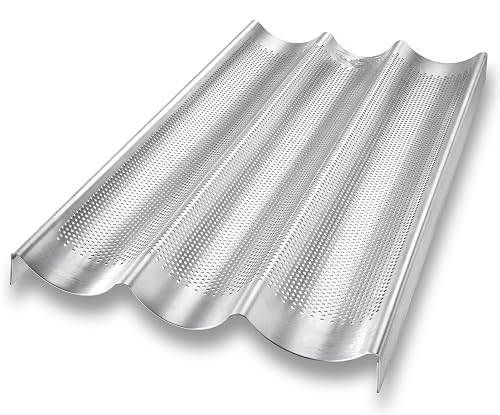
USA Pan Bakeware Aluminum Perforated Nonstick French Baguette Bread Pan 3-Loaf

Fulimax Baguette Pan Nonstick 3 Slots Golden
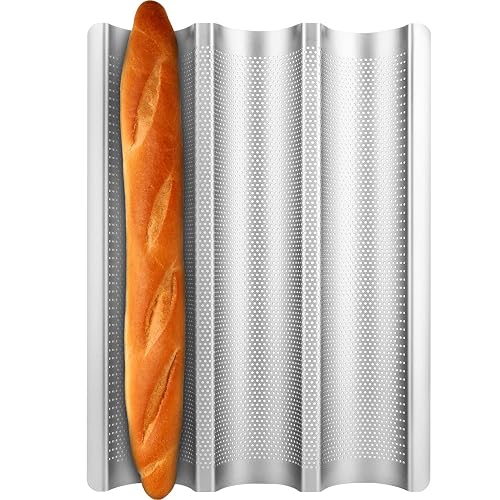
Fulimax Baguette Pan Nonstick 3 Slots Silver

Fulimax Baguette Pan Nonstick 2 Slots Golden
More Details On Our Top Picks
The 15 by 5 footprint keeps this one easy to place in smaller ovens, and the perforated surface should help air reach the dough from below. That kind of layout matters most when you bake shorter baguettes or want a pan that doesn’t dominate the rack. Compared with the larger 15 by 11 options later in the list, this feels more restrained and easier to store.
The non-stick finish also makes sense for home use, especially in a kitchen where cleanup needs to stay straightforward. The trade-off is simple, though, because a single-slot style gives you less batch capacity than the multi-loaf trays from Hesanzol and Fulimax. For compact kitchens and smaller bakes, that limitation can actually be the point.
Strong Points
- 15 by 5 size suits tighter oven space.
- Perforation supports better bottom airflow for bread baking.
- Non-stick surface helps loaves release with less fuss.
- Single-pan format keeps storage simple.
Worth Noting
- Single-slot capacity limits how much you can bake at once.
- Shorter length suits smaller baguettes more than long ones.
Feature Snapshot
Who It Suits Best
Home bakers with smaller ovens or limited rack space will get the cleanest fit from this pan.
A Better Fit Elsewhere
Hesanzol Baguette Pans for Baking 15 x 11 Carbon Steel 3 Loaf Tray Gold suits you better if you want more loaf capacity in a single run.
This twin-pack setup gives you a lot of surface area for the money, which is handy for weekend baking or prep sessions that stretch across several loaves. Carbon steel usually brings a firmer feel than lighter materials, so the tray is better suited to people who want a sturdier pan without moving into premium territory. Compared with the Eparé pan, this choice is more about volume than footprint.
The gold finish gives it a more finished look, though the real appeal is still the 3-loaf layout and perforated build. The trade-off is oven space, because two 15 by 11 trays can crowd a compact oven quickly. For regular home bakers who like batching, that’s a fair exchange.
Highlights
- Two-pan set gives you flexible batch capacity.
- 15 by 11 size suits multiple loaves per run.
- Carbon steel brings a solid, familiar bakeware feel.
- Non-stick surface supports easier release and cleanup.
- Perforations help the underside brown more evenly.
Small Caveats
- Two trays take more cabinet space than a single pan.
- Large footprint can feel crowded in smaller ovens.
- Gold finish may not match every kitchen setup.
Core Details
Whose Shelf It Belongs On
Frequent bakers who want more batch capacity and don’t mind a larger storage footprint will use this set best.
Another Choice May Suit
USA Pan Bakeware Aluminum Perforated Nonstick French Baguette Bread Pan 3-Loaf suits you better if you prefer a single-pan approach from a long-established bakeware line.
This silver twin-pack reads like the calmer sibling to the gold version above, with the same 15 by 11, 3-loaf layout but a more neutral finish. That makes it easier to pair with plain bakeware or a kitchen that already leans stainless and gray. For batch bakers, the useful part is still the size, not the color.
Because the structure matches the gold set closely, your decision mostly comes down to appearance and how much room you have for two trays. The honest read is that the silver finish feels easier to blend into a busy kitchen, especially one that already stores sheets, racks, and pans in the same cabinet. It’s a sensible middle-ground choice.
Upsides
- Two-pan format supports repeat baking runs.
- Three-loaf layout fits regular baguette batches.
- Silver finish blends cleanly with common bakeware.
- Carbon steel construction gives the pan a firm feel.
Areas To Watch
- Set takes more storage room than a single pan.
- Larger tray size may crowd compact ovens.
- Neutral finish is practical, though less distinctive than gold.
Details At A Glance
Perfect Match For
You’ll get the most from this set if you bake often and prefer a neutral-looking pan that disappears into your existing bakeware.
Swap It Out When
Hesanzol Baguette Pans for Baking 15 x 11 Carbon Steel 3 Loaf Tray Gold makes more sense if you want the same overall layout with a warmer finish.
This one trims the offer down to a single 3-loaf pan, which is exactly what many home kitchens need. It keeps the same 15 by 11 size as the twin-pack options, but the simpler purchase makes storage and setup easier. Compared with the Eparé pan, it gives you much more baking space without asking for a two-pan commitment.
The silver finish feels plain in a useful way, and the perforated build should suit loaves that need better underside airflow. One thing worth considering is that a single pan leaves less flexibility than buying a pair, but that also means less cabinet clutter. For a regular bread-baking routine, that balance makes sense.
Reasons To Buy
- Single-pan format keeps the purchase straightforward.
- Three-loaf layout supports family-size baking runs.
- Perforated surface helps with airflow under the dough.
- Silver finish keeps the look clean and simple.
Points To Note
- One pan gives you less flexibility than a set of two.
- Large size still needs enough oven clearance.
Feature Rundown
Made For
This is a practical fit for home bakers who want a single, roomy pan without stepping up to a set.
Look Elsewhere When
Baguette Pans for Baking 15 x 11 Carbon Steel 3 Loaf Tray Gold works better if you want two pans for more batch control.
Aluminum changes the feel here compared with the carbon steel pans above, and that difference matters to people who want a lighter pan to handle. The perforated design still points toward better airflow under the loaf, while the 3-loaf layout keeps the format practical for a household that bakes regularly. For bakers who care about bakeware material as much as shape, this one stands out.
The name is longer than the others, but the usable idea is straightforward: a familiar bakeware line, a non-stick surface, and room for three loaves. The trade-off is that aluminum can feel less heavy-duty than carbon steel in the hand, depending on your preference. That said, it’s a polished choice for someone who likes a lighter setup.
Best Bits
- Aluminum build keeps the pan comparatively light.
- Perforated base supports airflow around the bread.
- Non-stick coating helps loaves release more cleanly.
- Three-loaf format suits repeat baking sessions.
Softer Spots
- Long product name hides the simple use case.
- Lightweight feel may not satisfy everyone who prefers heavier bakeware.
- Single-pan capacity still trails the two-pack options.
Spec Overview
Right Fit For
You’ll like this pan most if you want lighter bakeware and still need a true three-loaf layout.
Where A Sibling Pick Shines
Baguette Pans for Baking 15 x 11 Carbon Steel 3 Loaf Tray Silver suits you better if you prefer a firmer carbon steel feel instead of aluminum.
Fulimax keeps the format simple, with three loaf slots and a non-stick surface in a gold finish. That combination works well for people who want a familiar baguette pan shape without a lot of extra complication. Compared with the USA Pan option, this one leans more toward straightforward functionality than material branding.
In a busy kitchen, a pan like this often makes sense because the layout is obvious and the cleanup is easier to manage than raw metal. The gold color adds a little visual polish, though the bigger story is still the perforated structure. For casual home bakers, that’s usually enough.
Positives
- Three-slot layout suits standard baguette batches.
- Non-stick finish helps with loaf release.
- Perforated form supports airflow under the bread.
- Gold finish gives the pan a warmer look.
Things To Consider
- Finish preference is personal, so the gold tone won’t suit every setup.
- Simple construction gives you fewer material details to compare.
Feature Card
Who Should Grab It
This suits casual bakers who want a no-fuss three-loaf pan with a little more visual warmth.
Reach For A Different Pick When
USA Pan Bakeware Aluminum Perforated Nonstick French Baguette Bread Pan 3-Loaf is the better match if you want a lighter aluminum pan from a more established bakeware line.
This silver version lands in the same practical lane as the gold Fulimax pan, but the cooler finish makes it easier to blend into most kitchen storage. It keeps the 3-slot layout and perforated body, so the real value is the same basic bread-baking function. In a home that already uses mostly silver or stainless bakeware, the look feels more natural.
The trade-off is that you’re choosing mainly on appearance rather than format. That’s fine for many kitchens, especially where the pan will live in a drawer or cabinet most of the time. Compared with the gold variant, this one feels a touch more understated.
Bright Spots
- Three-slot shape fits familiar baguette batches.
- Non-stick surface helps with easier cleanup.
- Silver finish blends into many kitchen setups.
- Perforation supports airflow beneath the loaves.
Room For Improvement
- Functionally close to the gold version, so the main difference is visual.
- Simple design leaves little material detail to evaluate.
Core Details
Built With In Mind
You’re the right match for this one if you want a basic three-slot pan that blends into a low-key kitchen setup.
Not Your Match When
Baguette Pan French Bread Pans For Baking Pans, Nonstick 2 Slots Perforated Italian Loaf Pan Mold Long French Bread Pan Golden suits you better if you prefer a smaller two-slot layout.
The two-slot layout makes this the easiest Fulimax pan to place in a smaller oven or a tighter storage stack. That smaller footprint also gives you a more modest batch size, which suits casual bread baking or households that only need a couple of loaves at a time. Compared with the 3-slot versions, this one feels more focused and less crowded.
Golden finish aside, the main story is the reduced capacity, and that’s either a plus or a limit depending on your routine. You may find it better for smaller households, slower baking schedules, or anyone who wants a simpler pan to handle. The honest read is that it’s a practical compact choice, not a volume piece.
Highlights
- Two-slot format fits smaller batch baking.
- Compact shape stores more easily than the larger trays.
- Non-stick surface helps with loaf release.
- Perforated body supports airflow during baking.
Minor Gripes
- Lower capacity than the 3-slot pans in this roundup.
- Smaller format is less suited to larger batch prep.
- Gold finish is a style choice, not a functional advantage.
At A Glance
The Right Fit
This belongs on the shelf of a casual baker who wants a smaller pan for occasional baguette runs.
Where Shoppers Go Wrong
Baguette Pans for Baking 15 x 11 Carbon Steel 3 Loaf Tray Silver is the better call if you need more loaf capacity than two slots can give you.
How To Choose The Right baguette pans for baking
Start With Slot Count And Oven Space
Slot count decides more than output, because it also shapes how the pan sits in your oven. A 2-slot pan like the Fulimax golden version works well for modest batches and smaller storage areas, while 3-slot trays suit households that bake several loaves at once. The larger 15 by 11 pans ask for more rack room, so that measurement matters as much as the number of slots.
Think about the pans you already own. A compact 15 by 5 model is easier to tuck away, but it gives you less baking area than the wider trays from Hesanzol and USA Pan. For a cramped oven, smaller can be smarter.
Material Changes The Feel
Carbon steel tends to feel firmer in hand, which suits bakers who want a tray that feels substantial during repeated use. Aluminum usually feels lighter, so the USA Pan option will appeal more to people who prefer easier handling and a less weighty setup. Neither material automatically wins, because the better choice depends on how you store, move, and wash the pan.
Material also affects how the pan sits in daily use. In a busy kitchen, lighter bakeware can be easier to manage, while a sturdier feel may matter more to someone who bakes often. That’s the trade-off behind the material line, not just the label.
Perforation Is About Airflow
Perforated bread pans have openings in the metal base or sides, and those openings let hot air reach the underside of the loaf. That can help with browning and crust development, especially for baguettes that benefit from even heat exposure. Every item in this list uses that idea, but the surrounding shape still determines how much bread you can fit.
You’ll want to match perforation with your usual bake style. For tighter, smaller loaves, the Eparé pan is easier to manage. For larger batches, the 3-slot trays make better use of the same basic airflow concept.
Finish And Cleanup Matter More Than You Think
Non-stick surfaces usually make loaf release less fussy and cleanup easier, which helps on weeknight bakes. The finish color, gold or silver, is mostly visual, but it can influence how the pan fits with the rest of your storage and tools. A pan that feels easy to grab and easy to wash gets used more often.
That’s why a simple design often wins in real kitchens. Extra styling can be nice, but clear shape, manageable size, and easy upkeep do more day-to-day work.
A Quick Reality Check
Wrong Turns To Avoid
Many people focus on loaf count and ignore oven clearance. A wide tray can look appealing on paper, then feel awkward once it sits under a rack or beside a second pan.
Another common miss is picking a style-heavy pan and forgetting storage. A compact home kitchen usually rewards the pan that stacks cleanly and wipes down without fuss.
The Upgrade Payoff
Higher-tier pans usually cost more because of material feel, finish quality, and more deliberate construction. Aluminum from USA Pan, or a well-finished carbon steel tray, tends to appeal to people who bake often and want a pan that feels more settled in daily use.
Paying up makes the most sense when bread baking is part of your weekly routine. For occasional use, a simpler pan can handle the job without asking for extra cabinet space or extra spend.
Frequently Asked Questions
What size baguette pan works best for home ovens?
A 15 by 11 pan gives you more baking room for multiple loaves. A 15 by 5 pan fits more easily in smaller ovens and tighter storage spots.
Do perforated pans really matter for baguettes?
Perforation lets air reach the underside of the loaf, which supports browning and crust texture. That makes it a useful feature for baguettes, not just a visual detail.
Should you choose carbon steel or aluminum?
Carbon steel usually feels firmer and a bit more substantial. Aluminum feels lighter, which can suit you better if handling weight matters.
Is a two-slot pan enough for regular baking?
A two-slot pan suits smaller households and occasional baking sessions. A three-slot tray makes more sense for larger batches or shared meals.
How many pans should you keep on hand?
One pan is enough for casual use. A two-pack helps when you bake often and want to keep one batch moving while another is ready.
Closing Thoughts
The right baguette pan depends on how you actually bake, not just how many slots sound useful. If your oven is small, the Eparé pan keeps things tidy. If you bake in batches, the larger Hesanzol, USA Pan, or Fulimax options make more sense. Focus on slot count, material, and storage fit, and the choice gets much easier. Once those three line up, the rest feels straightforward.



