

Steel cookware earns its keep in busy kitchens because it handles high heat, moves from stovetop to oven, and usually cleans up without drama. That matters for weeknight searing, one-pan pasta, paella-style rice, and sauces that need a pan with some backbone. The six picks below cover a broad spread, from a titanium-clad option to tri-ply stainless sets and two single-pan VocVoi choices that suit different batch sizes. The main differences come down to capacity, cladding, and how much cookware a kitchen actually needs.
The Shortlist At A Glance

Titanium Hammered Pro 12 Inch Paella Pan with Lid

DELARLO Tri-Ply Stainless Steel Pan 12 Inch with Lid

VocVoi Stainless Steel Pan with Lid, 6 QT 12 Inch

VocVoi Stainless Steel Pan, 12 Inch with Lid
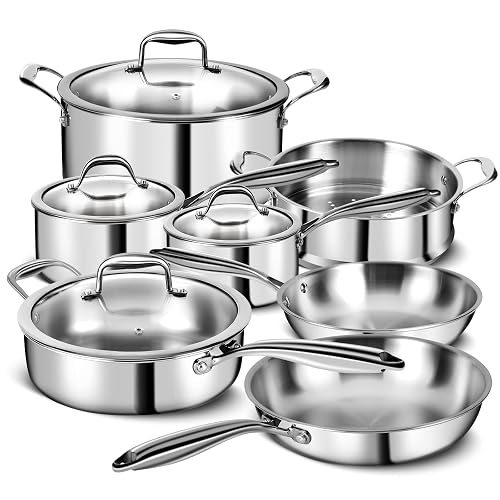
EWFEN 3 Ply Stainless Steel 11-Piece Cookware Set

All-Clad D3 Stainless Steel 10 and 12 Inch Frying Pans Set
More Details On Our Top Picks
The wide paella-style profile makes this VEDNHOL pan feel closer to a shallow stage than a standard skillet. That shape helps with rice dishes, searing in batches, and anything that benefits from more exposed surface area, while the included lid adds some flexibility for covered simmering.
The trade-off is plain enough, the broad format asks for more storage room than a compact sauté pan. For households that cook for several people or like cookware that can move from stovetop to oven, the layout makes sense, and the hammered finish gives it a more purposeful look than the usual plain steel surface.
Strong Points
- 12-inch surface suits larger portions without crowding.
- Hammered exterior gives the pan a distinct presence.
- Lid support broadens use beyond open-pan searing.
- Induction compatibility helps in mixed-cooktop kitchens.
- Dishwasher and oven safe claims suit busy routines.
Things To Consider
- Paella-style shape takes more cabinet space.
- The broad pan can feel less nimble for quick pan tosses.
- Shiny finishes usually need regular wiping to stay presentable.
Feature Snapshot
Who It Suits Best
Home cooks who prepare rice-based dishes, shared dinners, or oven-finished meals will get the most from the broad pan shape.
Where A Sibling Pick Shines
DELARLO Tri-Ply Stainless Steel Pan, 12 Inch with Lid suits cooks who want a more familiar skillet form and quicker all-purpose handling.
Tri-ply construction means three bonded layers, usually stainless steel outside and an aluminum core in the middle. That matters because heat tends to spread more evenly across the base and up the sidewalls, which is exactly what helps in a busy kitchen where hot spots can ruin delicate sauces or leave one side of a steak ahead of the other.
Compared with the Titanium Hammered Pro pan above, this DELARLO keeps the format more familiar and the cooking surface more straightforward. The honest read is that it looks built for routine use: searing, sautéing, and oven work on a range of cooktops, with the lid adding a useful bit of control.
What We Like
- 18/10 cooking surface resists flavor transfer from strong ingredients.
- Tri-ply body supports steadier heat across the pan.
- Large cooking area gives room for better spacing.
- Medium-low heat use can suit efficient daily cooking.
- Works across multiple cooktops for flexible installation.
Points To Note
- Large stainless pans usually need drying after washing to avoid water marks.
- The pan’s scale can feel substantial in smaller kitchens.
- Stainless surfaces ask for a little more technique than nonstick-style cookware.
Core Details
Who Will Love This
Households that cook several times a week and want one stainless pan for broad everyday use will find this format easy to place in rotation.
Another Choice May Suit
All-Clad D3 Stainless Steel 10 and 12 Inch Frying Pans Set suits cooks who want a two-pan setup instead of a single large skillet.
The deeper 6-quart format changes the job from simple frying pan duties to something closer to a hybrid sauté pan. That extra depth is useful for saucier dishes, braises, and vegetable-heavy dinners, and it helps keep food inside the pan instead of scattered across the stovetop.
Compared with the DELARLO 12-inch skillet, this VocVoi is the better shape for cooks who value volume over a broad, open surface. In most kitchens, that makes it a practical option for meal prep or families that like one vessel to cover more than just searing.
Upsides
- 6-quart capacity suits larger portions and saucier recipes.
- Deep body helps reduce splatter during stirring and simmering.
- Tri-ply build supports steadier heat management.
- Lid adds coverage for covered cooking and resting.
Softer Spots
- The deeper shape can feel bulkier in tight cabinets.
- Stainless steel still benefits from attentive heat control.
- Large capacity can be more than needed for solo cooking.
Quick Facts
Built With In Mind
Meal-prep cooks and families that make one-pan dinners will get the most value from the deeper format and broader capacity.
Look Elsewhere When
VocVoi Stainless Steel Pan, 12 Inch with Lid is the neater fit for cooks who want a lower-profile pan that handles quick sears more easily.
This one reads like the simplest path into stainless steel: 12-inch format, lid, tri-ply body, and induction compatibility. That combination makes sense for standard weeknight cooking, especially in homes that want one pan to cover eggs, chicken cutlets, vegetables, and quick pan sauces without stepping into a larger set.
Compared with the deeper 6-quart VocVoi, this version is easier to store and quicker to handle. The trade-off is less vertical room, so recipes with lots of liquid belong better in the larger pick above, while this pan stays in the sweet spot for general stove-top work.
Best Bits
- 12-inch size gives a familiar all-purpose cooking footprint.
- Tri-ply build supports even heating across the surface.
- Induction compatibility widens cooktop fit.
- Oven and dishwasher safe claims suit busy routines.
Room For Improvement
- Shallow format is less suited to saucy, high-volume recipes.
- Stainless care usually means more drying and wiping than coated cookware.
- Flat pans can crowd cabinets more than nested sets.
Details At A Glance
Right Fit For
Households that want a straightforward stainless skillet for day-to-day cooking will find this shape easy to live with.
Reach For A Different Pick When
EWFEN 3 Ply Stainless Steel 11-Piece Cookware Set fits kitchens that need an entire cookware refresh rather than a single pan.
An 11-piece set solves a different problem than the single-pan options above, it covers the whole kitchen in one go. That matters for a first apartment, a remodel, or any home replacing mismatched pots and pans, since the various sizes can handle simmering, boiling, sautéing, and covered cooking without separate purchases.
The trade-off is predictably about storage and overlap. Sets look efficient on paper, but cabinet space and repeated pieces matter in real use, so the right fit goes to kitchens that want coordinated cookware rather than a minimalist setup.
Highlights
- Multiple pieces cover several cooking styles in one set.
- 3-ply build supports more even heat than thin stock cookware.
- Induction, oven, and dishwasher compatibility broaden usage.
- Useful for setting up a kitchen from scratch.
Minor Gripes
- Sets need more storage than a single pan.
- Some households will use only a few pieces often.
- Cleaning and drying several items takes more time.
Feature Card
Whose Shelf It Belongs On
New households and cooks replacing an entire mixed set will get the clearest benefit from this bundled approach.
Swap It Out When
All-Clad D3 Stainless Steel 10 and 12 Inch Frying Pans Set suits cooks who want two higher-end pans instead of a full kitchen collection.
Two pans, 10 inch and 12 inch, cover a more flexible spread than a single skillet, and that makes this set feel especially practical for serious home cooking. The bonded D3 construction is the kind of detail that matters in steel cookware, because layered metal is built to spread heat more predictably than plain sheet steel.
Compared with the EWFEN set, this is the cleaner, more focused path for cooks who want a smaller roster and a higher-end build. The honest trade-off is obvious too, a two-pan set will not replace an entire cabinet, so it fits best where quality and simplicity matter more than sheer piece count.
Bright Spots
- 10-inch and 12-inch pans cover different portion sizes.
- D3 bonded construction supports consistent heat behavior.
- Made in the USA is a notable origin detail for some kitchens.
- Induction compatibility and oven use broaden everyday flexibility.
- The pair works well for cooks who like a matched setup.
Areas To Watch
- Two pans means less variety than a full cookware set.
- Premium builds usually ask for a larger upfront commitment.
- Stainless care still rewards patient heating and thorough drying.
Technical Sheet
Who Should Grab It
Experienced home cooks and serious stainless-steel users will appreciate the tighter two-pan format and the more refined build profile.
Where A Sibling Pick Shines
DELARLO Tri-Ply Stainless Steel Pan 12 Inch with Lid fits cooks who want a single large pan with a wider cooking field and an included lid.
How To Choose The Right steel pans for cooking
Metal Build And Heat Behavior
Stainless steel, titanium-clad surfaces, and tri-ply construction each change how a pan feels in daily use. Tri-ply means three bonded layers, usually a stainless outer shell with an aluminum middle layer, and that middle layer matters because aluminum spreads heat more evenly than steel alone. A plain or lighter build can still work, but hot spots show up more easily during searing or sauce work.
Size And Shape Matter More Than The Label
A 12-inch skillet sounds straightforward until storage, burner size, and batch size enter the picture. Broad pans like the VEDNHOL paella-style option suit rice, shallow frying, and roomy browning, while deeper models like the VocVoi 6-quart pan handle liquid-heavy dishes better. Compact kitchens usually benefit from the simpler 12-inch profile in the VocVoi single-pan option or the two-pan All-Clad set.
Lid, Cooktop, And Care Details
A lid changes the job from open searing to simmering and covered finishing, which is useful in everyday cooking. Induction compatibility matters for modern kitchens because it broadens placement across cooktops, while oven-safe construction helps with recipes that start on the stove and end under heat. Dishwasher-safe claims reduce cleanup friction, though stainless surfaces still tend to look better with prompt drying.
Who Each Type Suits
Beginners often do best with a straightforward 12-inch tri-ply pan because the shape is familiar and easy to read. Meal-prep cooks and families may prefer a deeper sauté pan or a full set, since capacity and piece count matter more than compact storage. More experienced cooks sometimes lean toward the All-Clad D3 set because the two sizes create a cleaner, more flexible routine without extra clutter.
What To Weigh Before You Commit
Common Shopping Slip Ups
A common miss is choosing by diameter alone and ignoring depth, because a 12-inch skillet and a 12-inch sauté pan serve different jobs. Another is overlooking cooktop fit, especially in induction kitchens where magnetic compatibility decides whether the pan even belongs on the burner. Storage gets ignored too, then a wide pan or a full 11-piece set turns into cabinet friction.
What The Higher Tier Buys
Higher-tier steel cookware usually spends more on bonded metal, tighter finish work, and a more deliberate handle or lid layout. That extra build quality can matter in kitchens that cook often, since smoother heat movement and a sturdier feel make routine meals easier to manage. The upgrade makes sense for households that use pans every day and want less fuss with hot spots or flex.
Final Thoughts
Steel pans reward cooks who value control, durability, and a direct cooking surface. The strongest choices here separate cleanly by job, the VEDNHOL pan for broad, shallow cooking, the DELARLO and VocVoi single pans for everyday stainless use, the EWFEN set for a full-kitchen reset, and the All-Clad pair for a more refined two-pan setup. A good match usually comes down to shape, depth, and how much cabinet room the kitchen can spare.



