

Electric hot boxes for food solve a simple problem, keeping a meal ready without relying on a shared microwave or a full kitchen. That makes them useful for commuters, delivery drivers, office staff, and anyone eating on a rotating schedule. The right pick depends on capacity, power source, and how much cleanup you want after the workday. The wrong one turns into extra bulk.
Some of these are true lunch-box warmers, while others are closer to catering equipment for counters and serving lines. That split matters, because a compact 12V unit fits a truck cab very differently from a stainless steel warmer built for pans and buffet service. You’ll see both use cases here, sorted by how they fit real daily routines.
Quick Look At Our Top Picks

Sohida 1.8L Heated Lunch Box

Winco FW-S500 Steam Table Food Warmer

LISHZEN 2.8L Double Layer Heated Lunch Box
Cambro GoBox EPP400 Food Pan Carrier

FEPPO 4-in-1 Electric Warming Tray

ESOHOT 1.5L Stainless Steel Heated Lunch Box
SNIFITAR 24000mAh Battery Heated Lunch Box

VEVOR 3-Tier Commercial Food Warmer Display
More Details On Our Top Picks
The Sohida unit sits in the practical end of the category, with 1.8L capacity and 80W heating aimed at personal meals rather than group serving. The 12V, 24V, and 110V compatibility makes it fit a car, truck, or office desk, which is useful for anyone moving between locations during the day.
Leak resistance and dishwasher-safe parts matter here because lunch gear gets messy fast in a work bag. Compared with the larger LISHZEN 2.8L box later in this list, this one is the tighter, simpler carry for smaller portions and lighter packs.
Strong Points
- 1.8L size keeps the footprint small for daily carrying.
- Multi-voltage support suits desks, vehicles, and jobsite outlets.
- Dishwasher-safe parts reduce cleanup after oily or saucy meals.
- Leak-resistant design helps keep bags cleaner on the move.
Areas To Watch
- The 1.8L chamber is modest for hearty eaters.
- Portable warmers like this usually suit personal meals more than shared portions.
- The carrying format is built for convenience, not bulk cooking.
Feature Card
Who It Suits Best
Commuters, truck drivers, and office staff who want a compact personal warmer will get the most from this layout.
A Better Fit Elsewhere
LISHZEN’s 2.8L Double Layer Heated Lunch Box suits you better when lunch needs more room or separate food sections.
Winco’s FW-S500 belongs in a different conversation from the lunch-box warmers, because this is commercial steam-table gear rather than a portable meal container. The 120V, 1200W setup and full-size pan fit make sense in buffets, serving lines, and back-of-house stations where volume matters more than portability.
Stainless steel is the right call for a food-service environment, since it wipes down cleanly and handles regular use without looking delicate. The trade-off is obvious, though: you get serious capacity, but you also commit to a larger footprint than the SOHIDA or ESOHOT options.
Highlights
- Fits full-size pans up to 6 inches deep.
- 1200W output supports steady holding in service settings.
- Portable frame helps with repositioning in event spaces.
- Stainless steel construction suits repeated cleaning.
- Good match for buffet or serving-line workflows.
Worth Noting
- This is equipment for counters, not a lunch bag.
- The larger footprint asks for dedicated space.
- You’ll get more value from it in group-service settings than in personal use.
Core Details
Who Should Grab It
Caterers, buffet operators, and serving teams need this kind of pan-compatible warmer more than a lunch-box style unit.
Another Choice May Suit
VEVOR’s 3-Tier Commercial Food Warmer Display makes more sense for front-facing retail counters that need visibility as well as heat.
Double-layer lunch boxes are useful because they separate food better than a single tub, and this 2.8L version gives you more breathing room than the smaller SOHIDA unit. The 100W heater and 12V, 24V, 110-230V support make it a flexible match for home, office, car, or truck routines.
That larger volume makes sense for long shifts, larger appetites, or meals with a main and side dish. The honest read is that the bigger shell takes more bag space, so it fits best in setups where capacity matters more than a tiny carry profile.
Upsides
- 2.8L capacity gives you room for fuller lunches.
- Double-layer layout helps separate different foods.
- 100W heating suits people who want a stronger warm-up unit.
- Wide voltage support works across home and travel settings.
Small Caveats
- The larger body is less pocketable than compact 1.5L or 1.8L boxes.
- Double-layer designs add parts to keep track of during cleaning.
- It makes more sense for full lunch routines than quick snack heating.
Quick Facts
Whose Shelf It Belongs On
Office staff on long shifts and road workers who bring full meals will appreciate the extra room and broad power compatibility.
Swap It Out When
ESOHOT’s 1.5L stainless steel lunch box suits you better when lighter packing and simpler cleaning matter more than size.
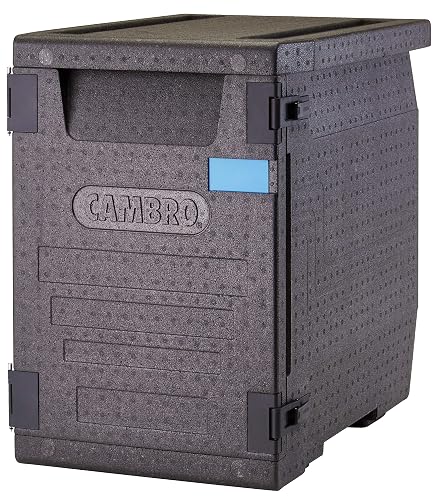
The Cambro GoBox shifts the category from electrical warming to insulated transport, so it fits catering workflows where hot food needs to move without being handled constantly. EPP, or expanded polypropylene, is a lightweight foam material, and that matters because it helps keep the carrier portable without making it flimsy.
Holding four 4-inch pans gives it a clear role in event service, commissary runs, and delivery support. Compared with the Winco warmer, this pick is about transport first and active heating second, which is exactly why it works for teams that already have hot food prepared elsewhere.
What We Like
- Lightweight construction keeps carry weight manageable.
- Holds four 4-inch pans for batch transport.
- Front-load format supports quicker loading and unloading.
- Insulated shell helps maintain food temperature during movement.
Points To Note
- This is a transport carrier, not a powered warmer.
- Front-load access works best with a planned packing routine.
- The gray shell is practical, though it still needs regular cleaning after service use.
Details At A Glance
Built With In Mind
Caterers and delivery crews who already move prepared hot food from kitchen to venue will get the most value here.
Where A Sibling Pick Shines
Winco’s FW-S500 suits you better when the goal is to hold food hot at the service station rather than transport it.
The FEPPO tray is built for spread-out serving, not sealed personal transport, and that gives it a strong role at parties and buffet tables. A 33 x 15 inch glass surface, ten temperature settings, and a timer create a more controlled setup than a basic warm tray.
Glass cleans easily, though it also asks for a little more care than a metal tray in crowded kitchens. Compared with the Cambro GoBox, this one is for keeping food visible and ready on the table, not for hauling pans across town.
Positives
- Large glass surface gives you room for mixed dishes.
- Ten temperature settings help match different serving needs.
- Timer function adds structure for longer gatherings.
- Modular buffet layout suits flexible table arrangements.
- Glass top gives a cleaner presentation than plain metal warming mats.
Room For Improvement
- Glass surfaces need more careful handling than textured metal.
- The wider footprint asks for real counter space.
- Best results come in serving areas, not portable carry settings.
Technical Sheet
Made For
Hosts, caterers, and gathering planners who want a tidy buffet setup will get the best use from this warming tray.
Look Elsewhere When
SNIFITAR’s battery-powered lunch box is a better match for mobile work and meals away from a wall outlet.
ESOHOT keeps the formula simple, with a 1.5L 304 stainless steel container and 120W heating for a personal lunch setup. 304 stainless steel is a common food-contact alloy chosen for its sturdier feel and easier cleanup, which makes this box practical for daily packing.
The smaller 1.5L size helps it stay manageable in a work bag, and the 12V, 24V, 110V support gives it the same broad-use advantage as the larger SOHIDA box. The trade-off is plain: you gain portability, but you give up the extra room that the 2.8L LISHZEN offers.
Best Bits
- 1.5L size is easy to carry and store.
- 304 stainless steel insert suits routine cleaning.
- 120W output gives it a stronger warming profile than many compact units.
- Multiple voltage options fit home and vehicle use.
Softer Spots
- The smaller capacity limits portion flexibility.
- Steel containers can feel less separated than layered lunch systems.
- Best for personal meals, not shared serving.
Core Details
The Right Fit
Workers who want a straightforward personal warmer with a steel insert will find this layout easy to live with.
Skip It When
LISHZEN’s 2.8L double-layer box is the better call for larger meals or separate dish storage.
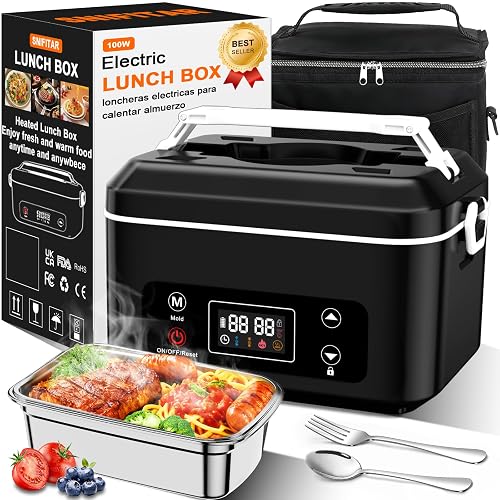
The battery-powered design sets SNIFITAR apart from every plug-in lunch box in this list, and that alone changes where it fits in daily life. A 24000mAh battery, 5.5-cup capacity, 3D and five-side heating, and intelligent temperature control point to a warmer made for movement, not wall sockets.
That freedom is a big reason mobile workers may like it, especially in trucks or field routes where outlets aren’t convenient. The trade-off is the obvious one, battery gear adds another thing to charge, so this makes the most sense for people who value cord-free use more than absolute simplicity.
Reasons To Buy
- Battery power adds real cord-free flexibility.
- 24000mAh capacity supports mobile use between charges.
- 5.5-cup volume is generous for a personal warmer.
- 3D and five-side heating help distribute warmth more evenly across the container.
- Intelligent temperature control gives the unit a more managed heating profile.
Minor Gripes
- Battery charging adds another task to manage.
- Portable battery gear usually takes a bit more planning than plug-in lunch boxes.
- The larger spec sheet can make the unit feel less minimal than SOHIDA or ESOHOT.
Feature Rundown
Who Will Love This
Truck operators, mobile staff, and anyone spending long stretches away from outlets will benefit most from the cordless design.
Where Shoppers Go Wrong
SOHIDA’s plug-in lunch box is the simpler choice for desk and vehicle use when battery charging sounds like one more chore.
VEVOR’s warmer display serves a different job from the lunch-box models, because it’s built to show food while holding it warm on a counter. The 86 to 185°F range, adjustable shelves, LED light, and 34L capacity make it a fit for storefronts or service counters where visibility matters as much as heat.
The stainless steel frame gives it a more commercial feel than the FEPPO tray, while the three-tier layout helps separate pizza, bread, fried chicken, or burgers. The honest limitation is space, since this kind of unit belongs in a fixed service area rather than a mobile setup.
Positives
- Three tiers create useful vertical display space.
- Adjustable shelves help fit mixed food heights.
- LED lighting improves product visibility on a counter.
- Wide temperature range gives you more control over different foods.
- 34L capacity supports busy display service.
Areas To Watch
- This is counter equipment, not portable lunch gear.
- The fixed footprint makes it more suited to permanent service stations.
- Glass and steel surfaces call for regular wiping to keep the display tidy.
At A Glance
Built For
Retail counters, concession stands, and food-service displays are the clearest match for this warmer.
Reach For A Different Pick When
FEPPO’s warming tray is the better choice for home parties or buffet tables that need a flatter serving surface.
How To Choose The Right electric hot boxes for food
Match Capacity To The Meal Routine
Capacity is the first number worth checking because it tells you how much food the box can physically hold. A 1.5L or 1.8L lunch box suits a solo lunch, while 2.8L gives you room for fuller portions or a main plus side.
Commercial warmers play by a different rule. Full-size pan fit, 34L display volume, or multi-tier shelving matter more there than a single lunch capacity.
Choose The Power Style Around Your Day
Plug-in warmers work well for office desks, trucks, and fixed stations with a dependable outlet. Battery-powered units add flexibility, but they also introduce charging habits and a bit more planning.
For catering or buffet use, wattage and steady holding matter more than portability. A 1200W steam table warmer or 800W display unit serves a different purpose than a personal lunch box.
Think About Cleaning And Storage
Dishwasher-safe parts, stainless steel inserts, and wipe-clean shells save time after the workday. That matters more than fancy extras when you’ll use the same warmer several days a week.
Glass trays and layered lunch boxes can still be practical, though they tend to ask for a little more care. Compact shapes store more easily in office lockers, truck cabs, or kitchen cabinets.
Separate Personal Use From Serving Use
Personal lunch boxes make sense for one meal at a time, especially during commutes or long shifts. Serving gear is built for pans, presentation, and keeping several portions ready at once.
Mixing those jobs usually leads to disappointment. A commuter wants size and portability, while a caterer needs capacity and steady hold, and those are not the same thing.
What To Weigh Before You Decide
Mistakes Worth Dodging
Many shoppers focus on heat and skip the physical format. That leads to buying a counter warmer for a truck cab, or a tiny lunch box for a shared serving station.
Voltage support matters too. A unit that works in 12V, 24V, and standard wall power is far more adaptable than one tied to a single setup.
The Upgrade Payoff
Higher-tier models usually cost more because they add capacity, stronger housings, better temperature control, or commercial layouts. Battery systems also add engineering, which pushes the design beyond a basic plug-in box.
You feel that upgrade most in daily use, not in a spec sheet. Extra room, easier cleaning, and better fit for a specific work routine usually justify the jump.
Frequently Asked Questions
What makes a lunch-box warmer different from a buffet warmer?
A lunch-box warmer is built for one person’s meal in a compact shell. A buffet warmer is built for pans, display, or service lines.
Does stainless steel matter in a heated lunch box?
Stainless steel usually helps with durability and routine cleaning. It also tends to feel more solid than softer insert materials.
Is a battery-powered warmer worth it?
It makes sense for mobile work and places without easy outlet access. You do need to keep up with charging.
How much capacity do you need for one lunch?
Most personal routines fit well in the 1.5L to 2.8L range. Bigger portions or separate compartments push you toward the larger end.
Do warming trays and food displays serve the same job?
They overlap, but not exactly. Warming trays suit shared table service, while display warmers add shelving and presentation for counter use.
Bottom Line
Your best match depends less on the word hot box and more on the job in front of you. A commuter, truck driver, or office staffer needs a compact lunch warmer with the right voltage support, while a caterer needs pan capacity, counter stability, or visible display space. The strongest options here each fit a clear routine, and that’s the point. Choose the shape that matches your day, and the rest gets much easier.



