

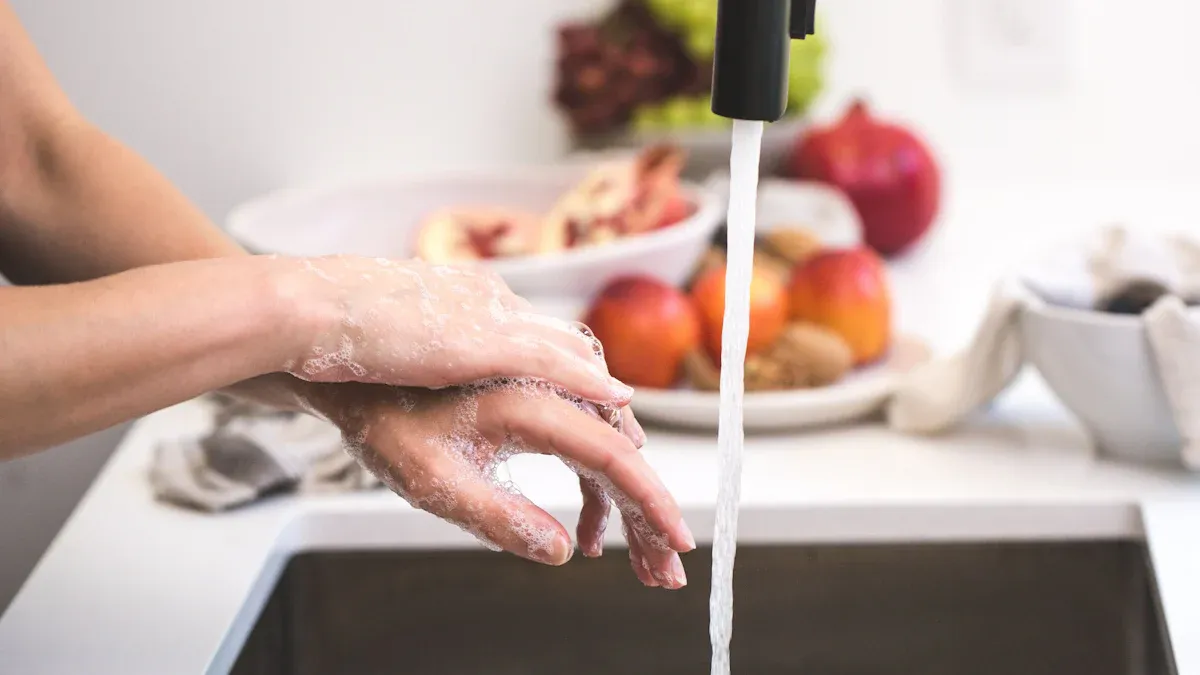
A clean kitchen is essential for your health and safety. Did you know that 75% of foodborne illnesses come from poor kitchen hygiene? This alarming statistic highlights the need for vigilance in your cooking space. Common kitchen hygiene concerns include:
Contamination prevention during food preparation.
The importance of personal and sanitary hygiene.
Risks from cross-contamination and improper food handling.
By focusing on key areas like daily cleaning, appliance care, and food storage, you can create a safe kitchen that promotes food safety and reduces the risk of illness.
Key Takeaways
Daily cleaning of surfaces, appliances, and storage areas is crucial for preventing bacteria buildup.
Proper food storage practices, like separating raw and cooked foods, help avoid cross-contamination.
Regularly disinfect high-touch areas in your kitchen to reduce the risk of foodborne illnesses.
Implement a cleaning schedule to ensure all areas of your kitchen receive attention and nothing is overlooked.
Washing hands thoroughly before food preparation is one of the simplest ways to maintain kitchen hygiene.
Daily Cleaning
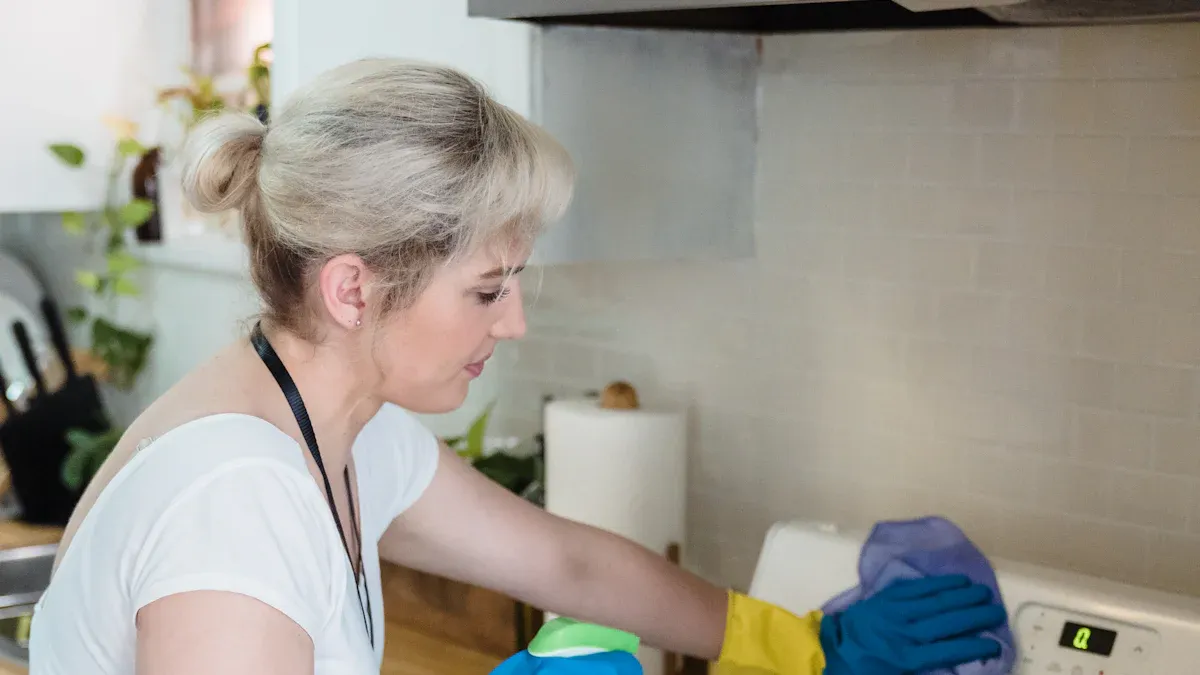
Keeping your kitchen clean every day is crucial for maintaining a safe cooking environment. Daily cleaning helps prevent the buildup of bacteria and grease, which can lead to foodborne illnesses. Here are some essential practices to incorporate into your routine:
Surface Wiping
Start by wiping down all surfaces in your kitchen. This includes countertops, cutting boards, and tables. Use a disinfectant cleaner to eliminate germs and bacteria. Remember, different surfaces may require different cleaning products. For example, avoid using acidic cleaners on natural stone countertops, as they can damage the surface over time.
To prevent cross-contamination, consider these practices:
Regularly clean and sanitize cutting boards, knives, and countertops.
Use separate cutting boards for raw meats and ready-to-eat foods.
Sanitize surfaces frequently, especially after handling raw ingredients.
Designate specific tools for different types of food to avoid cross-contact.
Wash utensils thoroughly between uses.
Immediate Spill Cleanup
When spills happen, clean them up right away. A sticky spill can attract bacteria, especially if it sits for too long. As one expert notes, “A sticky spill of soda or syrup doesn’t give bacteria an instant feast… but once the sweet mess is diluted by steam or moisture, it gives bacteria the nutrients they need to thrive.”
Additionally, spills can create slip hazards. That thin film of oil on the floor can turn your kitchen into a skating rink, leading to accidents. Falls are a leading cause of household injuries, particularly among children and older adults. So, make it a habit to clean up spills immediately to keep your kitchen safe and hygienic.
Proper Waste Disposal
Effective waste management is vital for a clean kitchen. Use a quality trash bin with a tight seal to keep pests away. An airtight enclosure helps contain odors and makes it harder for pests to detect waste. Here are some tips for proper waste disposal:
Ensure trash cans are sealed and emptied regularly.
Consider professional waste management services for proper disposal.
Regularly empty and clean your bins to eliminate potential breeding grounds for pests.
By following these daily cleaning practices, you can maintain a clean kitchen that promotes hygiene and safety. Remember, a clean kitchen is not just about appearance; it’s about protecting your health and the health of your loved ones.
Appliance Care
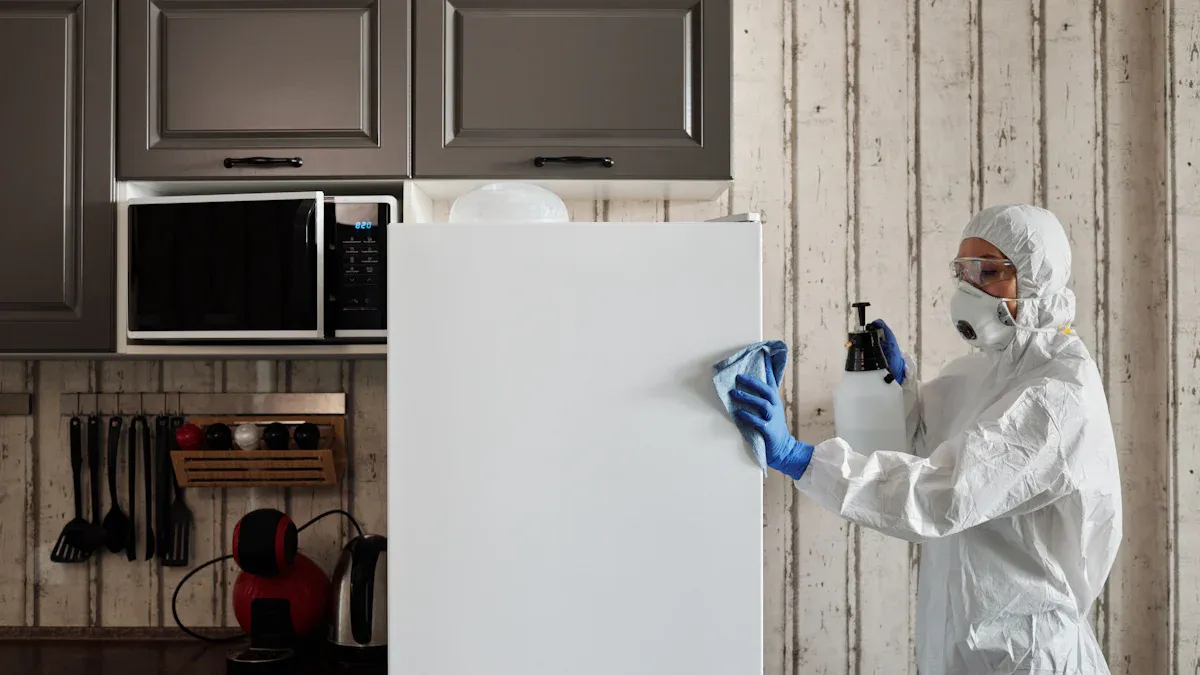
Taking care of your kitchen appliances is crucial for ensuring food safety and maintaining hygiene. Regular maintenance not only keeps your appliances running smoothly but also prevents the growth of harmful bacteria. Here’s how you can keep your appliances in top shape:
Refrigerator Cleaning
Your refrigerator is a hotspot for bacteria if not cleaned regularly. To keep it hygienic, follow these tips:
Wipe down trays and drawers at least weekly to avoid grime and odors.
Clean up spills daily to prevent bacteria growth.
Perform a deep clean about four times a year to ensure everything stays fresh.
A complete cleaning every couple of months helps prevent food spoilage and cross-contamination. Remember, old food left in the refrigerator can lead to food contamination and potential food poisoning.
Oven and Stovetop Maintenance
Your oven and stovetop require special attention to maintain hygiene. Here are some recommended practices:
Use water sparingly around knobs and dials to prevent damage.
Clean both the exterior and interior of the stove/oven to avoid fire hazards.
Quickly clean up spills to prevent damage and reduce the need for repairs.
Make it a habit to clean the interior of the oven about three times a year, or more frequently if spills occur. Always unplug the oven before cleaning to avoid electrocution. Inspect door gaskets regularly to ensure proper sealing and efficiency.
Small Appliance Hygiene
Don’t forget about your small appliances! They can harbor bacteria if not cleaned properly. Here’s how to keep them hygienic:
Use disinfectant wipes on handles, knobs, and faucet handles.
Clean non-electrical components with warm soapy water followed by a disinfectant.
Choose non-toxic and eco-friendly cleaning products.
For food contact surfaces, opt for food-safe sanitizers. Regular cleaning of small appliances helps prevent contamination and keeps your kitchen safe.
By following these appliance care practices, you can significantly enhance your kitchen hygiene and ensure a safer cooking environment.
Food Storage
Proper food storage is key to preventing cross contamination and ensuring food safety in your kitchen. When you store food correctly, you reduce the risk of harmful bacteria growing and keep your meals fresh longer. Here are some essential practices to follow:
Leftover Storage
Storing leftovers properly can prevent bacterial contamination. Here’s how to do it right:
Divide large amounts of food into small, shallow containers.
Cut large food items, like whole hams, into smaller portions.
Place hot food in the refrigerator or chill quickly in an ice- or cold-water bath.
Cover leftovers using airtight packaging or seal them into storage containers.
Store leftovers in the refrigerator for 3 to 4 days or freeze for 3 to 4 months.
Thaw frozen leftovers safely in the refrigerator, in cold water, or in a microwave oven.
Reheat leftovers to an internal temperature of 165 °F.
Following these steps helps maintain kitchen hygiene and keeps your food safe to eat.
Pantry Organization
A well-organized pantry can significantly enhance food safety and reduce spoilage rates. Here are some tips to keep your pantry in top shape:
Group similar items together, like snacks, baking supplies, and canned goods.
Use clear containers to store dry goods, making it easy to see what you have.
Label everything clearly to streamline meal planning.
Regularly check your pantry stock to avoid overbuying and waste.
Follow the “First In, First Out” rule to use older items before newer ones.
By organizing your pantry, you not only keep food fresh but also prevent raw foods from contaminating cooked foods.
Raw vs. Cooked Food
Separating raw and cooked foods is crucial for preventing cross contamination. Here are some guidelines to follow:
Guideline | Description |
|---|---|
Storage of Raw Foods | Store raw meat, poultry, seafood, and eggs in securely wrapped packages away from other foods. |
Avoiding Cross-Contamination | Never store raw meat, poultry, or seafood above produce, cooked food, or beverages. |
Use of Containers | Place raw items in containers or sealed plastic bags to prevent juices from dripping onto other foods. |
Wrapping Raw Foods | Wrap raw meat and poultry securely to prevent juices from contaminating other items. |
By following these food storage and handling practices, you can create a safer kitchen environment that promotes health and hygiene.
Sanitization Practices
Keeping your kitchen clean and hygienic goes beyond just surface cleaning. You need effective sanitization practices to ensure a safe kitchen environment. Here’s how you can achieve that:
Cleaning Products
Choosing the right cleaning products is essential for maintaining hygiene in your kitchen. Here are some recommended options from health agencies:
Peroxyacetic acid (PAA): This environmentally friendly option can be corrosive to metals but is effective for sanitizing.
Iodophors: These iodine-based sanitizers are less corrosive than bleach and may stain surfaces.
Quaternary ammonium (quats): Non-corrosive and provides residual protection, but may be less effective in hard water.
Chlorine-based sanitizer (bleach): A low-cost option that is effective but should be prepared fresh daily to maintain its potency.
Hot water: Using water at 171°F (77°C) for at least 15 seconds can effectively sanitize surfaces.
Using the right concentration of these products is crucial. For example, chlorine compounds should be at a minimum of 50 ppm for effective sanitization. Check the table below for more details on recommended concentrations:
Sanitizer Type | Recommended Concentration | Notes |
|---|---|---|
Chlorine Compounds | 50 ppm (minimum) | 1 min exposure at 24°C (75°F) |
Chloramines | 200 ppm | 1 min exposure |
Quaternary Ammonium Compounds | 200 ppm | Follow manufacturer’s instructions |
Peroxyacetic Acid | 100-200 ppm | Follow manufacturer’s instructions |
Hydrogen Peroxide | 80-600 ppm | Follow manufacturer’s instructions |
Disinfecting Surfaces
Regularly disinfecting surfaces is vital for preventing foodborne illnesses. You should aim to disinfect high-touch areas daily, such as countertops, handles, and sinks. Here’s a simple checklist to follow:
Daily Maintenance (Every Day): Clean dishes, mop floors, and wipe down counters to prevent dirt and germs accumulation.
Weekly Deep Clean (Once a Week): Thoroughly clean the kitchen, including washing the sink and disinfecting handles and knobs.
Monthly Deep Clean (Once a Month): Focus on often-overlooked areas like the oven and refrigerator, and check for outdated goods in cupboards.
Seasonal Deep Clean (Every Three to Four Months): Conduct a deeper clean at the start of each season, including moving appliances for thorough cleaning.
By following these cleaning and sanitizing practices, you can significantly reduce the risk of contamination and maintain a clean kitchen.
Hand Washing Techniques
Washing your hands thoroughly is one of the simplest yet most effective ways to prevent the spread of germs in your kitchen. Here’s how to do it right:
Wash hands before preparing food, working with clean equipment and utensils, and before putting on single-use gloves.
Use sinks designated for handwashing, ensuring they are accessible and stocked.
Wash hands for at least 20 seconds, using running water to wet hands and arms, followed by soap to create a lather.
Scrub hands and lower arms vigorously for 10 to 15 seconds, cleaning fingertips, under fingernails, and between fingers.
Rinse hands and arms thoroughly with warm, running water.
Dry hands and arms with a single-use paper towel or hand dryer, and use a paper towel to turn off the faucet.
Handwashing is crucial for maintaining hygiene, especially for food handlers. It prevents the spread of pathogens that can lead to foodborne illness outbreaks. Remember to wash hands often, especially after using the restroom, touching your body, or handling raw meat.
By implementing these sanitization practices, you can create a safe kitchen environment that promotes food safety and reduces the risk of illness.
Maintaining a clean kitchen is essential for your health and safety. Here are some key practices to keep in mind:
Regularly clean and sanitize surfaces, appliances, and storage areas.
Implement a cleaning schedule to ensure nothing gets overlooked.
Store food properly to prevent cross-contamination.
By adopting these habits, you significantly reduce the risk of foodborne illnesses. Remember, good hygiene not only keeps your kitchen looking great but also promotes food safety. Make these practices a part of your daily routine for a healthier kitchen environment!
Evidence Type | Findings |
|---|---|
Microbial Reduction | 28.6% reduction in microorganisms due to food safety interventions |
Specific Organism | Enterobacterales counts reduced significantly after HACCP training programs |
FAQ
What are the best cleaning products for my kitchen?
You should use eco-friendly cleaners like vinegar, baking soda, or commercial disinfectants. Look for products that are effective against bacteria and safe for food contact surfaces.
How often should I clean my refrigerator?
Clean your refrigerator at least once a week. Wipe down shelves and drawers, and do a deep clean every few months to prevent odors and bacteria growth.
Can I use the same cutting board for raw meat and vegetables?
No, you should use separate cutting boards for raw meat and vegetables. This practice prevents cross-contamination and keeps your food safe.
How can I tell if my food has gone bad?
Check for off smells, discoloration, or mold. If you’re unsure, it’s best to err on the side of caution and throw it away.
What temperature should I store my refrigerator at?
Keep your refrigerator at or below 40°F (4°C) to ensure food safety. Use a thermometer to monitor the temperature regularly.