

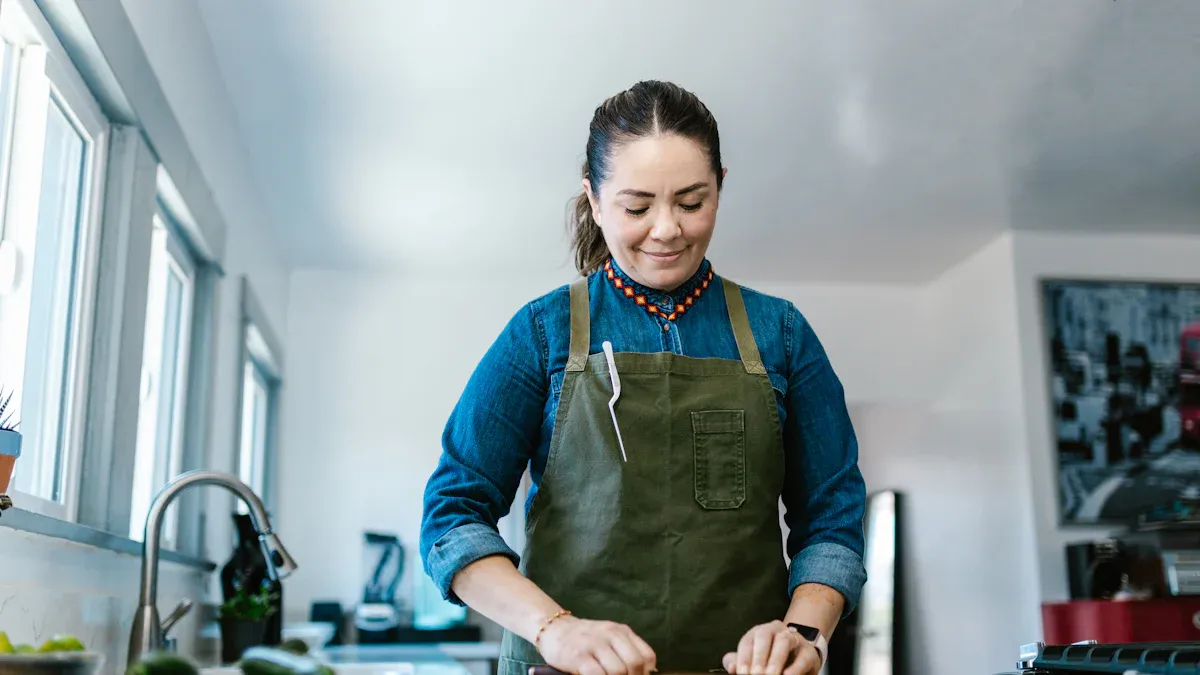
Cooking brings joy to many, with 57.2% of adults in the U.S. enjoying it as a hobby. The act of preparing food can lift your spirits and provide a sense of control, especially during stressful times. Embrace cooking as a journey, not just a task. You can discover new flavors, techniques, and experiences along the way. By building culinary skills step by step, you can enhance your meals and well-being. Let’s embark on this exciting journey together!
Key Takeaways
Prioritize kitchen safety by washing hands, using separate cutting boards, and keeping knives sharp to prevent accidents.
Invest in essential kitchen tools like a good chef’s knife and thermometer to enhance your cooking efficiency and enjoyment.
Master basic knife skills and cooking methods to improve your efficiency and confidence in the kitchen.
Understand your ingredients and use seasonal produce to elevate flavor, nutrition, and support local economies.
Keep a cooking journal to track your progress, set goals, and celebrate your culinary achievements.
Culinary Basics
Kitchen Safety
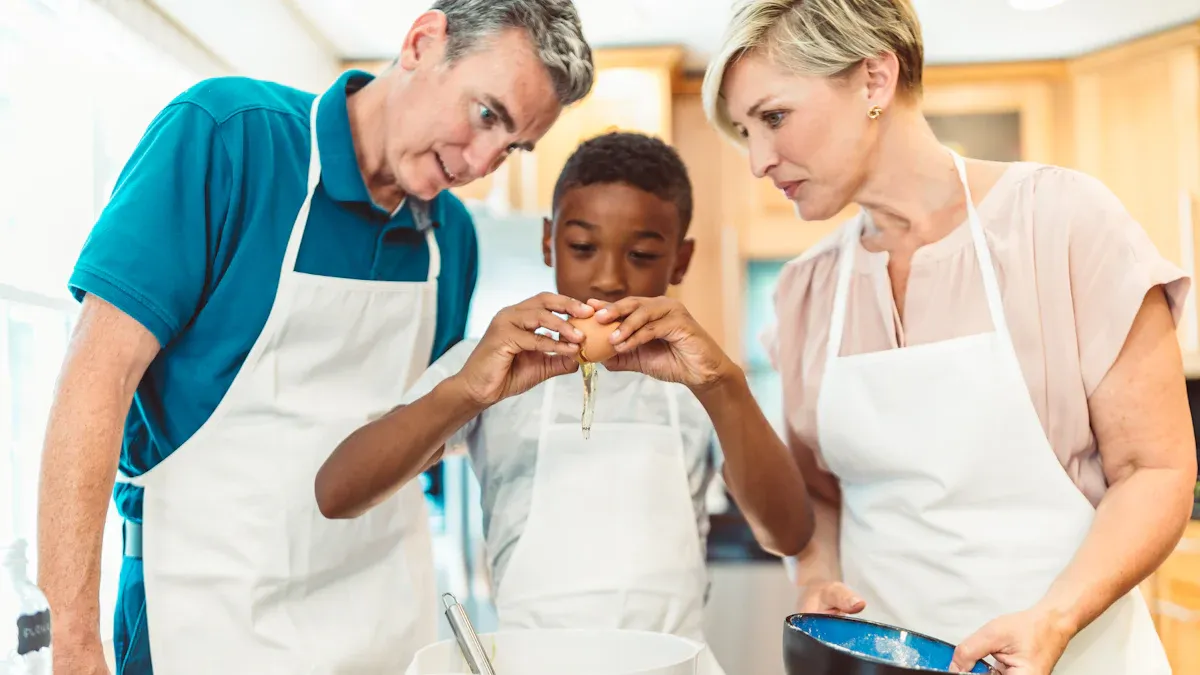
Kitchen safety is crucial for anyone starting their cooking journey. You can prevent accidents by following some essential safety practices. Here are key tips to keep in mind:
Always wash your hands before handling food.
Use separate cutting boards for raw meat and vegetables to avoid cross-contamination.
Keep knives sharp; dull knives can slip and cause injuries.
Be cautious with hot surfaces and liquids to prevent burns.
Clean spills immediately to avoid slips and falls.
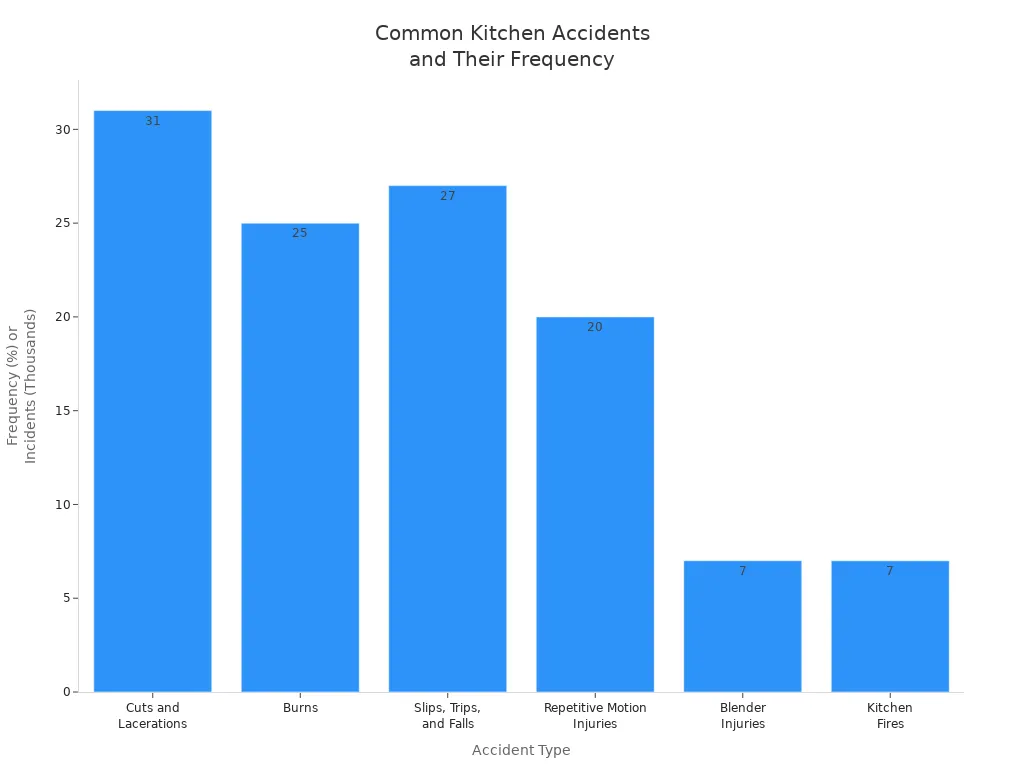
According to safety statistics, kitchen accidents are common. Here’s a quick overview of the most frequent types of accidents:
Accident Type | Frequency/Statistics |
|---|---|
Cuts and Lacerations | 31% of injuries in commercial kitchens require time off work, particularly from lacerations. |
Burns | Common due to hot surfaces and liquids; prevalent in kitchen environments. |
Slips, Trips, and Falls | Account for over 27% of all reported injuries, especially in kitchens with spills. |
Repetitive Motion Injuries | Nearly 20% of kitchen injuries are due to repetitive actions like stirring and chopping. |
Blender Injuries | Over 7,000 injuries reported in one year, with an increase due to handheld blenders. |
Kitchen Fires | Over 7,400 fires in commercial kitchens annually, according to the National Fire Protection Association. |
Essential Tools
Having the right tools makes cooking easier and more enjoyable. As a beginner, you should invest in essential kitchen equipment. Here’s a list of must-have tools:
ZWILLING PRO 8-inch Chef’s Knife
ZWILLING COMMERCIAL 8-inch Bread Knife
ZWILLING COMMERCIAL 6-inch Boning Knife
ZWILLING PRO 4-inch Paring Knife
CDN Digital Pocket Thermometer
CDN SD1104 Digital Scale
Using the right tools can significantly impact your cooking efficiency. They help streamline workflows, reduce cleaning time, and ensure consistent food quality. With the right equipment, you can work smarter and maintain a steady flow in the kitchen.
By focusing on these cooking basics, you lay a solid foundation for your culinary journey. Remember, safety and the right tools are key to becoming a confident cook.
Essential Cooking Techniques

Knife Skills
Mastering knife skills is one of the most important fundamentals in cooking. Good knife skills improve your efficiency and safety in the kitchen. Here are some essential knife skills every beginner should master:
Skill | Description |
|---|---|
Types of Knives | Chef’s Knife, Utility Knife, Paring Knife, Santoku Knife, Boning Knife, Bread Knife, Cleaver Knife, Kitchen Shears, Steak Knife. |
How to Grip a Knife | Hold the knife with your palm near the blade base, thumb and index finger gripping the blade, and use a ‘bear claw’ grip with the opposite hand. |
Secure Your Cutting Surface | Ensure the cutting board is stable to prevent slips while cutting. Use a rubber mat or wet paper towel underneath. |
How to Keep Knives Sharp | Use a whetstone or honing steel to maintain sharpness. Hand wash knives and store them safely to avoid damage. |
To enhance your knife skills, remember these tips:
Grip the knife correctly for better control and safety.
Hone your knife before each use to maintain sharpness.
Practice cutting techniques like chiffonade for herbs.
Proper knife skills not only make cooking easier but also minimize the risk of accidents. When you handle knives safely, you reduce the chances of cuts and injuries. Additionally, good knife skills help you prepare ingredients more quickly, allowing you to focus on the cooking process itself.
Cooking Methods
Understanding various cooking methods is essential for any aspiring chef. Different techniques yield different results, and knowing when to use each method can elevate your dishes. Here are some common cooking methods:
Cooking Method Type | Techniques Included | Results |
|---|---|---|
Dry Heat | Searing, Roasting, Baking, Grilling, Broiling, Sautéing, Stir-Frying, Pan-Frying / Deep-Frying | Crisp textures, caramelization, browning, concentrated flavor |
Moist Heat | Poaching, Simmering, Boiling, Steaming | Tender, delicate textures; soups, grains, vegetables, gentle proteins |
Combination Heat | Braising, Stewing, Sous Vide | Tough cuts, root vegetables, plant-based braises, thickened sauces, deeply flavored dishes |
Heat control plays a vital role in cooking. It influences taste, texture, and appearance. When you adjust the temperature of your cooking surfaces, you achieve desired results. For example, high heat can create a crispy exterior, while low heat allows for gentle cooking.
Heat is passed down the line from particle to particle, each bumping into the next and averaging out their energy. This is what causes the phenomenon we call temperature gradients.
By mastering these cooking techniques, you can create a variety of dishes with confidence. Experiment with different methods to discover what works best for you. As you practice, you will develop your skills and enhance your culinary repertoire.
Ingredient Knowledge for Beginners
Understanding Ingredients
As you embark on your cooking journey, understanding ingredients is vital. A well-stocked pantry helps you create a variety of dishes. Here are some staple ingredients every beginner should consider:
Spices: Enhance flavor and aroma in your dishes.
Oils: Essential for cooking and dressing salads.
Sauces: Add depth and complexity to your meals.
These staples allow you to execute a wide range of recipes. Knowing how to use them effectively can elevate your cooking skills.
Understanding the properties of different ingredients also contributes to better cooking outcomes. Here’s a table that outlines key ingredient types and their effects when cooked:
Ingredient Type | Key Properties | Cooking Effects |
|---|---|---|
Proteins | Change structure when heated or exposed to acid (denaturation) | Affects texture, e.g., firming of egg whites, tenderizing meat |
Carbohydrates | Gelatinize when heated and absorb water | Softens pasta and rice, caramelizes sugars for flavor |
Fats | Carry flavor, create mouthfeel, emulsify | Essential for frying, stabilizes mixtures like mayonnaise |
Water | Fundamental for heat transfer and moisture retention | Influences cooking methods like steaming and flavor melding |
By grasping these properties, you can develop a recipe with confidence and achieve the desired results.
Seasonal Produce
Using seasonal produce in your cooking offers numerous benefits. When you choose fruits and vegetables harvested at their peak, you enjoy better flavor and nutrition. Here are some reasons to incorporate seasonal produce into your meals:
Seasonal produce is more nutrient-dense due to longer maturation on the plant.
It is often locally grown, benefiting both your health and the local economy.
Seasonal items are typically sold at their best price, saving you money.
Buying seasonal produce helps reduce environmental impact, including water and land use.
Fresh fruits and vegetables contain the most vitamins, nutrients, and antioxidants, crucial for your health.
Seasonal produce tastes better since it is picked at its peak flavor.
In different regions, you can find a variety of seasonal ingredients. Here are some popular options:
Apricots
Asparagus
Broccoli
Carrots
Strawberries
Spinach
Incorporating these ingredients into your cooking not only enhances flavor but also allows you to explore a variety of taste sensations. Embrace the seasonal bounty and enjoy the benefits it brings to your meals!
Learning Through Practice
Simple Recipes
To build your culinary skills, start with simple recipes. These dishes help you gain confidence and enjoy the cooking process. Here are some great options to try:
Scrambled eggs with toast: A classic breakfast that teaches timing and seasoning.
Pasta with tomato sauce: Learn sauce-making and boiling pasta perfectly.
Stir-fried vegetables and rice: Teaches sautéing, chopping, and combining flavors.
Omelets or frittatas: Great for practicing multitasking and flipping techniques.
One-pot soups or stews: Ideal for understanding simmering and layering flavors.
Blueberry pancakes: Fluffy pancakes that are easy to mix and cook evenly.
Chicken and dumplings: A comforting recipe that teaches basic skills with simple ingredients.
Simple marinara sauce: A foundational recipe that helps you make fresh meals.
Pizza dough: A key recipe for learning to make pizza from scratch.
Cacio e pepe: A simple dish that teaches a basic technique for creamy pasta.
Starting with these easy recipes can lead to a more enjoyable cooking experience. They provide a sense of accomplishment, which boosts your confidence in the kitchen. Aim for recipes with ten ingredients or less, as they are ideal for beginners.
Cooking Journal
Keeping a cooking journal can enhance your learning experience. This tool helps you track your progress and set achievable goals. Here are some effective methods for using a cooking journal:
Meal Planning Journal: Document your meal plans, grocery lists, and reflections to track your culinary journey.
Set Achievable Goals: Establish realistic goals to provide direction and a roadmap for your cooking progress.
Use Meal Planning Apps: Leverage technology to streamline meal planning and enhance your cooking skills.
Take Photos: Capture your culinary creations to visually track your progress and skill development.
Monitor Your Grocery Expenses: Keep track of your spending to make informed choices and reduce waste.
Reflect Regularly: Set aside time to evaluate your meal planning successes and challenges.
Celebrate Your Wins: Acknowledge and celebrate your cooking achievements, no matter how small.
By writing down your experiences, you can see how much you learn to cook over time. This structured learning approach keeps you motivated and engaged in your culinary journey.
Advanced Culinary Skills
Plating Techniques
Plating is an art that enhances the visual appeal of your dishes. A well-plated meal can elevate the dining experience and make food more enjoyable. Here are some key techniques to consider:
Technique | Description |
|---|---|
Texture / Contrast | Combine different textures, such as crunchy and creamy elements, to create interest. |
Height | Build height on the plate through stacking or overlapping to add visual intrigue. |
Symmetry | Use symmetrical plating for balance or asymmetrical designs for surprise. |
Position on the plate | Center components to enhance volume and use contrasts for stacking. |
Color | Utilize contrasting or complementary colors to enhance visual appeal. |
Food arrangement | Arrange food aesthetically to highlight key ingredients through techniques like fanning or stacking. |
Sauce plating | Apply sauces in visually appealing ways, considering their consistency and color. |
Garnishing | Add garnishes that complement flavors and enhance the overall look of the dish. |
Research shows that presentation significantly impacts perceived taste. In a study, diners preferred artistically arranged food and were willing to pay more for it. This highlights how visual presentation enhances the overall dining experience.
Advanced Methods
As you advance your culinary skills, mastering advanced cooking methods can greatly improve your dishes. Here are some common techniques used in professional kitchens:
Cooking Method | Description |
|---|---|
Sous Vide | Slow-cooks vacuum-sealed food in a water bath for precise temperature control. |
Braising | Combines searing and slow cooking in liquid for tender results. |
Stewing | Involves cooking small cuts of meat submerged in liquid for a thick gravy. |
Roasting | Uses dry heat to cook food evenly, often in an oven. |
Sautéing | Cooks food quickly in a small amount of oil or fat over high heat. |
Sous vide cooking stands out for its ability to enhance food quality. It preserves nutrients better than traditional methods and improves flavor and texture. Research indicates that vegetables retain higher levels of vitamins when cooked sous vide compared to other techniques.
By incorporating these advanced techniques into your cooking, you will build culinary confidence and create dishes that impress. Experiment with plating and cooking methods to discover your unique style.
Building culinary skills takes time and practice. You should remember that cooking is a journey filled with learning opportunities. Here are some key points to consider:
Mastering kitchen safety and essential tools lays a strong foundation.
Developing knife skills and understanding cooking methods enhances your efficiency.
Knowing your ingredients and using seasonal produce improves your dishes.
As you continue your culinary journey, embrace experimentation. Try new recipes and techniques. Consistent practice leads to improvement. Community-based cooking programs show that tailored strategies and social interactions help you grow.
Revisit the steps outlined in this blog as you progress. Celebrate your achievements, no matter how small. Enjoy the process, and keep learning!
FAQ
What are some beginner-friendly cooking techniques I should learn first?
Start with basic techniques like boiling, sautéing, and roasting. These methods form the foundation for many recipes and help you build confidence in the kitchen.
How can I improve my knife skills?
Practice regularly with different cutting techniques. Use a sharp knife and a stable cutting board. Watch tutorials to learn proper grip and cutting styles.
Why is it important to use seasonal produce?
Seasonal produce offers better flavor and nutrition. It’s often fresher and more affordable, supporting local farmers and reducing environmental impact.
How can I track my cooking progress?
Keep a cooking journal to document recipes, techniques, and reflections. Note what you enjoy and areas for improvement to guide your culinary journey.
What should I do if I make a mistake while cooking?
Mistakes are part of learning! Assess the situation, adjust as needed, and don’t hesitate to experiment. Every error teaches you something valuable.