

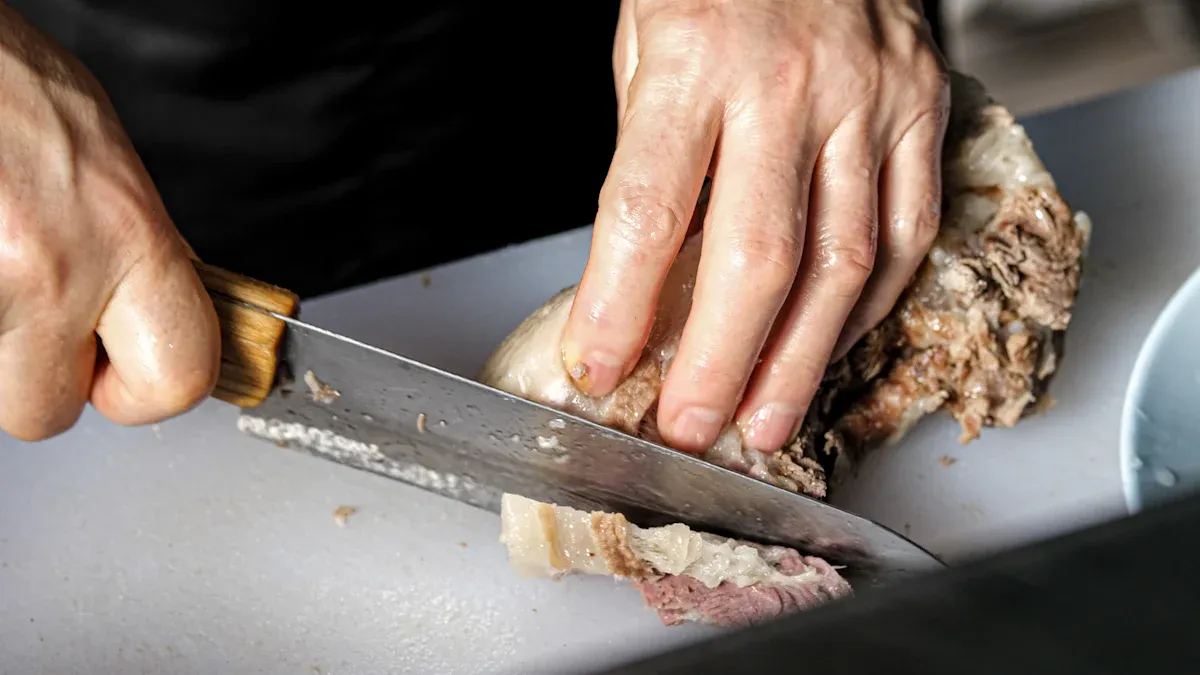
Mastering knife skills is crucial for safety in the kitchen. Each year, about 350,000 people visit emergency departments due to knife injuries, which can result from improper handling. Learning proper techniques not only prevents accidents but also enhances efficiency. Good knife skills allow you to chop, slice, and dice quickly, streamlining your cooking process.
Key Takeaways
Mastering knife skills enhances safety and efficiency in the kitchen. Proper techniques reduce the risk of accidents and improve your cooking speed.
Always use a sharp knife. Sharp knives require less force, making them safer and more effective for cutting tasks.
Practice essential techniques like chopping, slicing, dicing, and mincing. Each technique improves your cooking and helps create uniform dishes.
Knife Basics
Understanding the basics of knives is essential for any cook. Knowing the different types of knives and their components can significantly improve your knife skills and enhance your safety in the kitchen.
Types of Knives
Each knife serves a specific purpose. Here are some common types of kitchen knives and their primary uses:
Knife Type | Primary Use |
|---|---|
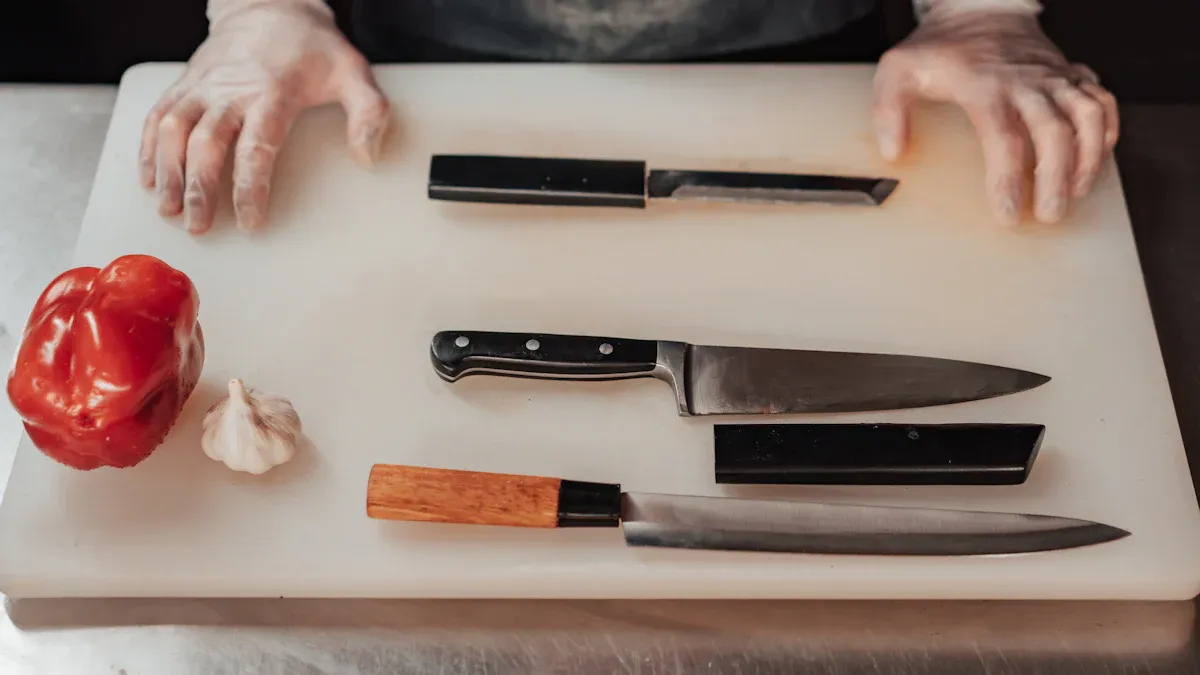
Chef’s Knife | Versatile for chopping, dicing, and slicing various ingredients. |
Santoku Knife | Great for chopping, dicing, and mincing; similar to a chef’s knife. |
Carving Knife | Ideal for precision slicing of larger cuts of meat. |
Bread Knife | Designed for slicing bread without crushing it. |
Meat Cleaver | Used for chopping through bone and can also chop vegetables. |
Each knife type has its unique design and function, making it easier for you to handle different ingredients effectively.
Knife Components
A knife consists of several components that contribute to its functionality. Understanding these parts can help you choose the right knife for your tasks. Here’s a breakdown of the key components:
Component | Contribution to Functionality |
|---|---|
Blade Material | Affects sharpness, durability, and maintenance; options include stainless steel, carbon steel, high-carbon stainless steel, and ceramic. |
Blade Shape | Determines suitability for tasks; examples include chef’s knife for versatile cutting, paring knife for precision, and bread knife for slicing. |
Blade Construction | Influences quality and balance; forged blades offer durability, while stamped blades are lighter and less expensive. |
Key Parts | Each part, such as the blade face, tip, spine, and cutting edge, plays a role in cutting ability and balance. |
Handle | Affects usability and comfort; varies in material and design, with Western handles being robust and Eastern handles being lighter and more agile. |
By familiarizing yourself with these components, you can better appreciate how each knife works and how to maintain your knife skills effectively.
Grip and Safety
How to Hold a Knife
A proper grip is essential for safety when using knives. It helps you maintain control and reduces the risk of accidents. Here are some recommended techniques for holding a chef’s knife:
Wrap your hand around the handle near the bolster, pinching the blade between your thumb and index finger.
Ensure your grip is primarily with the thumb and forefinger for better control.
When you hold the knife, always stabilize the food with your guiding hand. This prevents slipping and keeps your fingers safe. Use the ‘claw’ position with your non-dominant hand. This technique protects your fingertips from the blade while allowing you to control the food effectively.
Tip: A secure grip is vital for safety. It reduces the risk of accidents and improves your control over the knife. Always place your cutting board on a stable surface to prevent slipping. Hone your knife regularly to maintain its edge and ensure safe cutting.
Safe Cutting Techniques
Using safe cutting techniques is crucial for preventing injuries in the kitchen. Here are some best practices to follow:
Safety Tip | Description |
|---|---|
Cut away from yourself | Protect your hands by cutting away from your fingers to avoid injuries. |
Use a stable surface | Always cut on a clean, dry, and stable surface in a well-lit area. |
Keep knives sharp | A sharp knife is safer than a dull one, as it requires less force and is less likely to slip. |
Store tools safely | Keep knives and sharp tools out of children’s reach. |
Focus and alertness | Stay focused when using tools to prevent accidents. |
Additionally, ensure the item you are cutting is stable. Choose the right cutting tool for the task and use sharp blades. Apply light pressure when cutting thinner materials to maintain control. Always keep your hands and legs clear from the knife’s path, and maintain a clean workspace.
By mastering these knife skills and prioritizing safety, you can enjoy a more efficient and accident-free cooking experience at home.
Essential Knife Skills
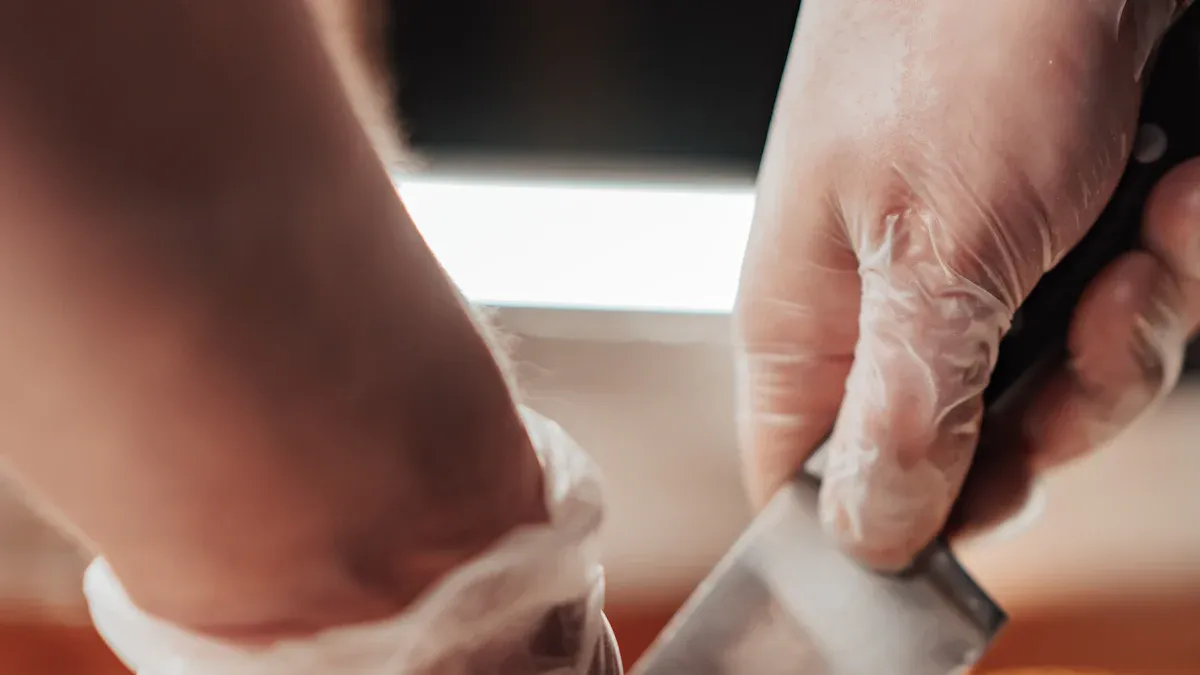
Mastering essential knife skills is vital for any home cook. These skills not only enhance your cooking efficiency but also improve safety in the kitchen. Maintaining sharp knives is crucial. Dull knives can lead to accidents, as they require more force to cut, increasing the risk of slips. Sharp knives allow for controlled movements, making your cutting tasks safer and more precise.
Chopping
Chopping is a fundamental technique where you cut food into larger, irregular pieces. This method is perfect for ingredients where uniformity is less critical, such as when preparing soups or stews. Here are some tips for effective chopping:
Use a sharp knife to minimize effort and maximize control.
Employ the claw grip technique to protect your fingers while holding the food.
Keep your cutting board stable to prevent slipping.
Chopping can be casual and imprecise, making it a great skill to practice as you build confidence in the kitchen.
Slicing
Slicing involves cutting food into thin, flat pieces. This technique is essential for items like meats, vegetables, and fruits. Proper slicing affects the texture and appearance of your dishes. Here’s how to slice effectively:
Use a gentle sawing motion for softer items, like tomatoes.
Apply steady pressure for firmer vegetables, such as carrots.
Aim for even thickness to ensure uniform cooking.
Uniform slices not only enhance the visual appeal of your dishes but also contribute to even cooking. For instance, thinly sliced vegetables cook faster and integrate flavors better.
Dicing
Dicing is a precise technique that results in uniform cubes. This skill is crucial for recipes that require even cooking, such as salsas or mirepoix. Follow these steps for successful dicing:
Start by slicing the ingredient into slabs of similar thickness.
Rotate the slabs and cut them into uniform cubes.
Use the claw grip to keep your fingers safe.
Dicing ensures that all pieces cook evenly, enhancing the overall quality of your dish. Remember, consistency is key!
Mincing
Mincing involves cutting ingredients into very small pieces, almost to a paste. This technique is often used for herbs and garlic, as it releases their flavors more effectively. Here are some tips for mincing:
Use a sharp knife for clean cuts.
Combine garlic and herbs while chopping to prevent sticking.
Keep your fingers curled under to protect them.
Mincing enhances the flavor of your dishes without adding texture. For example, finely minced garlic can elevate the taste of sauces and marinades.
By mastering these essential knife skills, you can improve your cooking efficiency and safety. Practice regularly to build confidence and refine your techniques. Good knife skills will not only make your preparation easier but also enhance the presentation of your meals.
Mastering knife skills is vital for every home cook. Regular practice enhances safety, precision, and efficiency in the kitchen. You can prevent accidents and improve your culinary creations by honing these techniques. Embrace the art of knife skills, and enjoy a safer, more confident cooking experience!
FAQ
What is the best way to maintain cutting board safety?
Always use a stable cutting board. Clean it regularly and avoid cross-contamination by using separate boards for raw meat and vegetables.
How often should I sharpen my knives?
You should sharpen your knives every few months, or more frequently if you use them daily. A sharp knife enhances safety and efficiency.
Can I use a dull knife safely?
Using a dull knife is unsafe. It requires more force, increasing the risk of slips and accidents. Always keep your knives sharp for safety.