

Accurate kitchen measurements play a crucial role in cooking. They directly affect the outcome of your recipes. When you measure ingredients precisely, you ensure consistency in flavor and texture. Understanding measurement conversions is equally important. Many recipes use different systems, such as metric and imperial. Knowing how to convert between these systems helps you scale recipes effectively. Cooking ratios also matter. They guide you in balancing flavors, ensuring your dishes are delicious every time.
Key Takeaways
Accurate measurements are crucial for successful cooking. They ensure consistent flavor and texture in your dishes.
Understanding measurement conversions between metric and imperial systems helps you adapt recipes easily and achieve accurate results.
Mastering cooking ratios allows you to balance flavors and maintain consistency across different recipes.
Regular practice with measurement techniques and conversions enhances your cooking skills and leads to better outcomes.
Investing in quality measuring tools, like cups and scales, is essential for achieving precise measurements and improving your cooking results.
Cooking Measurements
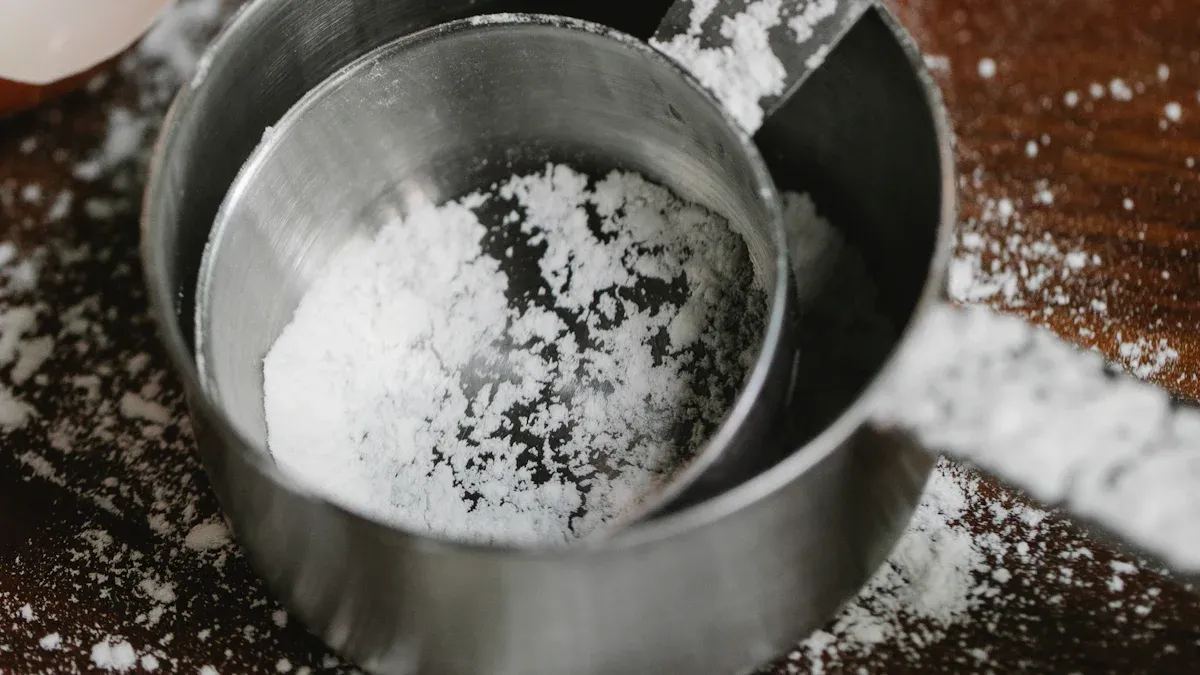
Accurate kitchen measurements are essential for successful cooking. You must measure both dry and liquid ingredients correctly to achieve the desired results in your recipes. Let’s explore how to measure these ingredients effectively.
Dry Ingredients
When measuring dry ingredients, precision is key. Using the right techniques ensures that your baked goods turn out perfectly every time. Here are some common measurements and best practices:
Flour: Spoon flour into a measuring cup and level it off with a knife. Avoid scooping directly from the bag, as this can pack the flour and lead to too much being used.
Sugar: Use dry measuring cups and level off with a knife for accuracy.
Honey: To prevent sticking, spray your measuring cup with nonstick spray before measuring.
Ingredient | Measurement Technique |
|---|---|
Flour | Spoon into the cup and level off with a knife. Avoid scooping directly from the bag. |
Sugar | Use dry measuring cups and level off with a knife. |
Honey | Spray measuring cup with nonstick spray to prevent sticking. |
Measuring dry ingredients accurately affects the texture and taste of your baked goods. Here are some reasons why:
Baking is a scientific process. Precise measurements are essential for achieving the desired texture and taste.
Chemical reactions depend on the correct ratios of ingredients. Inaccurate measurements can disrupt these reactions.
Each ingredient plays a specific role. Miscalculations can lead to undesirable outcomes, such as cookies that spread excessively or cakes that collapse.
Liquid Ingredients
Measuring liquid ingredients also requires attention to detail. Using the correct tools and techniques helps maintain the balance of flavors and textures in your dishes. Here are some tips for measuring liquids accurately:
Use Liquid Measuring Cups: Opt for glass or plastic measuring cups with a spout for liquids like water, milk, and oil. These cups have measurement lines marked on the side.
Proper Technique: Place the measuring cup on a flat surface and check the measurement at eye level. This helps avoid parallax error. Ensure you do not overfill the cup and check for the meniscus to ensure accuracy.
Country | Standard Cup | Tablespoon | Teaspoon |
|---|---|---|---|
Canada | 250ml | 15ml | 5ml |
Australia | 250ml | 20ml | 5ml |
New Zealand | 250ml | 15ml | 5ml |
UK | 250ml | 15ml | 5ml |
Accurate measurements of liquid ingredients influence the consistency of soups and sauces. Here are some key points:
Accurate measurements maintain the balance of flavors and textures.
Using the correct measuring tools prevents errors that lead to variations in the final dish.
Consistency in measurements ensures that every customer experiences the same taste and texture, which is crucial for customer satisfaction.
By mastering these cooking measurements, you can elevate your culinary skills and create delicious dishes every time.
Measurement Conversions

Understanding measurement conversions is vital for any cook. You often encounter recipes that use different systems, such as metric and imperial. Knowing how to convert between these systems helps you achieve accurate results in your cooking.
Metric vs. Imperial
The metric and imperial systems differ significantly. Here’s a quick comparison to help you understand their features:
Feature | Metric System | Imperial System |
|---|---|---|
Base | Decimal base (multiples of 10) | Traditional units (inches, pounds, etc.) |
Common Units | Kilograms, grams, liters | Pounds, ounces, cups |
Usage | Widely used globally | Primarily in the US, Myanmar, Liberia |
Familiarity | Less familiar to some in the US | Familiar measurements for many people |
Precision | High precision and ease of calculation | Simpler for everyday use |
The metric system uses a decimal base, making it easier to calculate and convert. In contrast, the imperial system relies on traditional units, which can be less intuitive. This difference can lead to confusion, especially when you need to convert measurements for a recipe.
Conversion Examples
When you cook, you often need to convert measurements. Here are some common cooking conversions to help you:
CUPS | PINTS | QUART | GALLONS | FLUID OUNCES | MILLILITERS |
|---|---|---|---|---|---|
¼ cup | ⅛ pint | 1/16 quart | 1/64 gallon | 2 fl oz | 59 mL |
½ cup | ¼ pint | ⅛ quart | 1/32 gallon | 4 fl oz | 118 mL |
1 cup | ½ pint | ¼ quart | 1/16 gallon | 8 fl oz | 237 mL |
2 cups | 1 pint | ½ quart | ⅛ gallon | 16 fl oz | 473 mL |
4 cups | 2 pints | 1 quart | ¼ gallon | 32 fl oz | 946 mL |
8 cups | 4 pints | 2 quarts | ½ gallon | 64 fl oz | 1893 mL |
16 cups | 8 pints | 4 quarts | 1 gallon | 128 fl oz | 3785 mL |
You can also refer to this liquid measurements conversion chart for quick reference:
Metric | Standard |
|---|---|
1 mL | 1/5 tsp |
5 mL | 1 tsp |
15 mL | 1 tbsp |
240 mL | 1 c (8 fl. oz) |
1 liter | 34 fl. oz |
1 g | .035 oz |
100 g | 3.5 oz |
500 g | 17.7 oz (1.1 lb) |
1 kg | 35 oz |
When converting measurements, you may face challenges. Here are some common issues:
Accuracy Issues: Converting between systems can lead to errors, especially in precise contexts.
Communication Barriers: Different systems can create misunderstandings among cooks.
Educational Background: Individuals trained in one system may struggle with the other.
To avoid mistakes, always use the correct measuring tools. Invest in a good set of measuring spoons, cups, and a digital scale. This investment pays off in consistent results.
By mastering these conversions, you can confidently tackle any recipe, ensuring your dishes turn out perfectly every time.
Cooking Ratios
Importance of Ratios
Cooking ratios are essential for achieving consistency and balance in your recipes. They help you understand how different ingredients interact with each other. By mastering these ratios, you can create dishes that taste great every time. Here are some key points about the importance of culinary ratios:
Ratios standardize ingredient measurements. This ensures uniformity across batches.
They help you adjust cooking times and temperatures, especially when scaling recipes.
Conducting taste tests allows you to maintain quality control and make necessary adjustments.
Understanding these ratios can significantly improve your cooking skills. For example, using a stock ratio of 3 parts water to 2 parts bones ensures proper flavor extraction and consistency in stock preparation.
Common Cooking Ratios
Here are some common cooking ratios that you can apply in your kitchen:
Ratio Type | Example Ratio | Importance in Cooking |
|---|---|---|
Stock Ratio | 3 parts water to 2 parts bones | Ensures proper flavor extraction and consistency in stock preparation. |
Scaling Ratios | Adjusting for larger batches | Maintains flavor balance and ingredient proportions when increasing recipe size. |
Mirepoix Addition | 1 lb. mirepoix per gallon | Enhances flavor complexity and consistency in stocks and soups. |
You can also explore these widely used ratios in professional kitchens:
Ingredient | Ratio | Description |
|---|---|---|
Rice | 1 part rice : 2 parts water | Ensures light, separate grains; adjust water for texture. |
Quinoa | 1 part quinoa : 2 parts liquid | Yields tender, fluffy quinoa; rinse before cooking. |
Lentils | 1 part lentils : 3 parts liquid | Absorb more water; yields creamy results. |
Couscous | 1 part couscous : 1 part boiling water | Simple ratio; steam for light, airy grains. |
Polenta | 1 part cornmeal : 4 parts liquid | Creates smooth, creamy polenta; stir to avoid lumps. |
By applying these ratios, you can enhance your culinary creations. For instance, the 1-2-3-4 Yogurt Cake ratio (1 part oil, 2 parts sugar, 3 parts flour, and 4 eggs) allows for easy scaling and experimentation with flavors.
Understanding and using culinary ratios effectively can transform your cooking experience. You will gain confidence in your abilities and create delicious meals that impress your family and friends.
Mastering kitchen measurements, conversions, and cooking ratios is essential for every cook. Accurate measurements lead to consistent results, while understanding conversions helps you adapt recipes easily. Here are some key takeaways:
Practice Makes Perfect: Regularly practicing measurement conversions improves your cooking skills over time. It ensures correct ingredient proportions, leading to better outcomes.
Useful Resources: Consider these resources to enhance your knowledge:
Resource Title | Description |
|---|---|
Basic Cooking Conversions | A comprehensive guide on metric and imperial measurements, including conversion charts and tips. |
Cooking with Conversions | An educational activity that involves converting a recipe from English to metric units. |
Cooking and Baking Conversions | A guide to help understand various measuring options and how to convert between them easily. |
By honing these skills, you can create delicious meals with confidence. Embrace the art of cooking, and enjoy the journey!
