

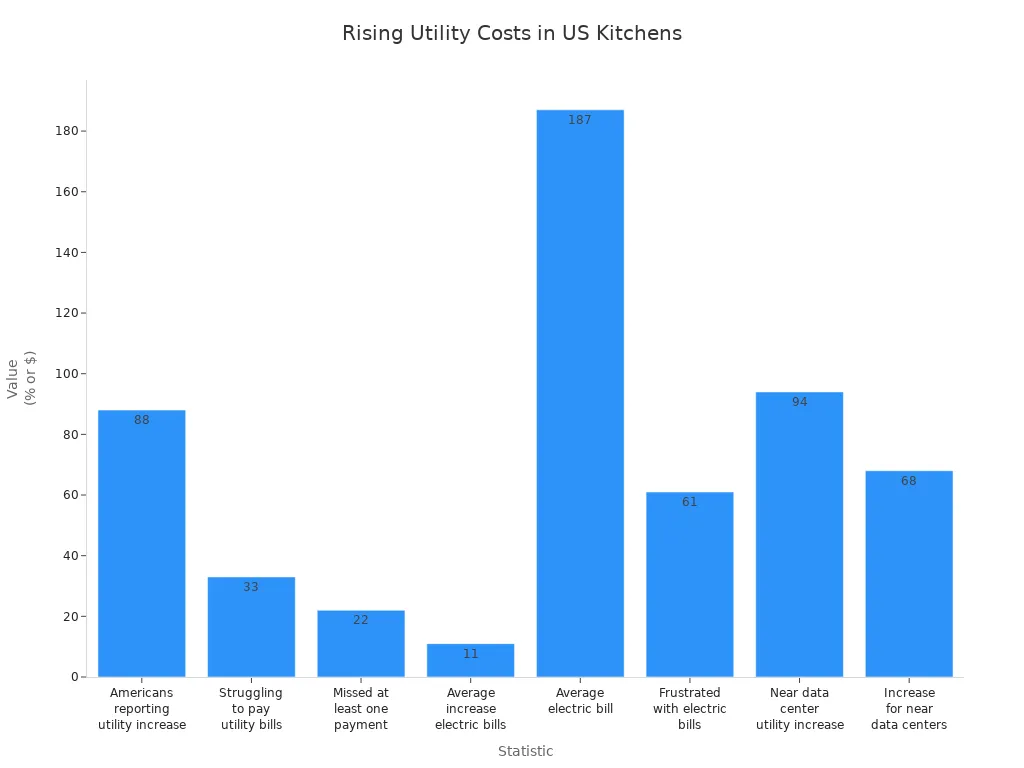
Utility costs are rising, and many Americans feel the pinch. In fact, 88% report increased utility expenses, with 33% struggling to pay their bills. You can combat these costs by investing in energy-efficient kitchen appliances. These appliances not only help you save money on your utility bills but also contribute to a more sustainable future. As more consumers seek eco-friendly options, the long-term financial benefits of energy efficiency become clear. Switching to energy-saving appliances can lead to annual savings of up to $450.
Key Takeaways
Investing in energy-efficient appliances can save you up to $450 annually on utility bills.
ENERGY STAR refrigerators and dishwashers use significantly less energy and water, leading to long-term savings.
Upgrading to energy-efficient ovens and ranges can reduce energy consumption by up to 40%, saving you money.
Many states offer rebates for purchasing energy-efficient appliances, making them more affordable.
Choosing energy-efficient appliances not only lowers your bills but also helps protect the environment.
Refrigerators and Energy Efficiency

Features of Energy Star Appliances
When you choose an ENERGY STAR refrigerator, you select a model that meets strict energy efficiency standards. These appliances use advanced technology to save energy and reduce your utility bills. Here are some key features that distinguish ENERGY STAR refrigerators from standard models:
Feature | ENERGY STAR Refrigerators | Standard Models |
|---|---|---|
Energy Efficiency | About 9% more energy efficient | Meets federal minimum standards |
Compressor Technology | High-efficiency compressors | Standard compressors |
Insulation | Improved insulation for better cooling | Standard insulation |
Temperature Control | Advanced temperature and defrost mechanisms | Basic temperature control |
By investing in an ENERGY STAR refrigerator, you not only save energy but also contribute to environmental protection. These appliances help reduce harmful emissions from power plants.
Cost Savings Over Time
Switching to an ENERGY STAR refrigerator can lead to significant savings over time. Here’s how:
ENERGY STAR refrigerators consume at least 15% less energy than non-certified models.
You can save approximately $220 over the 12-year lifespan of an ENERGY STAR refrigerator.
These models reduce energy consumption by up to 33%.
The enhanced energy efficiency comes from improved insulation and more efficient compressor technology. As a result, you enjoy lower electricity bills while keeping your food fresh.
Energy-Efficient Dishwashers
Benefits of Energy Star Dishwashers
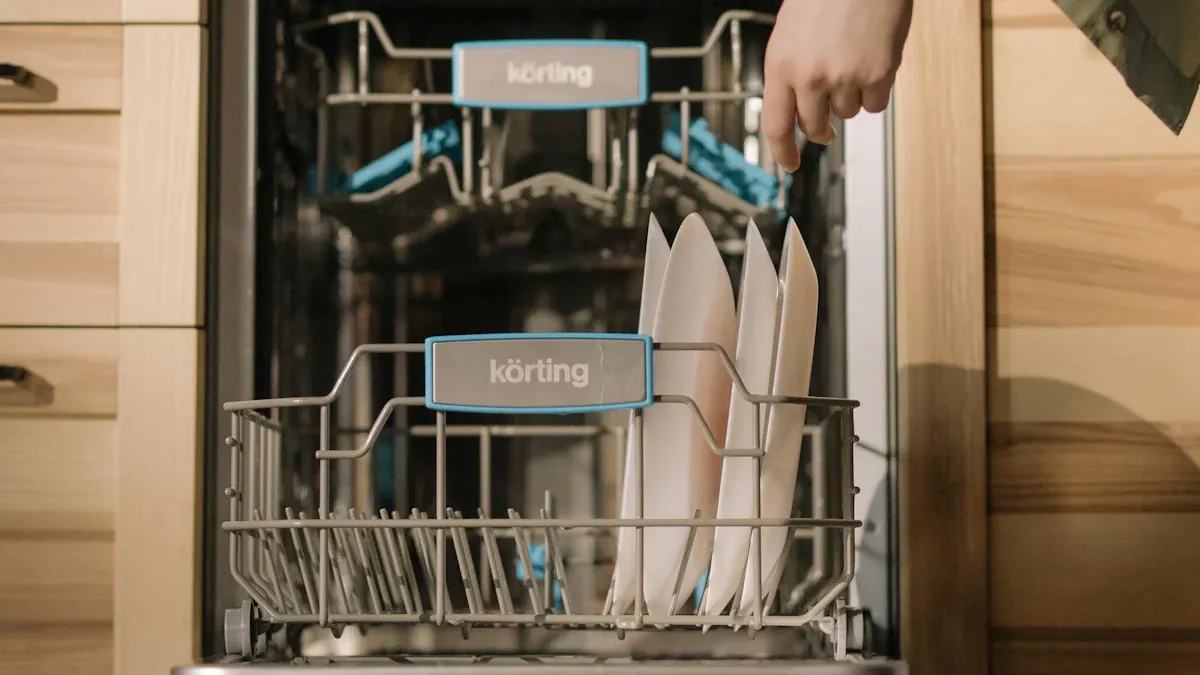
When you choose an ENERGY STAR dishwasher, you make a smart decision for both your wallet and the environment. These energy-saving appliances offer several advantages:
Energy Efficiency: ENERGY STAR dishwashers use, on average, 12% less energy than standard models. This efficiency translates to approximately $35 in annual energy savings.
Water Conservation: These dishwashers use as little as 3.5 gallons of water per cycle. In contrast, older models can consume up to 10 gallons. If every U.S. household upgraded to an ENERGY STAR dishwasher, it could save over 130 billion gallons of water annually.
Cost-Effective Operation: A standard-size ENERGY STAR certified dishwasher costs about $50 per year to operate. Over its lifetime, it can save approximately 5,800 gallons of water, which can lead to significant savings on your water bills.
By reducing both energy and water usage, ENERGY STAR dishwashers help you lower your utility bills while conserving valuable resources.
Long-Term Financial Impact
Investing in an ENERGY STAR dishwasher can lead to substantial savings over time. Here’s how:
Lower Utility Bills: With an ENERGY STAR model, you can expect to save around $35 annually on energy costs. Over the lifespan of the appliance, this adds up to significant savings.
Water Savings: You can reduce your water usage by nearly 1,000 gallons each year with a new ENERGY STAR dishwasher. This reduction not only helps the environment but also lowers your water bills.
Enhanced Performance: New models feature innovations that improve efficiency and performance. They clean your dishes effectively while using less energy and water.
Ovens and Ranges for Energy Efficiency
Energy-Saving Features
When you choose energy-efficient ovens and ranges, you benefit from innovative technologies that enhance efficiency. For example, convection ovens circulate hot air, allowing food to cook evenly. This method uses up to 20% less energy than traditional baking. Induction cooktops also stand out for their efficiency. They heat pots and pans directly, minimizing heat loss. In fact, induction cooking can use up to 40% less electricity than ceramic glass cooktops.
Many modern ovens come with programmable cooking cycles. These features optimize energy usage by adjusting cooking times and temperatures automatically. Additionally, energy-efficient deep fryers utilize advanced heat exchange systems. They maintain consistent oil temperatures while reducing energy consumption. Many of these fryers also include timers and auto-shutoff features to cut down on energy waste.
Cost Analysis
Investing in energy-efficient ovens and ranges can lead to significant savings on your utility bills. Here’s a breakdown of potential savings:
Type of Oven | Average Payback Period |
|---|---|
Induction upgrade | 3-5 years |
Convection upgrade | 5-8 years |
ENERGY STAR upgrade | 6-10 years |
Smart features | 8-12 years |
You may also qualify for government rebates when purchasing energy-efficient appliances. For instance, the Home Electrification and Appliance Rebates (HEAR) program offers up to $840 for Energy Star-approved ovens and ranges. This financial incentive can further reduce your overall costs.
By upgrading to energy-efficient ovens and ranges, you not only save money but also contribute to a more sustainable future.
Other Energy-Efficient Kitchen Appliances
Impact on Utility Bills
You can save money on your utility bills by using energy-efficient kitchen appliances like microwaves, slow cookers, and coffee makers. These appliances consume less energy than older models, leading to lower costs. Here’s a quick comparison of their energy usage:
Appliance | Wattage Range (Watts) | Annual Energy Usage (kWh) |
|---|---|---|
Microwave | 600 – 1,500 | ~215 |
Slow Cooker | 300 | Low cost compared to oven |
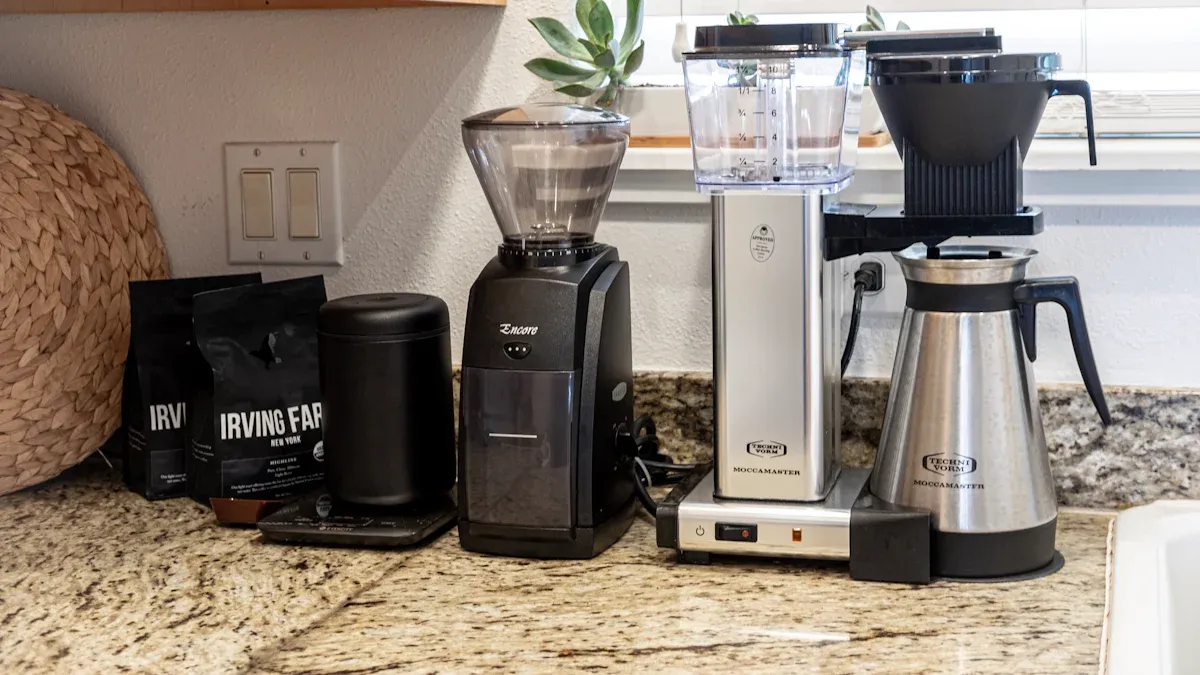
Coffee Maker | 550 – 1,200 | ~854 |
Energy-efficient microwaves use less power for improved performance.
Slow cookers operate at only 300 watts, making them very efficient for long cooking times.
Coffee makers have a variable wattage, averaging around 854 kWh annually.
By choosing these appliances, you can significantly reduce your energy consumption and save on your utility bills.
Environmental Benefits
Switching to energy-efficient kitchen appliances also benefits the environment. Here are some key advantages:
Transitioning to energy-efficient cooking methods can help decrease deforestation and greenhouse gas emissions.
These appliances emit fewer greenhouse gases, thus having a lesser impact on climate change.
Energy-efficient dishwashers utilize only the necessary amount of water for cleaning, leading to lower water usage.
Investing in energy-efficient appliances can significantly reduce your carbon footprint. For example, replacing an old refrigerator can prevent 1,000 pounds of carbon dioxide emissions annually. By making these choices, you contribute to a healthier planet while enjoying savings on your utility bills.
Upgrading to energy-efficient kitchen appliances offers you numerous benefits. You can enjoy significant cost savings on utility bills, as these appliances consume less energy and water. Here are some key advantages:
Cost savings on utility bills: Energy-efficient appliances lead to lower monthly expenses.
Increased property value: Homes with these appliances attract more buyers, enhancing market value.
Government incentives: Many programs offer rebates or tax credits for purchasing energy-efficient models.
Additionally, these appliances contribute to long-term environmental sustainability. They reduce energy consumption, conserve water, and lower carbon emissions. By evaluating your current appliances, you can make informed decisions that benefit both your finances and the planet.
