
When you cook, having a clear recipe structure can make all the difference. A well-organized recipe helps you achieve consistent results, ensuring that your dish tastes great every time. It simplifies the cooking process, reducing confusion with straightforward instructions. Plus, it promotes efficiency by encouraging you to gather all your ingredients beforehand. This way, you can focus on enjoying the cooking experience without feeling overwhelmed. Embracing a solid recipe format not only boosts your confidence but also leads to delicious outcomes.
Key Takeaways
A clear recipe structure boosts your cooking confidence and ensures consistent results.
Organize your ingredients in the order of use to avoid missing key components.
Use precise measurements for ingredients to achieve the desired taste and texture.
Follow step-by-step instructions to minimize errors and enhance your cooking experience.
Understand preparation and total cooking times to better manage your kitchen schedule.
Ingredients in Recipe Structure
Clear Ingredients
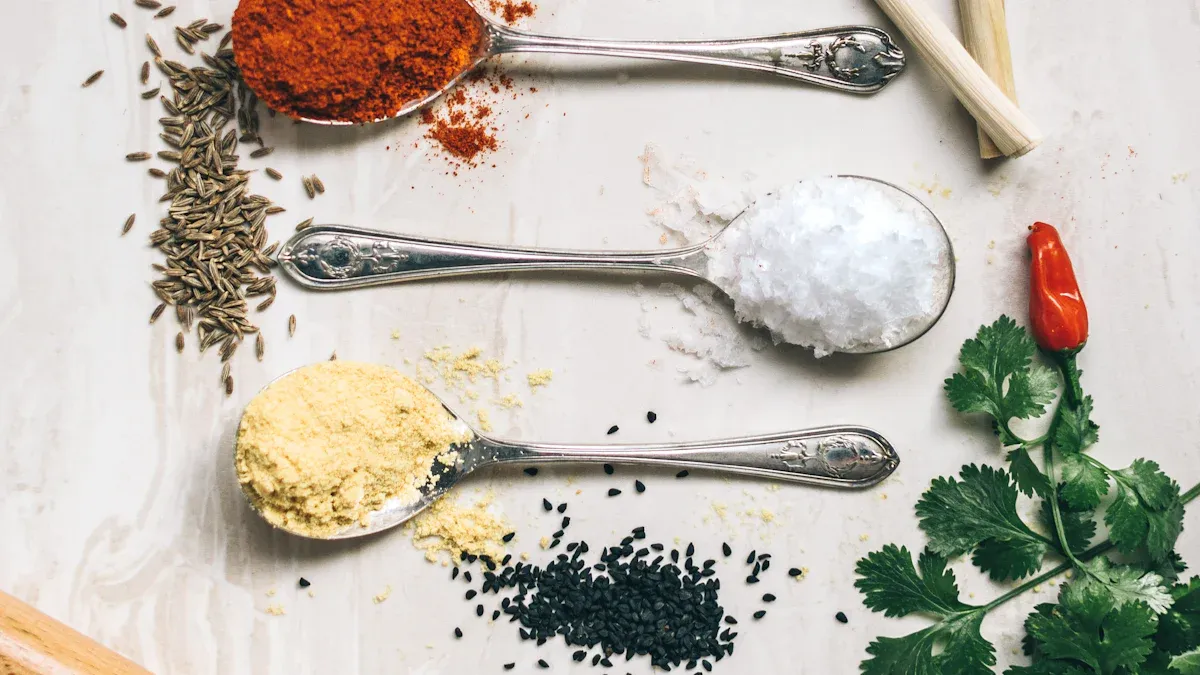
When you look at a recipe, the first thing you notice is the ingredients list. A clear organization of ingredients is crucial for a smooth cooking experience. Listing ingredients in the order you use them helps you avoid missing anything important. Imagine starting to cook only to realize halfway through that you forgot to add a key ingredient. That can lead to unexpected surprises and mishaps, like a cake that doesn’t rise or a sauce that lacks flavor.
Here are some best practices for creating a clear ingredients list:
List ingredients in the order they appear in the recipe. This way, you can follow along without confusion.
Be specific with measurements. For example, instead of saying “sugar,” specify “1 cup of granulated sugar.” This prevents variations in ingredient amounts.
Include the state of ingredients, such as “softened butter” or “chopped onions,” to ensure clarity.
Following these guidelines not only helps you but also anyone else who might use your recipe. Professional chefs recommend these practices to maintain consistency and clarity in their recipes.
Measuring Ingredients
Understanding measurements is key to successful cooking. Accurate measurements ensure that your dish turns out as intended. Here are some tips for measuring both dry and liquid ingredients:
For liquid ingredients, use a liquid measuring cup. Pour the liquid in and check the meniscus at eye level for accuracy.
For dry ingredients, use dry measuring cups. Fill the cup and level it off with a straight edge to avoid excess.
When measuring sticky liquids like honey, spray the measuring cup with nonstick spray to make pouring easier.
Using precise measurements is especially important in baking, where chemical reactions depend on the right amounts of ingredients. For instance, if you use too much flour, your cake might turn out dense instead of light and fluffy.
Here’s a quick reference for measuring different types of ingredients:
Ingredient Type | Measuring Method |
|---|---|
Liquid | Use a liquid measuring cup and check at eye level. |
Dry | Use dry measuring cups and level off. |
Sticky | Spray with nonstick spray before measuring. |
By following these methods, you can ensure that your recipes yield consistent results every time. Remember, a well-structured recipe with clear ingredients and precise measurements can make all the difference in your cooking journey.
Cooking Methods and Instructions
Cooking Techniques
Understanding various cooking methods is essential for any home cook. Each technique brings out different flavors and textures in your dishes. Here’s a quick overview of some common cooking methods you might encounter:
Cooking Technique | Description |
|---|---|
Baking and Roasting | Applying dry, radiant heat uniformly to food from all sides using an oven. |
Grilling and Broiling | Using radiant heat directly at high temperatures, often up to 500°F (260°C). |
Frying | Cooking food fully submerged in hot oil. |
Sautéing | Cooking in a pan with a small amount of oil, usually on the stovetop. |
Boiling | Cooking food in hot liquid like water or stock at 212°F. |
Simmering | Cooking in hot liquid at lower temperatures (180°F-200°F). |
Poaching | Cooking in hot liquid at temperatures between 160°F and 180°F. |
Steaming | Cooking food using hot vapor generated from liquid. |
These techniques not only enhance your cooking skills but also boost your confidence in the kitchen. When you learn the ‘why’ behind each method, you can adapt recipes to suit your taste. For example, sautéing vegetables before adding them to a dish can deepen their flavor.
Step-by-Step Instructions
Now, let’s talk about the importance of clear step-by-step instructions. When you follow a recipe, having organized steps makes a world of difference. Here are some key elements that make instructions effective:
Clarity in writing ensures that the recipe is easy to follow.
Organizing steps, often numbered, helps you understand the sequence of actions.
Engaging with the reader by anticipating questions and providing useful tips enhances the cooking experience.
Visual aids can also improve comprehension. They help you remember steps and provide clear references, making instructions more concrete. For instance, if a recipe suggests sautéing onions until they are translucent, a picture showing the desired color can guide you.
Testing recipes is crucial for clarity and accuracy. Professional recipe developers often test each recipe multiple times to catch any errors. This process ensures that you can reproduce the results consistently. Here’s a quick look at how they ensure clarity:
Evidence | Description |
|---|---|
Accuracy and Clarity | Each recipe is carefully reviewed and edited for accuracy and completeness. |
Clear Instructions | Instructions are written to be easy to follow for all skill levels. |
Visual Guidance | Pictures of every step visually guide the cooking process. |
Pro Tips | Helpful tips and troubleshooting suggestions enhance the cooking experience. |
By following these structured methods and clear instructions, you can minimize cooking errors and enjoy a more successful cooking experience. Remember, the right techniques and well-organized steps can turn any recipe into a delightful dish.
Cooking Times: Preparation and Total
Preparation Time
When you look at a recipe, preparation time refers to how long it takes to get everything ready before you start cooking. This includes tasks like chopping vegetables, marinating meat, or measuring out spices. Knowing this time helps you plan your cooking session better. For instance, if a recipe says it takes 15 minutes to prepare, you can set aside that time before you start cooking.
Total Cooking Time
On the other hand, total cooking time combines both preparation and cooking times. It tells you how long the entire process will take from start to finish. This distinction is crucial for effective meal planning. If you know a dish takes 30 minutes total, you can fit it into your schedule more easily.
Here’s a quick breakdown of how these times can impact your cooking:
Healthier Eating Patterns: Spending more time on food preparation and cooking often leads to healthier meals.
Time Cost of Healthy Meals: Healthy meals usually require a greater time investment, so plan accordingly.
USDA Thrifty Food Plan: This plan emphasizes home cooking to achieve better diet quality at lower costs.
Many recipes suggest that a 30-minute cooking time is a standard for main meals. However, this might not always be realistic for everyone. Celebrity chefs often whip up meals in under 30 minutes, but as a home cook, you might find that batch cooking allows you to prepare meals in less time.
Professional recipe editors verify cooking times by taking detailed notes during tests. They focus on visual cues, like the state of the food at various stages. For example, they check if the liquid is simmering or boiling, or if cookies are just set or overdone. These details help ensure that you get accurate timing in your recipes.
By understanding preparation and total cooking times, you can manage your kitchen time better and enjoy the cooking process more.
In summary, a clear recipe structure is vital for successful cooking. By organizing your ingredients, using precise measurements, and providing step-by-step instructions, you can enhance your cooking experience. Here are some key takeaways to remember:
Understand the main point of your recipe, just like selecting the main ingredient.
Develop your evidence with supporting facts to reinforce your ideas.
Organize your points for optimal flow and clarity.
Implementing these practices can lead to better meals and less food waste. So, why not start writing your recipes with these tips in mind? Happy cooking!