

Choosing the right dishwasher is crucial for your household, and our Dishwasher Buying Guide can help you make an informed decision. A well-suited dishwasher can significantly reduce water and energy consumption. For instance, an ENERGY STAR dishwasher uses only 3 gallons of water per cycle, while hand washing can consume up to 30 gallons. Consider your family size and dishwashing habits when selecting a model. Factors like capacity, wash cycles, and water efficiency play a vital role. Tailoring your choice to your lifestyle ensures you make the most of your dishwasher.
Key Takeaways
Understand dishwasher capacity in place settings. Choose a model that fits your household size for optimal efficiency.
Explore various wash cycles. Select a dishwasher with options like normal, quick, and heavy wash to meet your cleaning needs.
Prioritize water efficiency. ENERGY STAR models use significantly less water, saving you money and helping the environment.
Consider your kitchen space. Ensure the dishwasher’s dimensions fit your kitchen layout for a seamless installation.
Evaluate features carefully. Align the dishwasher’s capabilities with your lifestyle to enhance satisfaction and resource savings.
Dishwasher Capacity
Types of Capacities
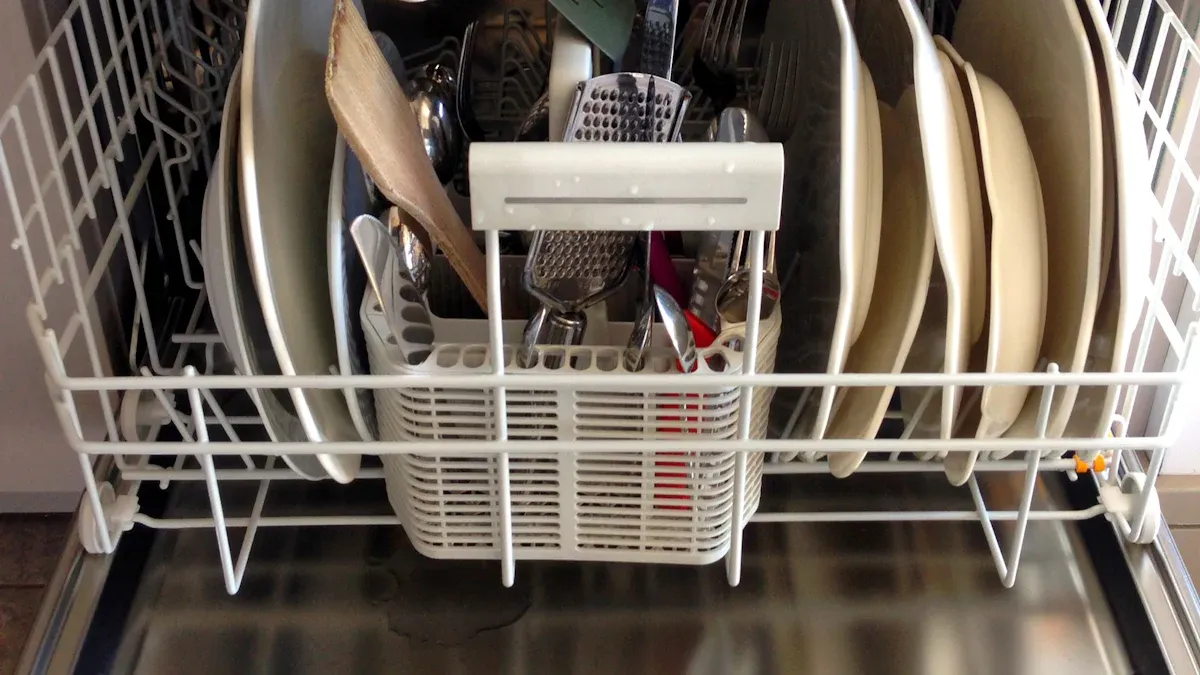
When you consider dishwasher capacity, you will find that it is measured in place settings. A place setting typically includes a large dinner plate, a bread and butter plate, a saucer, a bowl, a coffee cup, a drinking glass, and various utensils. Understanding these measurements helps you choose a dishwasher that fits your household needs.
Here’s a breakdown of the standard dishwasher capacity categories:
Dishwasher Type | Place Settings |
|---|---|
Compact | 6-9 |
Standard | 10-12 |
Large Capacity | 12+ |
Each type serves different household sizes. Compact dishwashers are ideal for small kitchens or apartments, while standard and large-capacity models suit families or those who entertain frequently.
Choosing the Right Size
Selecting the right size and capacity for your dishwasher is essential. For a family of four, a standard-size dishwasher is often the best choice. It typically holds 12 to 16 place settings, accommodating the dishes generated from daily meals.
Consider the following factors when choosing the right size:
Household Size: Larger families may need a large-capacity model, while singles or couples might find a compact model sufficient.
Dishwashing Frequency: If you wash dishes daily, a larger capacity can save time and energy.
Kitchen Space: Ensure your kitchen can accommodate the dishwasher’s dimensions. Standard models usually measure 24 inches wide, while compact models are around 18 inches.
Here’s a quick comparison of different dishwasher sizes:
Dishwasher Type | Width | Place Settings per Load |
|---|---|---|
Standard Size | 24″ | 12 to 16 |
Compact Size | 18″ | 8 to 10 |
Portable Dishwasher | N/A | 8 to 12 |
Countertop Dishwasher | N/A | Up to 6 |
Choosing the right size not only affects your convenience but also impacts water and energy usage. New ENERGY STAR® dishwashers use significantly less water per cycle compared to older models. For example, a family of four typically generates about 150 loads per year, leading to an annual water consumption of approximately 1,800 gallons with older dishwashers. In contrast, modern models can reduce this by nearly 1,000 gallons annually.
By understanding the types of capacities and how to choose the right size, you can make an informed decision when buying a dishwasher that meets your needs.
Wash Cycles in Dishwashers
Common Cycle Options
When you buy a dishwasher, understanding the available wash cycles is essential. Different cycles cater to various cleaning needs. Here are some common cycle options you might encounter:
Cycle Type | Description | Cycle Time |
|---|---|---|
Normal Wash | Cleans average amounts of food residue without extra water or heat. Ideal for daily use. | 2.25 hours |
Quick Wash | Uses more water and heat for fast cleaning of lightly soiled items. | 1 hour |
Heavy Wash | Uses extra water and higher temperatures for heavily soiled items. | 2.75 hours |
These cycles help you manage your dishwashing tasks efficiently. For example, the normal wash cycle is perfect for everyday dishes, while the quick wash cycle is great for when you need clean dishes in a hurry. The heavy wash cycle tackles tough, baked-on food, ensuring your cookware comes out sparkling clean.
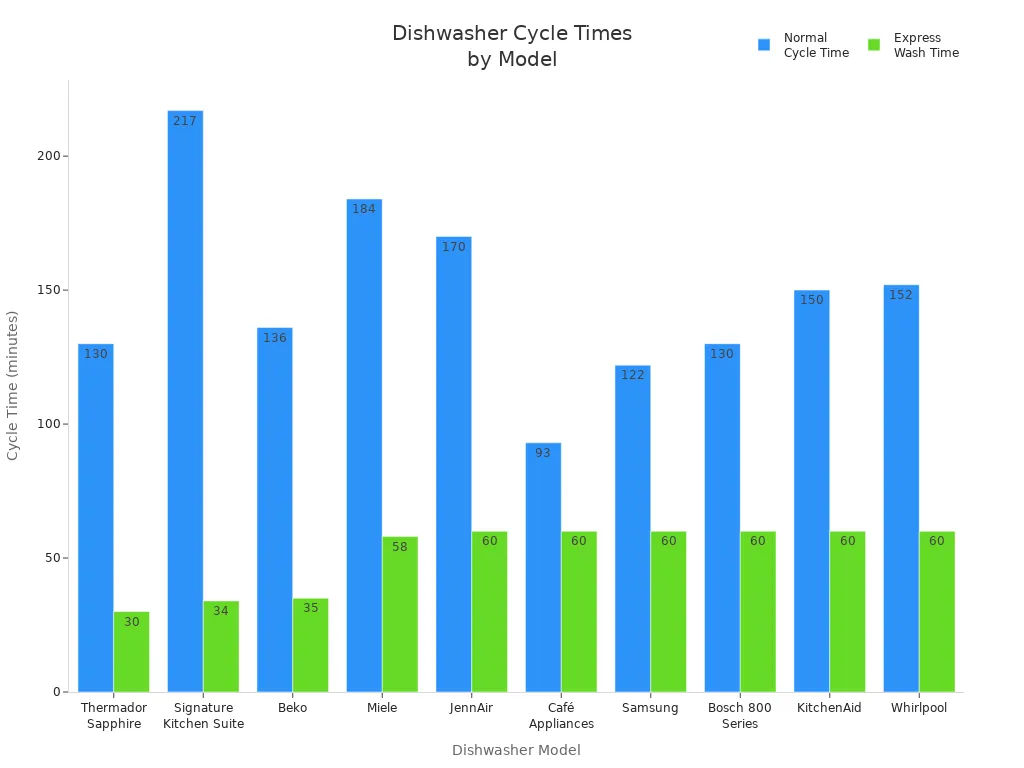
Many leading dishwasher brands offer a variety of cycles. For instance, the Thermador Sapphire DWHD770WFP features seven cycles, including a normal cycle that takes about 2 hours and 10 minutes. In contrast, the Samsung DW80N3030US has four cycles, with a quick wash option that completes in just 60 minutes.
Specialty Cycles
In addition to common cycles, many dishwashers include specialty cycles designed for specific cleaning tasks. Here are a couple of examples:
Cycle Type | Purpose |
|---|---|
Delicate Cycle | Designed for fragile items like delicate tableware, cutlery, and temperature-sensitive plastics. |
Heavy-Duty Cycle | Intended for heavily soiled cookware, effectively cleaning baked-on grime with more water. |
Delicate Cycle: Ideal for fragile items such as crystal, glassware, and fine china, ensuring they are cleaned without damage.
Heavy-Duty Cycle: Specifically for heavily soiled cookware, utilizing more water to remove tough, baked-on food.
Many modern dishwashers also feature sensor technologies. These sensors assess the soil level and temperature of the dishes. They automatically adjust the wash time and water usage, optimizing cleaning performance. For lightly soiled loads, the cycle can be shorter, while heavily soiled items may require a longer wash. This technology not only enhances cleaning efficiency but also helps reduce water and energy consumption.
By understanding the various wash cycles and their functions, you can choose a dishwasher that best fits your needs. This knowledge will help you make the most of your appliance, ensuring that you enjoy clean dishes without wasting resources.
Water Efficiency Ratings
Understanding Ratings
Water efficiency ratings help you choose the best dishwashers for your home. In the United States, the ENERGY STAR label indicates that a dishwasher uses 3.10 gallons or less per cycle for compact models. In Europe, the EU Energy Label provides energy classes from A to G, which include water consumption metrics. Here’s a quick comparison of these rating systems:
Region | Rating System | Key Requirement |
|---|---|---|
United States | ENERGY STAR | Water usage of ≤ 3.10 gallons/cycle for compact dishwashers |
Europe | EU Energy Label | Energy classes from A to G, including water consumption metrics |
Benefits of Efficient Models
Choosing an energy-efficient dishwasher can save you money and help the environment. Here are some key benefits:
Lower Water Usage: ENERGY STAR certified dishwashers use as little as 3 gallons of water per cycle. In contrast, older models can consume between 6 to 10 gallons. This difference can lead to significant savings over time.
Cost Savings: Running an efficient dishwasher five times a week can save you thousands of gallons of water annually. Although these models may have a higher initial cost, they reduce water and energy bills, leading to substantial savings each year.
Environmental Impact: Upgrading to an ENERGY STAR model can save over 130 billion gallons of water annually if every household in the U.S. made the switch. This change also reduces greenhouse gas emissions, making it a more eco-friendly choice.
Investing in a water-efficient dishwasher not only benefits your wallet but also contributes to a healthier planet. By understanding water efficiency ratings and selecting the right model, you can enjoy clean dishes while conserving resources.
Choosing the right dishwasher involves understanding your needs and preferences. Here are some key takeaways from this dishwasher buying guide:
Capacity Matters: Measure your household’s needs in place settings. For singles and couples, 8 to 12 place settings work well. Larger families may benefit from models with 14 to 16 place settings.
Cycle Options: Look for dishwashers with various cycles. Modern features like soil sensors can optimize wash times and water usage.
Water Efficiency: ENERGY STAR certified models use up to 50% less water than older dishwashers. This choice not only saves money but also benefits the environment.
Take your time when buying a dishwasher. Consider how much you should spend on a dishwasher based on its features and efficiency. Aligning these features with your lifestyle will enhance your satisfaction and resource savings.
FAQ
What is the average lifespan of a dishwasher?
Most dishwashers last between 9 to 12 years. Regular maintenance can extend their lifespan.
How do I ensure my dishwasher operates quietly?
Look for models specifically designed for quiet operation. Features like sound insulation and advanced motor technology help reduce noise levels.
What should I do if my dishes are not drying properly?
Check the rinse aid dispenser. Low rinse aid can affect drying performance. Ensure the dishwasher’s heating element is functioning correctly.
Can I wash pots and pans in my dishwasher?
Yes, most dishwashers can handle pots and pans. Use the heavy-duty cycle for best results, especially for heavily soiled items.
How often should I clean my dishwasher?
Clean your dishwasher monthly. Remove food debris from filters and run a cleaning cycle to maintain optimal performance.