
When you think about kitchen appliances, the debate of Blender vs. Food Processor often comes to mind. While both tools help you prepare food, they serve different purposes. A quick comparison shows that a blender excels at creating smoothies and soups, while a food processor handles tasks like chopping and slicing. This distinction in the Blender vs. Food Processor discussion can lead to confusion. Understanding the best use for each appliance helps you maximize your cooking efficiency.
Key Takeaways
Blenders are perfect for creating smooth textures in drinks and soups. Use them for smoothies, sauces, and frozen desserts.
Food processors excel at chopping, slicing, and shredding solid ingredients. They are ideal for meal prep and making dough.
Choose a blender for liquid-based recipes and a food processor for solid ingredients. Each appliance serves a unique purpose in the kitchen.
Invest in a high-quality blender for smooth results in beverages. A good food processor can save time and effort in food preparation tasks.
Consider your cooking habits when choosing between a blender and a food processor. Select the appliance that best fits your needs.
Blender Overview
Design and Functionality
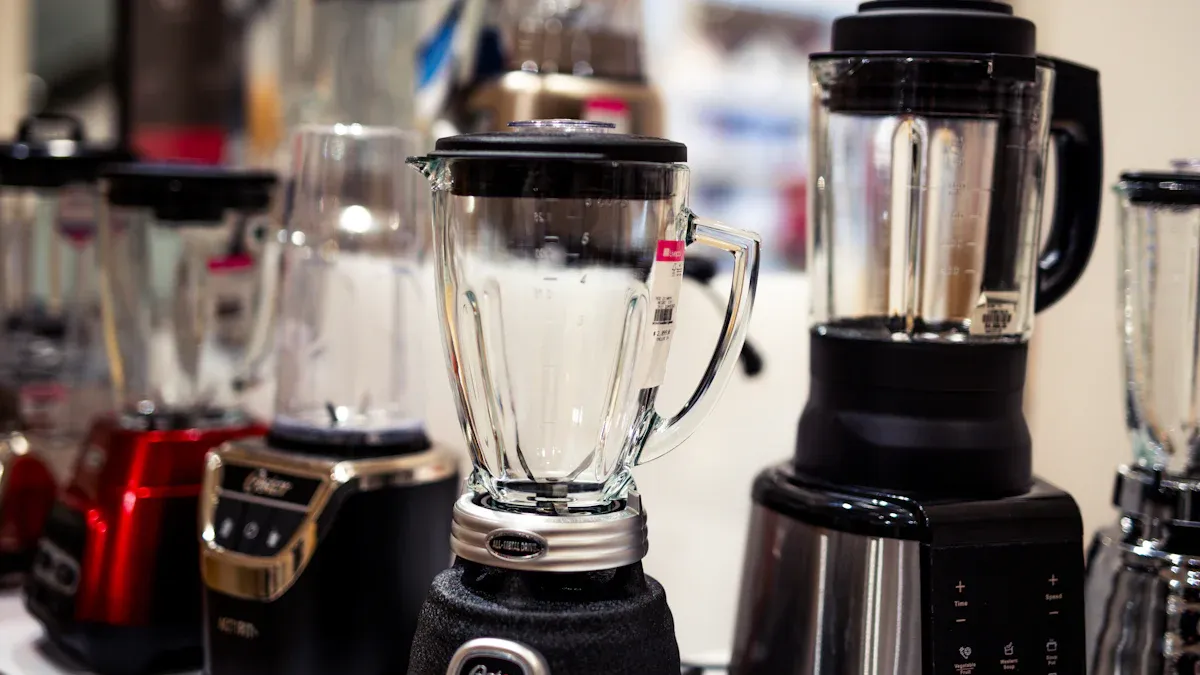
Blenders are essential kitchen appliances designed to mix, puree, and emulsify food. Their design typically includes a motor base, a blending jar, and sharp blades. Here are some key features that distinguish blenders from other kitchen tools:
Motor Speed: Most blenders range from 300 to 1,500 watts. Household models usually fall between 500 to 750 watts, providing enough power for various tasks.
Controls: You can find blenders with basic three-speed settings or advanced models with seven or more speeds. This variety allows you to choose the best settings for specific functions.
Jar Materials: Blenders come with jars made from glass, polycarbonate, or stainless steel. Each material has its pros and cons regarding durability and visibility.
Design Aesthetics: Blenders are available in many styles, from modern to retro, allowing you to match your kitchen decor.
Common Uses
Blenders excel in several culinary tasks. Here are the top five common uses for blenders:
Sauces, Dips, and Dressings: You can easily whip up pesto, mayonnaise, hummus, and vinaigrettes.
Frozen Desserts: Create ice cream bases or fruit-based treats with ease.
Vegetable Rice: Make low-carb sides like broccoli rice quickly.
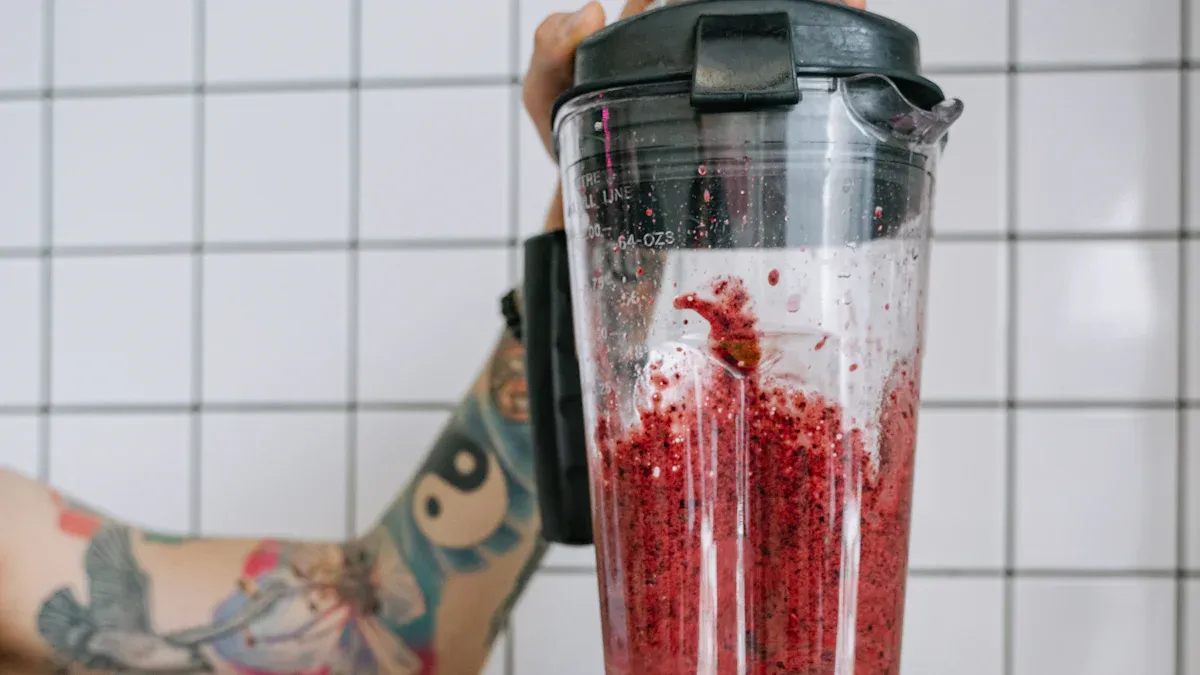
Beverages: Blend smoothies, frozen drinks, and cocktails effortlessly.
Nuts: Prepare homemade nut butter, such as almond or peanut butter.
Interestingly, about 25% of blender users make smoothies more than five times a month. This statistic highlights the popularity of smoothies as a primary use for blenders. If you want smooth results for your drinks, investing in a high-quality blender is essential. Whether you choose the best blender or the best budget blender, you will find that these appliances can significantly enhance your cooking experience.
Food Processor Overview
Design and Functionality
Food processors are versatile kitchen appliances designed to handle a variety of food preparation tasks. Their structure typically features a wide, squat bowl with sharp spinning blades. This design allows you to chop, mix, slice, shred, and knead ingredients efficiently. Here’s a quick comparison of key features that differentiate food processors from blenders:
Feature | Food Processor | Blender |
|---|---|---|
Structure | Wide, squat bowl with sharp spinning blades | Tall, narrow jar with multi-pronged blades |
Functionality | Chops, mixes, slices, shreds, and kneads | Purees, liquefies, and creates smooth mixes |
Intended Use | Best for solid or mostly solid ingredients | Best for liquids and creating smooth textures |
Blade Design | S-shaped blade with interchangeable accessories | Blades cradled at the bottom of the jar |
Operation | Often electrical with variable speeds and pulse options | Typically uses liquid to create a vortex |
Food processors come with various interchangeable blades and discs. These attachments enhance their versatility, allowing you to perform multiple tasks without needing liquid. For example, you can use the S-shaped blade for chopping and mixing, while the shredding discs help you prepare ingredients for salads or toppings.
Common Uses
You can use food processors for many tasks in your kitchen. Here are some of the most frequent functions:
Chopping and slicing large batches of vegetables.
Making hummus and other dips.
Grinding meat.
Making dough for bread, cookies, and pies.
Preparing cauliflower ‘rice’.
These functions make the food processor an essential tool for anyone who enjoys cooking. Whether you want to create dips for a party or prepare ingredients for a family meal, the best food processor can save you time and effort. If you’re looking for a budget-friendly option, consider the best budget food processor that meets your needs without breaking the bank.
Key Differences Between Blenders and Food Processors
Design and Build
The design and build of blenders and food processors highlight their unique functions. Blenders feature tall, narrow jars that create a vortex, allowing them to blend liquids smoothly. Their blades are fixed and optimized for pureeing. In contrast, food processors have wide, squat bowls designed for solid ingredients. They come with interchangeable blades that allow for chopping, slicing, and shredding.
Here’s a quick comparison of their physical features:
Feature | Blender | Food Processor |
|---|---|---|
Liquid-based blending | Excellent – creates smooth purées | Poor – not designed for liquids |
Chopping vegetables | Fine, but inconsistent | Superior – uniform cuts |
Slicing/Shredding | No capability | Yes – with disc attachments |
Dough kneading | Limited – only small batches | Strong – handles elastic doughs |
Ice crushing | Excellent – sharp blades | Moderate – not optimized for fine crush |
Batch size flexibility | Smaller to medium (32–64 oz typical) | Medium to large (7–14 cups common) |
Cleaning ease | Easy – often self-cleaning | More involved – multiple parts to disassemble |
The materials used in these appliances also impact their durability. Food processors often use stainless steel, which enhances longevity and performance. This material resists corrosion and is easy to clean. Blenders, while durable, may not withstand heavy-duty tasks as well as food processors.
Performance and Versatility
When it comes to performance, blenders excel in creating smooth mixtures. They are particularly effective for recipes that require pureeing, such as smoothies and icy drinks. Their powerful motors allow for quick blending, making them ideal for liquid-based tasks.
On the other hand, food processors shine in versatility. They can handle a variety of textures and tasks, such as chopping vegetables for salads, slicing potatoes, grating cheese, and kneading dough. The interchangeable blades and discs make food processors adaptable for many culinary needs.
Here are some common tasks where each appliance excels:
Blender:
Smoothies
Soups
Sauces
Frozen drinks
Food Processor:
Chopping vegetables
Slicing fruits
Grating cheese
Making dough
Ideal Use Cases
Understanding the ideal use cases for each appliance can help you make the best choice for your kitchen. If you frequently prepare smoothies, soups, or sauces, a blender is your best option. It provides the smooth texture you desire for these recipes.
Conversely, if you often chop vegetables, slice fruits, or make dough, a food processor is essential. Its larger capacity and ability to handle solid ingredients make it perfect for meal prep.
When to Use Each Appliance
Scenarios for Blenders
You should reach for a blender when your recipes call for smooth textures or liquid-based ingredients. Here are some specific scenarios where a blender shines:
Smoothies: If you love starting your day with a smoothie, a blender is your best friend. It can easily pulverize fruits, vegetables, and ice to create a creamy drink.
Soups: For pureed soups, a blender works wonders. It can turn cooked vegetables and broth into a silky soup in seconds.
Sauces and Dressings: When making sauces like pesto or vinaigrettes, a blender can emulsify ingredients quickly, giving you a smooth consistency.
Frozen Treats: If you want to whip up a quick sorbet or frozen yogurt, a blender can blend frozen fruits into a delightful dessert.
Nut Butters: You can make homemade nut butter by blending nuts until they reach a creamy texture.
Blenders excel in these scenarios because they effectively pulverize ingredients, which is essential for achieving the right consistency in beverages and sauces.
Scenarios for Food Processors
On the other hand, a food processor is your go-to appliance for tasks that involve solid ingredients. Here are some situations where a food processor proves to be more efficient:
Chopping Vegetables: If you need to chop large batches of vegetables for a stir-fry or salad, a food processor can handle this task quickly and uniformly.
Grating Cheese: When preparing a cheesy dish, a food processor can grate cheese in seconds, saving you time and effort.
Making Dough: For baking enthusiasts, a food processor can knead dough for bread or pastries, making the process easier and faster.
Slicing Fruits and Vegetables: If you want to create uniform slices for a salad or garnish, a food processor can slice quickly and evenly.
Preparing Meal Prep Ingredients: When you plan your meals for the week, a food processor can chop, slice, and shred ingredients, making meal prep a breeze.
Home cooks often find that food processors excel in tasks requiring chunkier textures, such as chopping and shredding. The choice between a blender and a food processor often depends on whether the dish requires a spoon or fork for serving.
When choosing between a blender and a food processor, consider your cooking habits. Here are the main differences:
Blender: Best for liquefying ingredients. Use it for smoothies, sauces, and soups. It requires liquid to function effectively.
Food Processor: Ideal for chopping, slicing, and shredding. It can handle dry ingredients without needing liquid.
Appliance | Best Uses | Notes |
|---|---|---|
Blender | Pureeing ingredients into smooth liquids (soups, smoothies) | Requires liquid to operate effectively. Useful for mixing and emulsifying. |
Crushing ice or making slushy drinks (cocktails) | ||
Food Processor | Chopping and blending herbs, nuts, and making dips (hummus, pesto) | Versatile with different blades; more efficient for vegetable purees. |
Making nut butters and vegetable purees | Easier to scrape out contents compared to a blender. |
Select the appliance that best fits your cooking style. If you enjoy smoothies and soups, invest in a blender. If you often chop and slice, a food processor will serve you well.
FAQ
What is the main difference between a blender and a food processor?
A blender primarily mixes and purees liquids, while a food processor handles solid ingredients. Use a blender for smoothies and soups, and a food processor for chopping and slicing.
Can I use a blender to chop vegetables?
You can chop vegetables in a blender, but results may vary. Blenders work best for liquids. For consistent chopping, a food processor is more effective.
Are food processors better for making dough?
Yes, food processors excel at kneading dough. Their powerful motors and wide bowls make mixing and kneading easier than using a blender.
Which appliance is easier to clean?
Blenders are generally easier to clean. Many models have self-cleaning features. Food processors require disassembly and more effort to clean all parts.
How do I choose between a blender and a food processor?
Consider your cooking habits. If you make smoothies and soups often, choose a blender. If you frequently chop, slice, or knead, a food processor is the better option.