
Food safety plays a critical role in preventing illnesses and creating a healthy kitchen. Each year, millions of people worldwide fall ill due to foodborne diseases. In the United States alone, home kitchens account for about 72% of food consumed, leading to a high risk of food handling errors. It’s estimated that up to 95% of foodborne illness cases originate from home kitchens. As a home cook, you hold the responsibility to implement effective food safety tips and sanitation practices. By doing so, you not only protect yourself but also safeguard your family from potential health risks.
Key Takeaways
Always wash your hands before and after handling food to prevent contamination.
Store perishable foods in the refrigerator at or below 40 °F to slow bacterial growth.
Use separate cutting boards for raw meat and vegetables to avoid cross-contamination.
Cook foods to the recommended internal temperatures to kill harmful bacteria.
Understand expiration dates to reduce food waste and ensure safety.
Foodborne Illness Risks
Common Sources
Foodborne illnesses often stem from various sources in your kitchen. Understanding these sources helps you prevent contamination. Here are some common culprits:
Raw Meat: Chicken, beef can harbor harmful bacteria like Salmonella and E. coli. Always handle raw meat carefully.
Dairy Products: Unpasteurized milk and cheese can contain dangerous pathogens.
Fruits and Vegetables: Even fresh produce can carry bacteria. For example, leafy greens and tomatoes have been linked to E. coli outbreaks.
Eggs: Raw or undercooked eggs can lead to Salmonella infections.
Seafood: Raw shellfish can carry Vibrio and norovirus, making proper cooking essential.
Recent studies show that nearly 45% of homes tested positive for a foodborne pathogen. Common bacteria found include S. aureus on countertops and Listeria in meat drawers.
Symptoms
Recognizing the symptoms of foodborne illness is crucial for your health. Symptoms can vary depending on the bacteria involved. Here’s a quick overview:
Bacterium | Symptoms |
|---|---|
Salmonella | Diarrhea (can be bloody), fever, stomach cramps, vomiting. Symptoms can appear 6 hours to 6 days after exposure. |
E. coli | Severe stomach cramps, diarrhea (often bloody), vomiting. Symptoms can appear 3 to 4 days after exposure. |
Listeria | Fever and flu-like symptoms, headache, stiff neck, confusion, loss of balance, and seizures. Symptoms can appear 2 weeks after exposure. |
Common symptoms of foodborne illness include:
Diarrhea
Stomach pain or cramps
Nausea
Vomiting
Fever
If you experience these symptoms after eating, seek medical attention. Remember, food safety starts with you. By understanding the risks, you can protect yourself and your family from foodborne illnesses.
Hand Washing for Food Safety
When to Wash
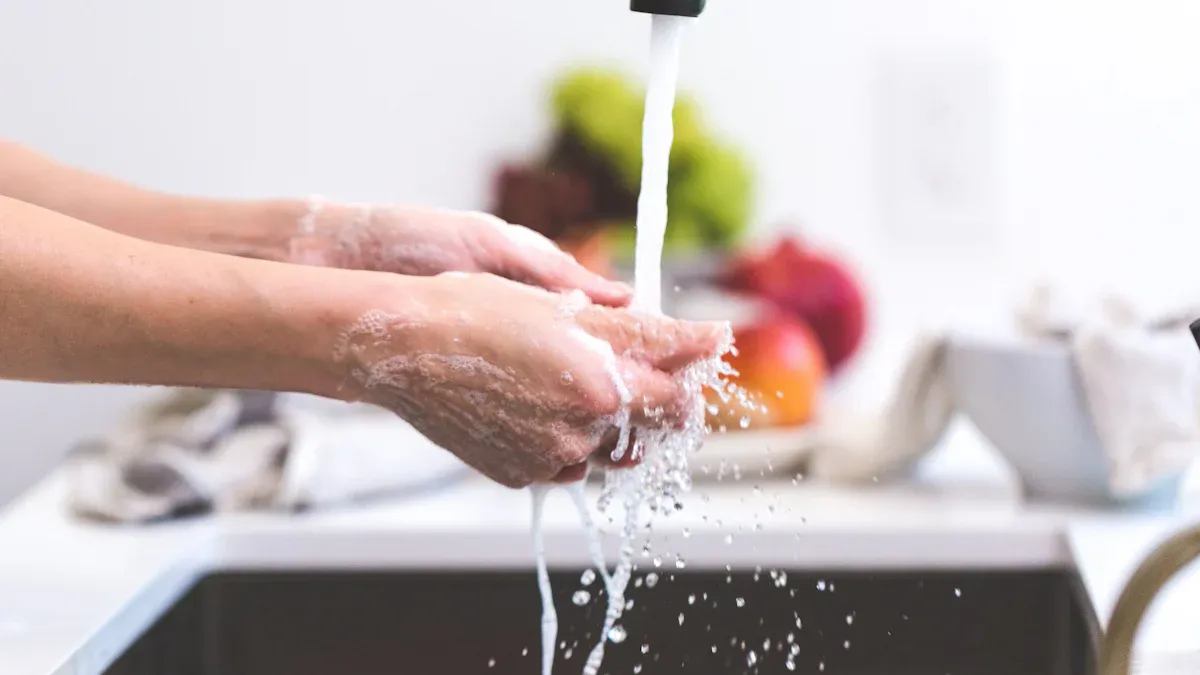
Washing your hands is one of the simplest yet most effective ways to ensure food safety. You should wash your hands at several key moments during food preparation. Here’s a list of when to wash your hands:
Before, during, and after preparing any food.
After handling uncooked meat, chicken, or other poultry, seafood, flour, or eggs.
Before and after using gloves to prevent germs from spreading to your food and your hands.
Before eating.
After touching garbage.
After wiping counters or cleaning other surfaces with chemicals.
After touching pets, pet food, or pet treats.
After coughing, sneezing, or blowing your nose.
By following these guidelines, you can significantly reduce the risk of contamination in your kitchen.
Techniques
To effectively remove harmful bacteria from your hands, you need to follow proper hand washing techniques. Research shows that washing your hands with warm water and soap for at least 20 seconds is the most effective method. Here’s a breakdown of the recommended technique:
Wet your hands with clean, running water (warm or cold).
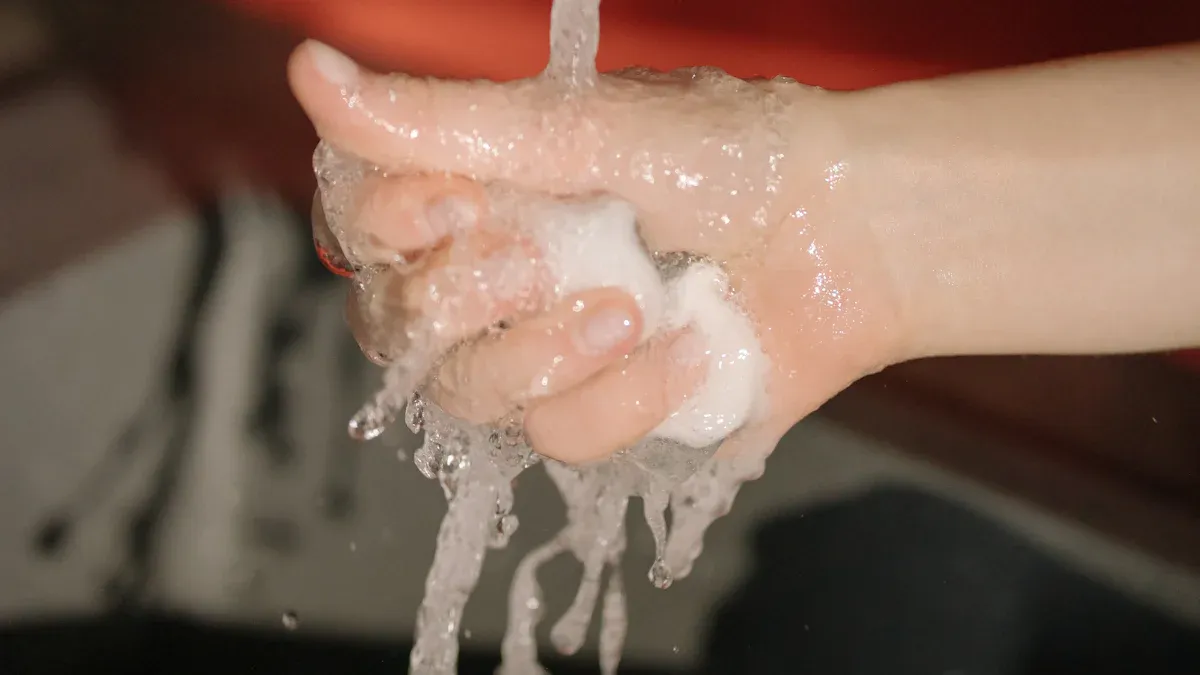
Apply soap and lather your hands by rubbing them together. Make sure to lather the backs of your hands, between your fingers, and under your nails.
Scrub your hands for at least 20 seconds. You can time this by humming the “Happy Birthday” song twice.
Rinse your hands well under clean, running water.
Dry your hands using a clean towel or air dry them.
Study Description | Findings | Significance |
|---|---|---|
Hand washing with warm water and soap for 20 s | Most effective in removing bacteria compared to other methods | p < 0.01 |
Warm water vs. cold water hand washing | Warm water more effective (97.3% vs. 95.4%) | p < 0.01 |
Efficacy of soap vs. rinsing alone | Soap significantly reduces E. coli counts | p < 0.01 |
Hand washing with soap vs. alcohol-based solutions | Soap more effective against H1N1 | N/A |
Remember, effective hand washing is crucial for maintaining sanitation in your kitchen. By taking these steps, you can help ensure that your food remains safe and free from harmful pathogens.
Safe Food Storage Tips
Refrigeration
Proper refrigeration is essential for maintaining food safety. You should keep your refrigerator at or below 40 °F (4 °C) to slow bacterial growth. The freezer should be set to 0 °F (-18 °C) or below. Here’s a quick reference table for recommended temperatures:
Appliance | Recommended Temperature |
|---|---|
Refrigerator | 40 °F (4 °C) or below |
Freezer | 0 °F (-18 °C) or below |
To ensure food safety, refrigerate perishable items quickly after use. This practice helps prevent spoilage and keeps your food fresh longer.
Expiration Dates
Understanding expiration dates can help you avoid foodborne illnesses. Misinterpretation of these dates contributes to about 20% of food waste in homes. Here are the main types of expiration dates you might encounter:
“Best if Used By”: This date indicates when a product will be at its best quality. It is safe to eat after this date, but the flavor may not be as good.
“Sell-by”: This date helps stores manage inventory. Foods are still safe to consume after this date, but you should use them quickly.
“Use-by”: This date is the last recommended date for peak quality. It is especially important for infant formula.
You should also be aware of how long common perishable foods can safely stay in the refrigerator. Here’s a helpful chart:
Food | Time in the fridge |
|---|---|
raw ground meat or stew meat | 1–2 days |
raw sausage | 1–2 days |
raw poultry | 1–2 days |
raw fish and shellfish | 1–2 days |
raw steaks, chops, and roasts | 3–5 days |
bacon | 7 days |
cooked ham | 7 days |
hot dogs and lunchmeats | 2 weeks unopened or 1 week opened |
chicken, egg, tuna, or macaroni salad | 3–5 days |
cooked meat, poultry, or fish leftovers | 3–4 days |
eggs (in their shells) | 3–5 weeks |
By following these food storage tips, you can help ensure that your meals remain safe and delicious.
Preventing Cross-Contamination
Safe Handling
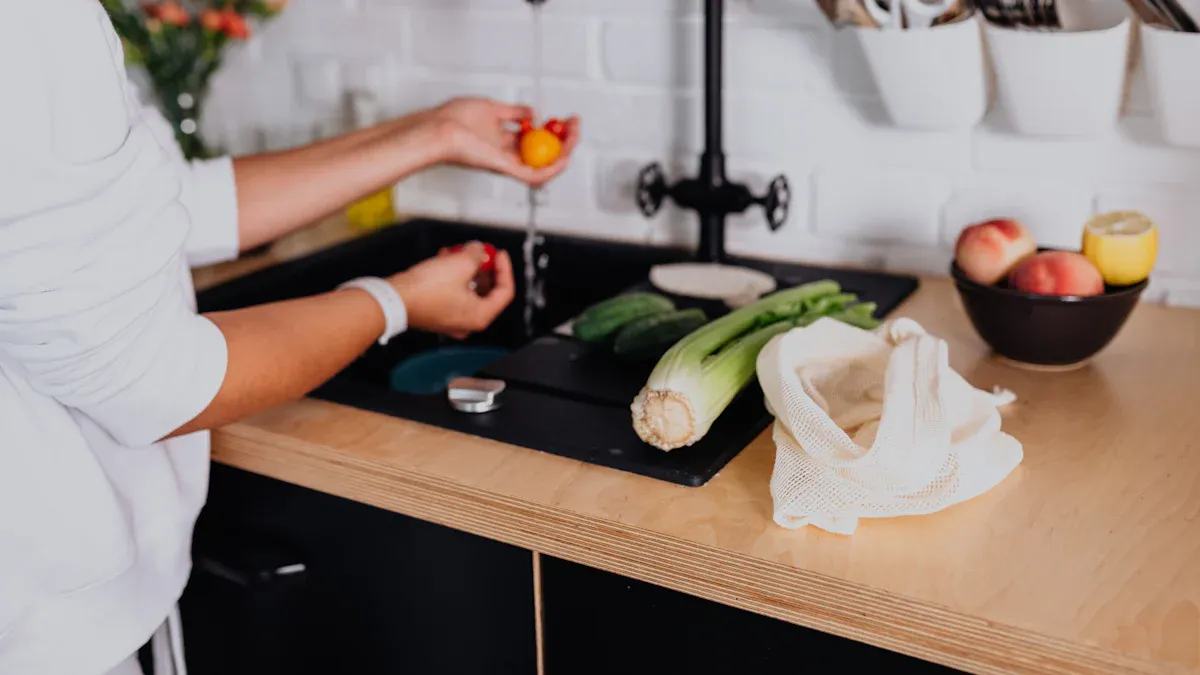
You can significantly reduce the risk of cross-contamination in your kitchen by following safe handling practices. Here are some essential tips to keep in mind:
Wash hands properly: Scrub your hands for at least 20 seconds with warm water and soap before and after handling raw foods.
Separate raw and cooked foods: Use different tools and surfaces to avoid mixing.
Clean surfaces and tools thoroughly: Regularly sanitize areas after preparing raw foods.
Store food safely in the refrigerator: Keep raw meat on the bottom shelf in sealed containers to prevent leaks.
Watch out for hidden risks: Clean items like spice jars and phones that can harbor bacteria.
Cross-contamination can occur in various ways during food preparation. For example, juice from raw meat can drip onto other foods. You might also store affected and unaffected foods in the same container or prepare them on the same cutting board. Touching food with unclean hands or using dirty utensils can also lead to contamination.
To summarize, cross-contamination happens through three main pathways:
Food-to-food: Contaminated foods added to non-contaminated foods.
Equipment-to-food: Bacteria transferred from unclean surfaces or utensils to food.
People-to-food: Bacteria transferred from humans to food during preparation.
Remember, cross-contamination can happen when a knife is used on raw meat and that same knife is used to cut vegetables without washing it first.
Cutting Boards
Using separate cutting boards is crucial for maintaining food safety. Different boards help prevent cross-contamination between raw meats and ready-to-eat foods like vegetables. Here’s a quick reference table to illustrate the purpose of using separate cutting boards:
Cutting Board Use | Purpose |
|---|---|
Raw Meat Board | To prevent cross-contamination with harmful bacteria |
Vegetable Board | For safe preparation of ready-to-eat foods |
Using separate boards eliminates the worry of cross-contamination and provides peace of mind when preparing food. Experts recommend materials like maple wood for cutting boards due to their durability and natural antimicrobial properties. Wood and bamboo boards can actively discourage bacterial growth.
A study showed that bacteria on wooden boards died within three minutes, while they survived on plastic boards. While plastic cutting boards are non-porous, they can harbor bacteria in knife marks, necessitating regular replacement.
By following these guidelines, you can effectively avoid cross-contamination and ensure a safer cooking environment.
Temperature Control in Cooking
Cooking Temperatures
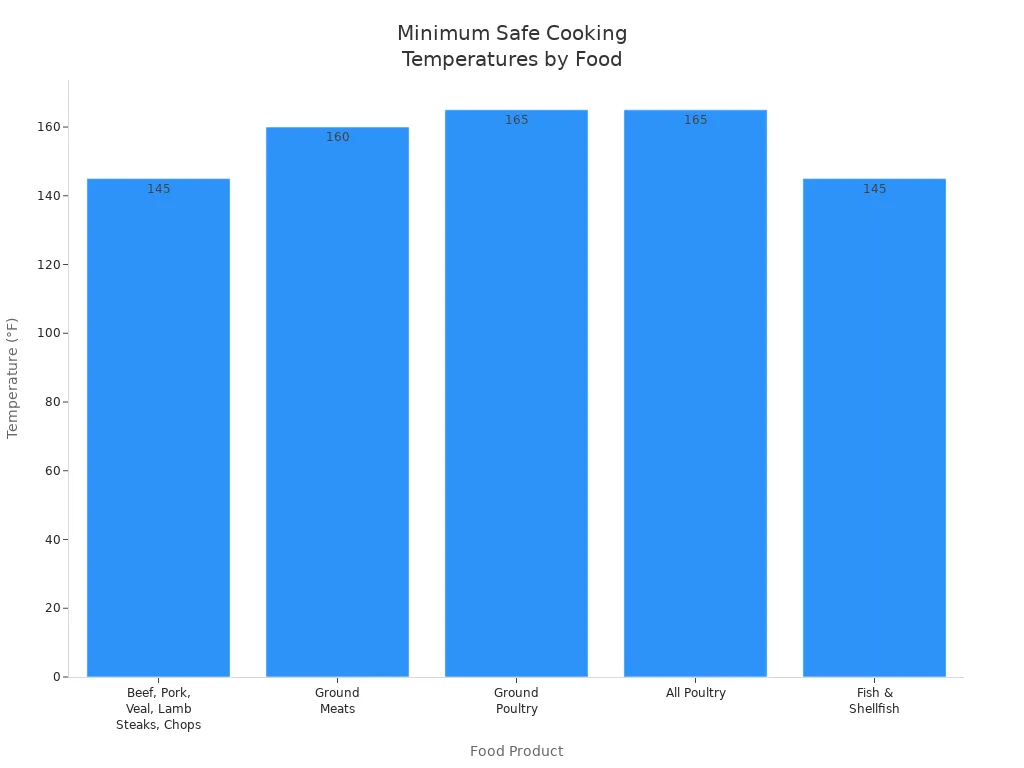
Cooking food to the right temperature is crucial for food safety. It helps kill harmful bacteria that can cause foodborne illnesses. Use a food thermometer to check the internal temperature of your dishes. Here are the minimum safe internal cooking temperatures for common foods:
Product | Minimum Internal Temperature and Rest Time |
|---|---|
Beef, Veal and Lamb Steaks, Chops and Roasts | 145°F (62.8°C) and allow to rest for at least 3 minutes |
Ground Meats | 160°F (71.1°C) |
Ground Poultry | 165°F (73.9°C) |
All Poultry (Breasts, Whole Bird, Legs, Thighs, Wings, Ground Poultry, Giblets and Stuffing) | 165°F (73.9°C) |
Fish & Shellfish | 145°F (62.8°C) |
To accurately measure food temperatures, follow these tips:
Clean and sanitize the probe of your food thermometer.
Insert the thermometer probe into the thickest part of the food.
Allow the temperature reading to equilibrate.
Record the temperature and clean the thermometer.
Cooling Guidelines
Cooling cooked foods properly prevents bacterial growth. Follow these guidelines to ensure safety:
Divide large pots of food into smaller portions and use shallow containers for refrigeration.
Cut large meats or whole poultry into smaller pieces before refrigerating.
Use an ice water bath to cool food quickly.
Follow the two-stage cooling method: cool from 140°F to 70°F in two hours, then to 41°F or lower in four hours.
Avoid placing hot food directly in the refrigerator or freezer.
By adhering to these temperature control tips, you can keep your meals safe and delicious. Remember, keeping food out of the danger zone (40°F – 140°F) is essential for preventing foodborne illnesses.
Implementing food safety and sanitation rules in your daily cooking practices is vital. These practices help you prevent foodborne illnesses and protect your family’s health. Here are some key benefits:
Food safety reduces the risk of severe health issues from pathogens like E. coli and salmonella.
It maintains family health, especially for vulnerable members like children and the elderly.
Following these tips lowers the burden on healthcare systems by reducing hospitalizations.
By adopting these practices, you contribute to a healthier community and ensure safe meals for everyone. Remember, your actions in the kitchen can make a significant difference!
FAQ
How long can I keep food in the refrigerator?
Most perishable foods last 3 to 5 days in the refrigerator. Always check for signs of spoilage before consuming leftovers.
What temperature should my freezer be set to?
Your freezer should be set to 0 °F (-18 °C) or lower. This temperature helps keep food safe and prevents bacterial growth.
How can I tell if food has gone bad?
Look for changes in color, texture, or smell. If food appears slimy or has an off odor, it’s best to discard it.
Is it safe to refreeze thawed food?
You can refreeze food that has thawed in the refrigerator. However, avoid refreezing food that has thawed at room temperature.
What should I do if I suspect food poisoning?
If you experience symptoms like nausea or diarrhea after eating, seek medical attention. Stay hydrated and report your symptoms to a healthcare provider.