
We’ve all been there—burnt toast, overcooked pasta, or a cake that just won’t rise. These cooking mishaps can feel frustrating, but they’re part of the journey. Recognizing and learning from common cooking mistakes helps you improve your skills. Remember, every mistake is a chance to grow and become more confident in the kitchen!
Key Takeaways
Always read the entire recipe before starting. This helps you understand the steps and gather all necessary ingredients.
Prep your ingredients in advance. Chopping vegetables and measuring spices beforehand makes cooking smoother and more enjoyable.
Avoid overcrowding the pan. Give your food space to cook evenly and develop flavor, ensuring a delicious golden-brown crust.
Prep Mistakes
Not Reading the Recipe
One of the biggest prep mistakes you can make is not reading the entire recipe before you start cooking. You might think you know what to do, but skipping this step can lead to chaos in the kitchen. Imagine mixing ingredients only to realize halfway through that you missed a crucial step or ingredient.
The ability to read and understand a recipe is crucial for success in the kitchen. Deciphering recipe terminology can mean the difference between stress and confusion versus cooking with ease and efficiency.
Before you dive in, take a moment to read the entire recipe. This way, you’ll know what to expect and can gather all your ingredients. It also helps you avoid poor substitutions that could ruin your dish. For example, if you’re supposed to use fresh herbs but only have dried ones, you need to adjust the quantity. Not doing so can lead to a dish that’s either too bland or overwhelmingly flavored.
Skipping Ingredient Prep
Another common cooking mistake is skipping ingredient prep. You might think you can just chop vegetables as you go, but this often leads to a messy kitchen and a chaotic cooking process. Instead, take the time to prepare everything before you start cooking. This practice, known as mise en place, helps you stay organized and focused.
Here are some tips to avoid this mistake:
Chop all your vegetables before you start cooking.
Measure out spices and other ingredients in advance.
Soften butter if your recipe calls for it, so it mixes well.
By prepping your ingredients, you’ll find that cooking becomes smoother and more enjoyable.
Improper Measuring
Improper measuring is a mistake that can seriously affect your dish, especially in baking. Baking is a science, and the ratios of ingredients must be respected. Accurate measuring is the foundation of any successful bake.
“Baking is like chemistry, and you have to be precise. Measuring your ingredients accurately is the foundation for any successful bake.”
If you don’t measure correctly, you might end up with a cake that’s too dense or cookies that spread too much. For dry ingredients, remember to sift them when necessary. Not sifting can lead to uneven distribution, resulting in a drier cake or an undesirable texture.
Here are some common measuring mistakes to avoid:
Using the wrong measuring cups (liquid vs. dry).
Not leveling off dry ingredients.
Forgetting to sift flour when the recipe calls for it.
By paying attention to how you measure, you can improve the texture and flavor of your baked goods significantly.
Cooking Techniques
Overcrowding the Pan
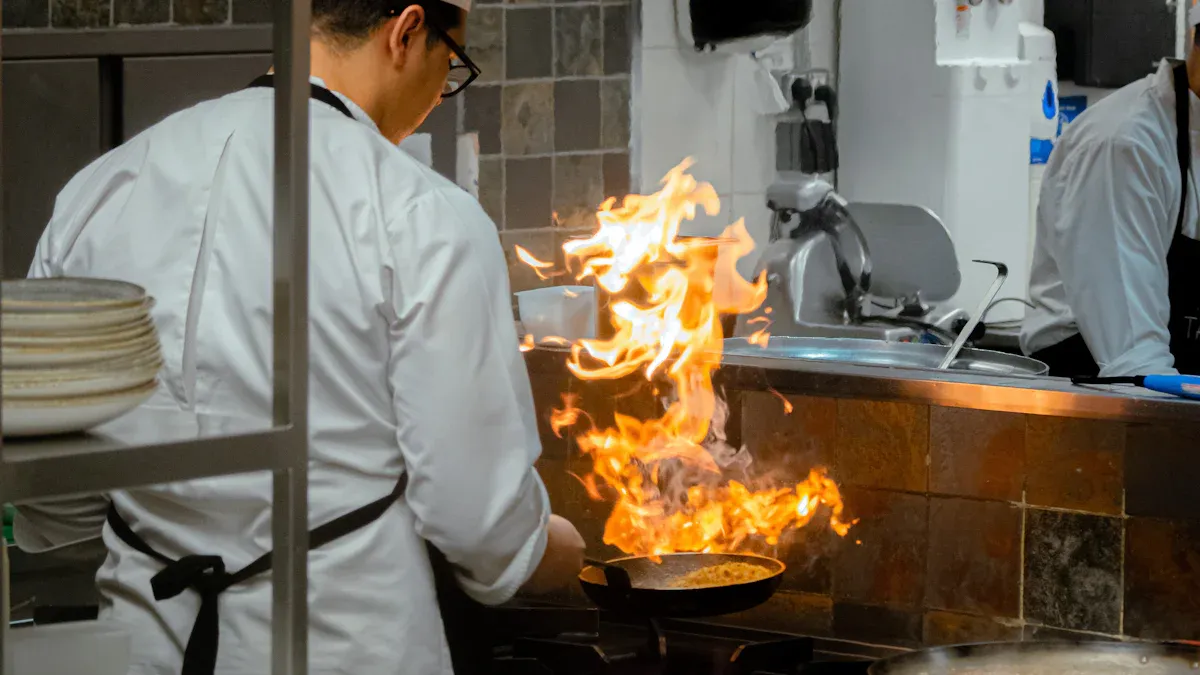
One of the most common cooking mistakes you can make is overcrowding the pan. When you crowd the pan, you prevent the Maillard reaction, which is essential for browning and developing flavor. Instead of searing, your food ends up steaming. This can lead to a disappointing texture and taste.
Here are some tips to avoid overcrowding:
Choose the Right Pan Size: A larger pan allows for better spacing, which helps food cook evenly without trapping steam.
Cook in Batches for Best Results: Cooking smaller amounts helps maintain heat and prevents steaming.
Leave Space Between Each Piece: Ensure at least 1-2 cm (½ inch) between pieces for even cooking.
By following these guidelines, you can enhance the quality of your dishes significantly. Remember, when you crowd the pan, you risk losing that delicious golden-brown crust that adds so much flavor.
Not Preheating Pans
Another mistake to watch out for is not preheating your pans. Failing to preheat compromises the texture and doneness of both the oil and the ingredients. When you don’t allow the pan to get hot, food releases excess moisture into the cool surface. This creates steam instead of achieving that perfect golden-brown sear.
Not preheating your pan leads to uneven cooking and disappointing results. Food releases excess moisture into the cool pan, creating steam instead of achieving a golden-brown sear. This results in soggy vegetables and proteins that stick to the surface.
To ensure your food cooks properly, always preheat your pans. This simple step can make a world of difference in the final outcome of your meals.
Timing Mistakes
Timing is everything in cooking. Overcooking or undercooking can ruin a dish and affect its nutritional value. For example, overcooking vegetables can lead to significant nutrient loss, with about half of certain vitamins disappearing when boiled excessively. Cooking can reduce several key nutrients, especially water-soluble vitamins like vitamin C and B vitamins.
Here are some common timing mistakes to avoid:
Keep an Eye on Cooking Times: Use a timer to help you remember when to check your food.
Taste as You Go: Forgetting to taste food during the cooking process can lead to disappointing results. It’s essential to check the taste to ensure the dish meets your expectations.
Know Your Ingredients: Different ingredients have different cooking times. Familiarize yourself with how long each item takes to cook.
By mastering your timing, you can improve both the flavor and nutritional value of your meals. Remember, cooking is as much about timing as it is about technique!
Flavoring and Tasting
Neglecting Seasoning
One of the most common cooking mistakes you can make is neglecting seasoning. Proper seasoning is essential for achieving balanced flavors in your dishes. It’s not just about salt; you should also consider acids, sugars, and umami. These elements enhance and balance flavors, making your meals more enjoyable. Here are some common seasoning mistakes to avoid:
Relying primarily on salt
Forgetting to taste regularly
Not toasting the spices
Overlooking lemon juice as a seasoning
Using stale seasonings
Failing to Taste
Failing to taste what you’re cooking can lead to disappointing results. Continuous tasting allows you to detect flavor changes, which is crucial for adjusting seasoning. For instance, when you bite into a tomato, the juice alters the flavor. This highlights the importance of tasting your food throughout the cooking process. You want to ensure that the flavors meld together perfectly.
Using Stale Ingredients
Using stale ingredients can ruin your dish’s flavor and texture. Stale items may lead to an off taste, and if you notice any signs of spoilage, like mold, it’s best to discard them. While stale food might not always be harmful, you should always check for freshness before using it. Here are some tips for checking the freshness of common pantry ingredients:
Honey: Good indefinitely; avoid refrigeration.
Processed Grain Products: Revive stale items by heating them in the oven.
Leavening Ingredients: Test baking powder with hot water.
Fats and Oils: Check for rancidity; store in a cool, dark place.
Spices and Herbs: Store in airtight containers; replace if the aroma fades.
By paying attention to seasoning, tasting your food, and using fresh ingredients, you can elevate your cooking and avoid common cooking mistakes.
Cooking is a journey filled with learning opportunities. Remember to avoid mistakes like overcrowding your pan, neglecting seasoning, and not tasting your food. Implement these tips in your routine, and you’ll see improvement. With practice, you’ll become more confident and skilled in the kitchen. Happy cooking!